

Can Security Guards Check IDs Legally? California (2026)

If a security guard asks for your ID, it can feel weirdly intense for something that’s… basically a piece of plastic with your face on it. So let’s answer the real question:
Can security guards check ID legally?
Yes, they can ask.
But whether you have to comply depends on where you are, why they’re asking, and what happens next.
(General info only, not legal advice.)
Quick Answer: Yes, They Can Ask, But You Usually Don’t Have to Hand It Over
Security guards are generally allowed to request identification, especially when they’re doing access control for a private property owner.
But in most everyday situations:
- You’re not legally required to show it just because they asked.
- They also usually can’t force you to hand it over.
“Ask” vs “require” (this is the whole game)
Security can ask for ID. You can decline. Then the property owner (through the guard) can often respond with:
“Okay, then you can’t come in / you need to leave.”
Private property is the biggest factor
On private property, a guard is often acting as the owner’s agent enforcing site rules (think: office buildings, controlled lobbies, gated communities). Refusing ID can mean no entry or you’re asked to leave.
Why Security Guards Check IDs in the First Place
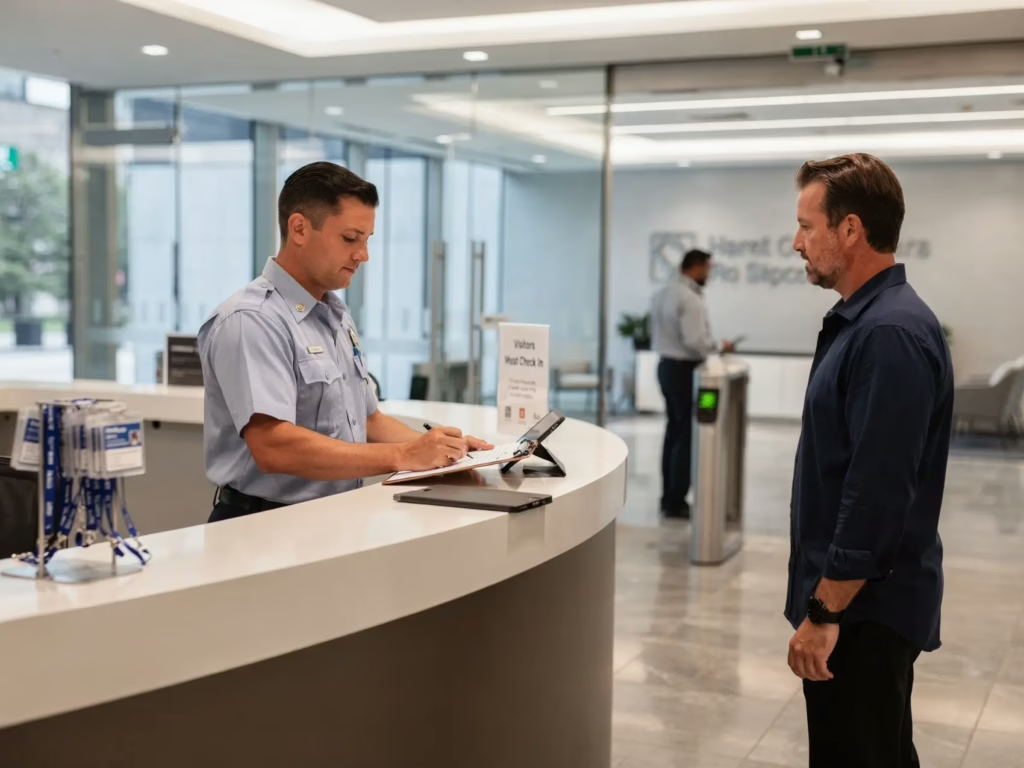
Most ID checks aren’t about “catching criminals.” They’re about reducing chaos.
Access control: offices, hospitals, gated communities
If the property is supposed to be limited to staff, residents, patients, or guests, an ID check is a simple way to keep strangers from wandering in.
Age checks: bars, clubs, events
If alcohol is involved, ID checks are basically mandatory in practice, even if the guard isn’t the one pouring drinks.
Incident response: “Who are you and why are you here?”
If there’s a complaint, a disturbance, or a safety concern, asking for ID is a quick way to document who was involved and get accountability.
Private Property Rules: They Can Deny Entry if You Refuse

Here’s the rule that surprises people:
Even if you don’t legally have to show your ID, you also don’t have a guaranteed right to stay on private property if you won’t follow reasonable entry rules.
So the “power” security has is often this:
- They can’t force you to show ID
- But they can enforce property rules, including denying entry or requesting you leave
Posted policies and “conditions of entry”
Those signs that say “ID Required” or “All visitors must check in” aren’t decoration. They’re basically the house rules.
Tickets, wristbands, and ID checks at events
Events are the clearest example: you don’t have to show ID, but the venue doesn’t have to let you in either.
Public Spaces: Security Has Less Leverage

Malls and semi-public spaces (the confusing middle)
A mall feels public, but it’s generally private property. That means mall security can often ask for ID and ask you to leave if you refuse and won’t comply with rules, though they’re still not police and can’t compel you the same way law enforcement can.
On sidewalks / public streets: totally different story
On public streets and sidewalks, private security has far less authority. They can still ask, but it’s usually just a request, nothing more.
Do You Have to Show ID in California?

California generally isn’t a “stop-and-identify” state
A lot of people think California works like some states where you must identify yourself to police during a stop. California generally does not have a broad “stop-and-identify” requirement the way people imagine it.
What that means for regular people vs law enforcement
Even with police, the rules are nuanced. With private security, the big idea remains: they can ask, but in most cases they can’t force you, their leverage is property access, not criminal enforcement.
Detained vs Not Detained: When Things Get Serious

Security guards aren’t police, but they can detain in limited cases
Security personnel are trained around the limits of detention, arrests, and use of force under California’s regulated training (BSIS “Power to Arrest” framework). Read more about that here.
The important takeaway:
- If you’re not detained, an ID request is typically just that, it’s a request.
- If someone says you’re being detained (for example, shoplifting/loss prevention contexts), the situation is different and can involve specific legal rules.
If you’re being detained, keep it calm and procedural
If you’re being detained, the best move is to:
- stay calm
- don’t resist physically
- ask what the reason is
- request law enforcement if you feel it’s improper
Not because you’re “admitting guilt,” but because escalation is how small problems become giant ones.
Can Security Guards Take Your ID or Photograph It?

Looking at it vs taking it from you
Usually, an ID check is visual: they look, confirm, and hand it back immediately.
A guard generally shouldn’t be “confiscating” your ID in random situations. If they insist on holding it, you can ask:
- “Can you look at it while I hold it?”
- “Can we do this at the front desk with a supervisor present?”
Scanning IDs: when it’s common and what to watch for
Some venues scan IDs for age verification or entry logs. If you’re not comfortable, your option is usually to decline and leave, again, the “property rules” thing.
Common Myths That Make ID Checks Weird
Myth: “They can force me.”
In most everyday scenarios, no. They can ask, and they can deny access. Forcing compliance is a different legal territory.
Myth: “Refusing is illegal.”
Usually false. Refusing may mean you can’t enter or you’ll be asked to leave, but refusing alone isn’t a crime.
Best Ways to Handle an ID Request Without Escalating
Here are a few lines that work in real life:
- “Sure, what do you need it for?”
- “I’m not comfortable handing it over, but you can look at it.”
- “If ID is required to enter, that’s fine, I’ll head out.”
- “Am I being asked, or is this required to stay on the property?”
When it’s smarter to just leave
If it’s turning confrontational and you’re not required to be there, leaving is often the cleanest option. You can always follow up with management later if you think the request was inappropriate.
How We Handle ID Checks at ADS Guards

This is where security either looks professional… or looks like someone’s having a power trip.
At ADS Guards, ID checks are treated as access control, not a dominance contest. The goal is simple: confirm who should be on-site, keep things calm, and document properly when needed. That’s why we emphasize training and de-escalation as part of professional security work.
If you’re a property manager, business owner, or event organizer, the difference matters, because sloppy ID checks create complaints, and professional ones prevent problems quietly.
FAQs: Can Security Guards Check IDs Legally?
1) Can a security guard legally ask for my ID in California?
Yes. Asking is generally legal, especially on private property.
2) Do I have to show it?
Often, no. But refusing can mean being denied entry or asked to leave private property.
3) Can security detain me if I don’t show ID?
Not just for refusing an ID request by itself. Detention typically requires specific circumstances (and guards must stay within legal limits/training).
4) Can security photograph my ID?
They can ask. Whether you agree is usually up to you, unless it’s a condition of entry to that private property or event.
5) Can security take my ID away from me?
In most normal situations, they should not be confiscating it. A standard check is “look and return.”
6) What should I do if the ID check feels inappropriate?
Stay calm, don’t escalate physically, ask for a supervisor/manager, and leave if you’re uncomfortable, then follow up with property management.
Conclusion: The Real Rule Is Consent + Property Rights
So, can security guards check ID legally?
Yes, they can ask. On private property, they can often deny entry if you refuse. But in most everyday situations, they usually can’t force you to comply.
If you remember one thing, make it this:
Security’s main leverage is access to private property, not police power.
And honestly? When ID checks are done professionally, you barely notice them. That’s kind of the point.


