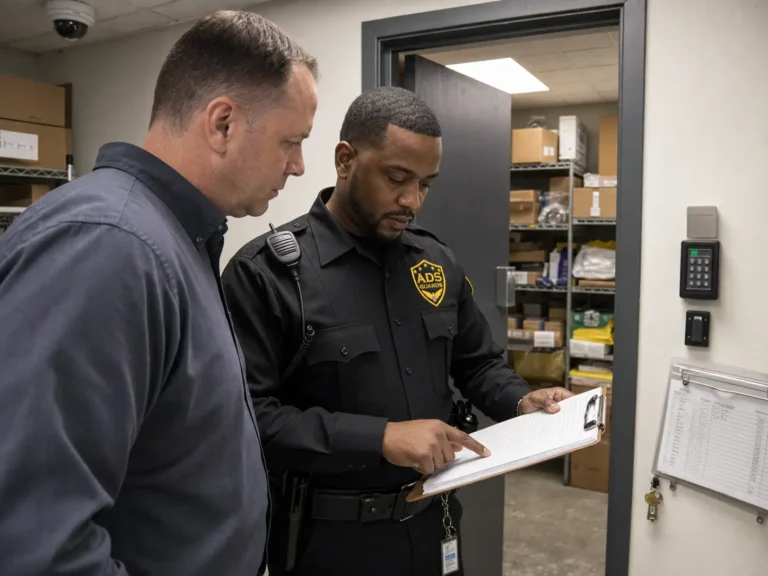

California Security Guard Laws Business Owners Ignore (and Why It Could Cost You Big)

Understanding the Basics: What Security Guard Laws Actually Say

Let’s be real, most business owners in California have no idea how many rules exist about hiring security guards. You’d think it’s as simple as calling a guy with a uniform and a flashlight, right? Nope. In the Golden State, security is serious business, and the government treats it that way.
Who Regulates Security Guards in California?
Meet your new pen pal: the Bureau of Security and Investigative Services (BSIS). They’re the folks under the California Department of Consumer Affairs who handle licensing, background checks, training, and all things “guard-y.” If someone is working security without their blessing, it’s technically illegal.
What’s the Role of BSIS?
BSIS basically ensures that guards aren’t just anyone who “looks tough.” They manage certifications, verify training, and track disciplinary actions. Translation? They keep the wannabe mall cops in check and the real pros in business.
Licensed vs. Unlicensed Guards – What’s the Difference?
A licensed guard has a Guard Card, which proves they’ve passed background checks and training. An unlicensed guard? They’re walking legal liabilities in cargo pants. If your business hires one, you’re essentially saying, “Hey, I love lawsuits.”
Common Legal Mistakes Business Owners Make

Now, here’s where most people mess up, not because they’re bad employers, but because California’s rules read like they were written by a caffeine-deprived lawyer (spoiler: they were).
Hiring Unlicensed Security Guards (Yep, That’s Illegal)
Some business owners think, “He used to work in security, close enough.” Nope. Without a Guard Card from BSIS, that’s illegal. You can get fined, and if something goes wrong, you could be on the hook.
“Independent Contractor” Myth – Why It Doesn’t Fly with BSIS
Another classic mistake: calling guards “independent contractors” to dodge payroll taxes. The BSIS sees right through that faster than you can say “1099.” Security guards must be employees under most conditions – period.
Ignoring Training and Certification Requirements
Every guard needs at least 40 hours of state-approved training. Armed guards? Even more. Skipping this step is like hiring a lifeguard who can’t swim, looks fine until something goes wrong.
Skipping Background Checks and Fingerprinting
Every guard must be fingerprinted and cleared through the California Department of Justice (DOJ). Skipping this? Big no-no. If your guard ends up being someone with a criminal record, congratulations, you’ve just hired your own lawsuit.
California’s Must-Know Compliance Rules for Employers

Here’s your cheat sheet to staying on the right side of the law.
The Guard Card Requirement Explained
Every security guard needs a BSIS Guard Card, no exceptions. It proves they’ve been trained and cleared to work security in California. Always ask to see it. No card, no hire.
Firearms Permit and Baton Training Rules
If your guards are armed, they need additional permits. Firearms Permits require psychological evaluations and extra training hours. Baton permits? Separate class, separate certification. (Yes, even the stick needs paperwork.)
Uniform and Badge Regulations (Yes, They’re Specific)
California actually regulates uniforms too. Guards can’t look like cops, so no badges, patches, or “law enforcement” vibes. It’s meant to prevent confusion (and probably a few bruised egos).
Legal Liabilities That Can Blow Up in Your Face

When Your Guard Breaks the Law – You Pay Too
If a guard oversteps, uses excessive force, detains someone illegally, or breaks a law, your business could be held liable. “But I didn’t tell him to!” won’t cut it in court.
Insurance Gaps Most Businesses Miss
Most business owners assume their general liability policy covers security incidents. It often doesn’t. You need specialized security liability coverage to stay protected.
How to Stay on the Right Side of Security Law

Okay, so now that you know what not to do, let’s talk about how to keep your business out of the courtroom and off BSIS’s naughty list.
Vetting Security Companies the Smart Way
Before you hire a security company, don’t just take their word for it that they’re “licensed and insured.”
Do this instead:
- Look them up on the official BSIS license search page (Google it, it’s public).
- Verify their Private Patrol Operator (PPO) license.
- Ask for proof of insurance and Guard Cards for every employee they assign to your site.
If a company hesitates or says, “We’ll get that later,” run. Fast.
Keeping Compliance Records and Audit Trails
BSIS can conduct audits or investigations anytime. Keep a simple binder (or digital folder) with:
- Copies of every guard’s license and training certificate
- A signed contract with your security vendor
- Incident reports and insurance documents
You don’t need to go full corporate lawyer, just stay organized enough that, if anyone ever asks, you can show proof you’re doing things right.
Setting Up a Security Policy That Protects You
Even if you outsource your guards, you’re still responsible for what happens on your property.
Set up a clear security operations policy, something that covers:
- Use-of-force limits
- Reporting procedures
- How guards should handle trespassers, theft, or fights
That policy doesn’t just protect you legally, it also makes sure everyone’s playing by the same rules.
Real-World Examples: When Businesses Got Burned

Because sometimes, you have to see how bad it can get to really care.
The “Mall Brawl” Case – A Costly Oversight
A shopping center in Southern California hired an unlicensed guard through a “friend of a friend.” When that guard tackled a customer during a dispute, the mall got hit with a $350,000 settlement.
Why? The guard had no certification, no training, and no authority to detain anyone. The owners said, “We didn’t know.” The court said, “Too bad.”
The Small Bar That Lost Its License Over a Fake Guard
A bar in Los Angeles hired a “security guy” who turned out to be a bouncer with a fake Guard Card. When a fight broke out, he pepper-sprayed half the bar. The Alcohol Beverage Control (ABC) board stepped in and suspended the bar’s liquor license for negligence.
One fake badge cost them thousands in lost revenue. Ouch.
Expert Tips for Business Owners (Without the Legalese)

You don’t need to become a lawyer, just follow these quick, sanity-saving tips.
Quick Checklist: Are You Compliant?
✓ Every guard has a valid BSIS Guard Card
✓ Armed guards have separate firearm/baton permits
✓ You’ve verified your security vendor’s PPO license
✓ You keep records of training, insurance, and incidents
✓ Your guards know your on-site policies
If you can check off all five, you’re already ahead of most California businesses.
When to Call a Lawyer vs. When to DIY
- Call a lawyer if you’re setting up your own security team or hiring directly.
- DIY it (with some diligence) if you’re contracting a licensed security company, just verify everything in writing.
Think of it this way: an hour with a lawyer now can save you months of court drama later.
FAQs About California Security Guard Laws
1. Do all security guards in California need a Guard Card?
Yes. Every single one. No Guard Card = illegal. You can verify one instantly on the BSIS website.
2. Can I hire an “independent contractor” to do security work?
Not in most cases. BSIS and California labor laws classify guards as employees under security companies, not freelancers.
3. What’s the penalty for hiring unlicensed guards?
Fines can range from $5,000 to $10,000 per violation, plus potential criminal charges if it’s a pattern.
4. Can security guards carry guns or batons?
Only with additional permits. They must complete BSIS-approved training and maintain their weapon permits separately.
5. Does my general business insurance cover security incidents?
Usually not. You’ll need specific security or liability coverage, talk to your insurance provider.
6. How often do Guard Cards expire?
Every two years, and they must be renewed with ongoing training hours (8 hours annually). No renewal = no legal work.
Conclusion: Don’t Let a $50 Mistake Turn Into a $50,000 Problem

Here’s the deal: most California business owners ignore security guard laws until something goes wrong.
But with a little awareness, you can protect your business from fines, lawsuits, and serious reputation damage.
Remember, compliance isn’t just about avoiding penalties. It’s about keeping your customers, employees, and property safe the right way.
And hey, that’s worth more than any shortcut.
External Resource:
If you want to check licenses or learn more straight from the source, visit the official California BSIS website – it’s free, fast, and keeps you out of trouble.
✓ Pro Tip: Bookmark this guide or share it with other local business owners, because odds are, they’re ignoring these laws too.