Workplace Theft Prevention That Does Not Turn Your Business Into a Lockdown
Workplace theft prevention usually starts with something small and annoying.
A cash drawer is short again. A few tools disappear. Inventory counts are off, but nobody can explain why. Someone keeps using the wrong door after hours. None of it feels big enough to panic over, so it gets brushed off.
Then it keeps happening.
That is where most businesses get burned. Workplace theft is rarely one dramatic moment. A lot of it is boring, repeated, and easy to miss when the business has loose access, weak inventory habits, messy cash handling, or no clear way to report suspicious activity.
The fix is not to treat every employee like a suspect. That creates a miserable workplace, and it still does not solve much. Better workplace theft prevention comes from simple controls that make theft harder to hide and easier to catch early.
Why workplace theft happens
Employee theft in the workplace can happen for a lot of reasons. Sometimes it is opportunity. Sometimes it is poor supervision. Sometimes an employee is angry, struggling financially, or used to a workplace where nobody checks anything closely.
But from a business owner’s point of view, the “why” only gets you so far. The more useful question is where your setup makes theft too easy.
A few common weak spots:
- Too many people have access to stockrooms, cash areas, offices, or equipment.
- Inventory only gets checked when something is already missing.
- Cash drawers use shared codes.
- Refunds and discounts do not need approval.
- Cameras exist, but nobody checks angles, blind spots, or footage access.
- Visitors, vendors, and employees move around without much tracking.
- Employees do not know how to report theft, or they worry it will turn into workplace drama.
Good internal controls help reduce misuse of assets and keep procedures consistent. The IRS has a plain explanation of internal controls if you want the dry version. The everyday version is simpler: make the right thing easy, make the wrong thing harder, and keep records that tell the story when something feels off.
Signs of employee theft worth watching
One missing item does not prove anything. One shortage does not mean someone stole. Jumping straight to accusations is a good way to create a bigger mess.
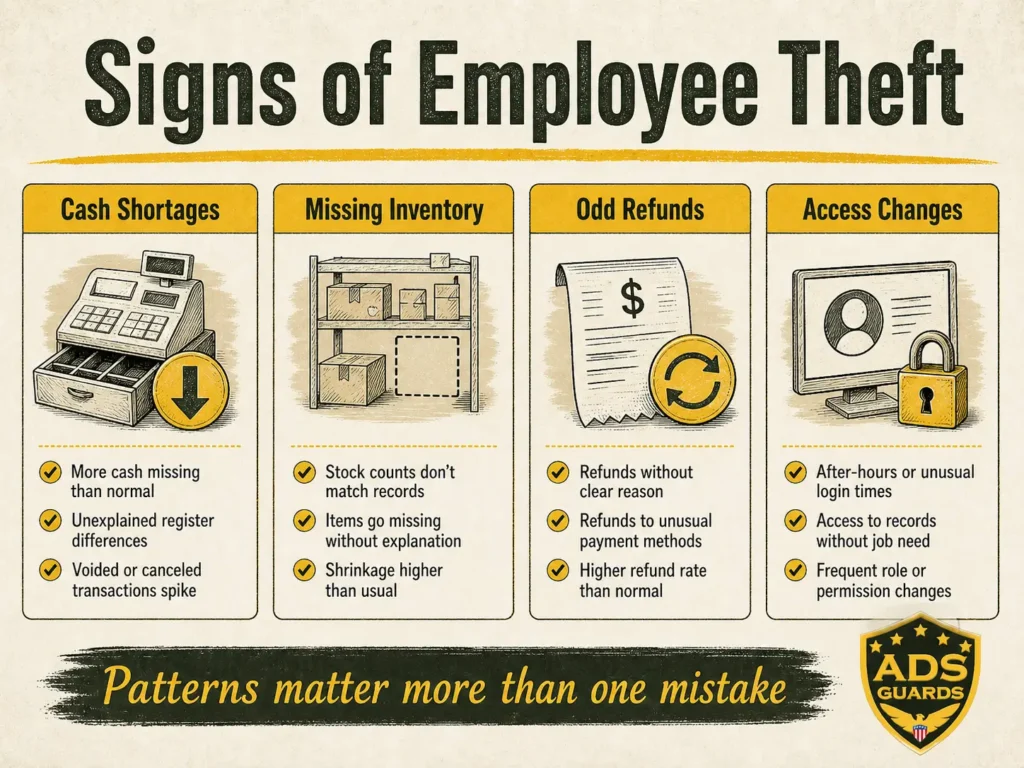
Patterns matter more.
Watch for:
- Repeated cash shortages tied to the same shift, register, or employee
- Inventory that keeps disappearing from the same area
- Odd refunds, voids, discounts, or manual overrides
- Employees who do not want anyone else checking their work
- Missing keys, badges, uniforms, tools, devices, or access cards
- Staff entering restricted areas without a clear reason
- Trash runs at strange times or through the wrong exit
- Vendors or visitors on site without proper logs
- Cameras blocked, unplugged, or pointed away from useful areas
- A sudden change in behavior around audits, counts, or shift handoffs
The trick is to document before acting. Pull logs. Check schedules. Review footage if your policy allows it. Compare inventory records. Talk to HR or legal counsel when the situation is serious. You want facts, not office gossip with a spreadsheet attached.
Start with access control
Access control is one of the easiest ways to prevent employee theft because it limits opportunity.
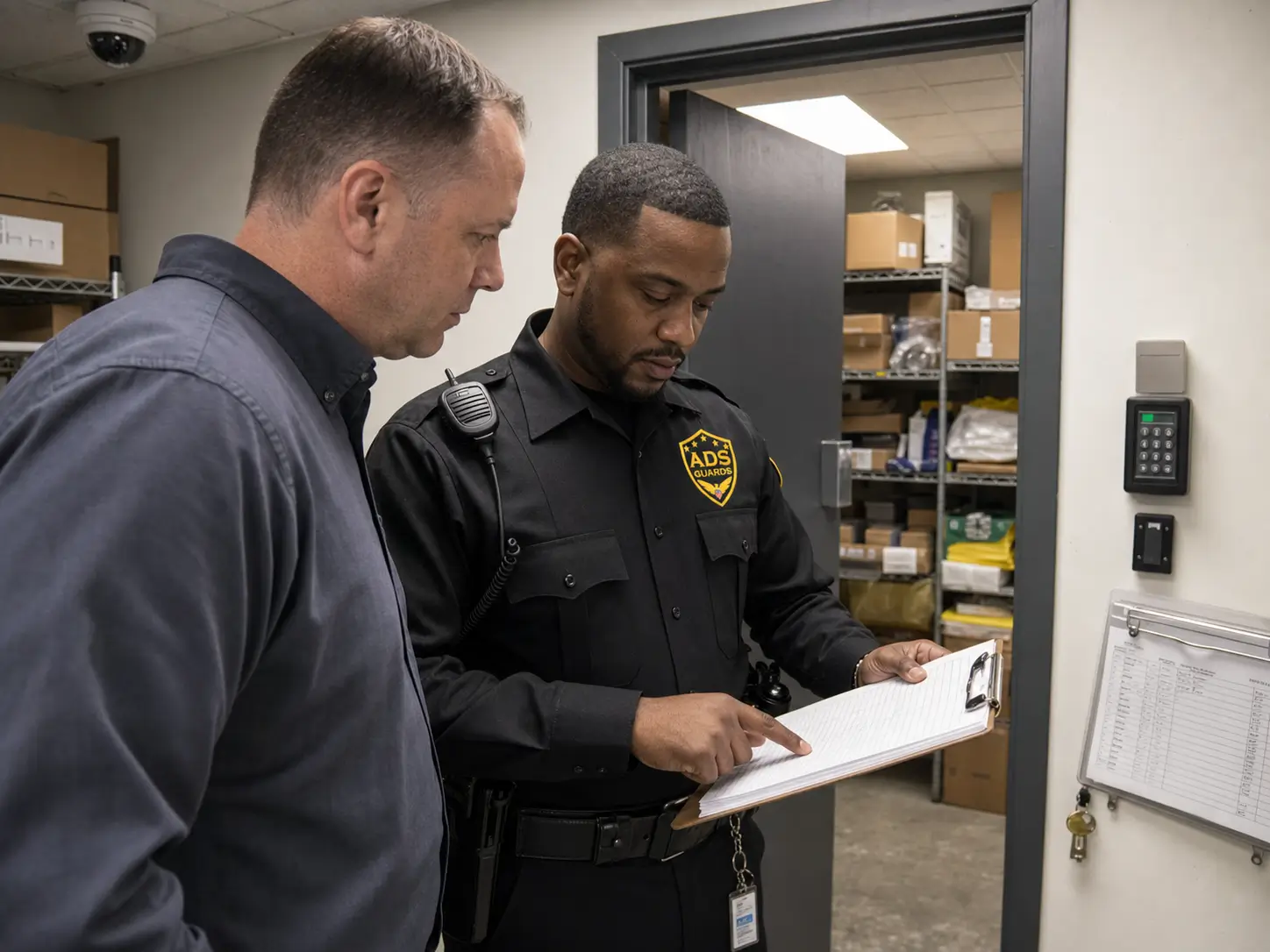
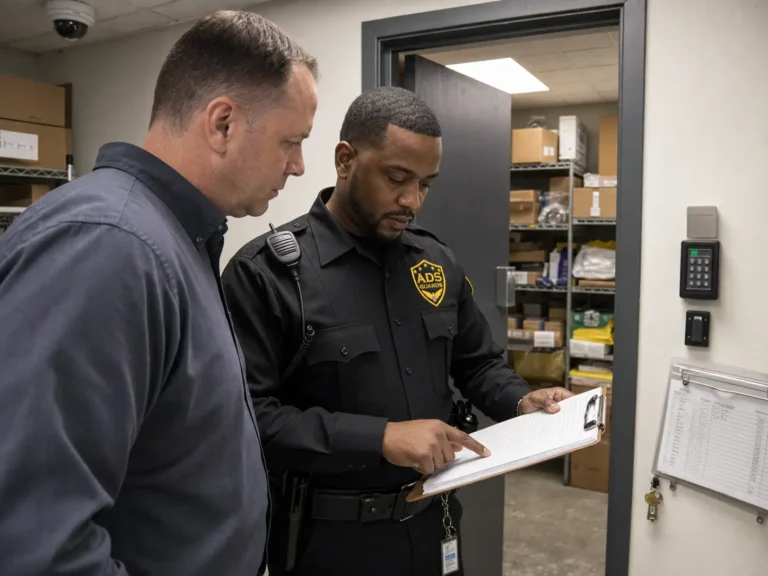
Not everyone needs every key. Not every employee needs badge access to every room. Not every vendor should be able to walk through back areas because someone at the front was busy.
Start with the places where theft would hurt most:
- Cash rooms
- Stockrooms
- Tool cages
- IT rooms
- Offices with files, devices, or sensitive records
- Loading docks
- Back entrances
- Supply rooms
- Parking areas with company vehicles or equipment
Then ask a blunt question: who truly needs access?
Use badges, fobs, keys, PINs, or sign-in logs based on the site. Remove access fast when employees leave. Stop using shared codes that never change. Review access lists on a schedule, not only after something goes missing.
For businesses that need help tightening entry points, our commercial security services can include access control, camera systems, alarm support, patrol planning, and security consulting.
Inventory checks should be boring on purpose
Inventory theft prevention does not mean counting every paperclip. It means knowing which items are most likely to disappear and checking those items often enough to catch problems early.
Every business has different risk items.
For retail, it might be small, expensive merchandise. For offices, it might be laptops, tablets, keys, access cards, and supplies. For warehouses, it might be tools, pallets, electronics, copper, fuel cards, or anything easy to move out the door.
A cleaner inventory process usually includes:
- A starting count for high-risk items
- Regular spot checks
- A log for who removed items and why
- Two-person checks for sensitive inventory
- Delivery records matched against purchase orders
- Clear rules for damaged, returned, discarded, or transferred items
Do not save inventory checks for the annual count where everyone suddenly discovers three months of losses. Smaller checks are less dramatic, which is exactly the point.
Cash handling needs rules people can follow
Cash theft gets easier when one person controls too much of the process.
If the same employee can run the register, approve refunds, process discounts, count the drawer, and prepare the deposit with no review, the business is relying on trust alone. Trust is good. Trust plus a process is better.
A stronger cash handling setup may include:
- Unique register logins
- Manager approval for refunds and voids
- Written steps for discounts and price changes
- Daily drawer reconciliation
- Two-person cash counts when possible
- Deposit logs
- Separate duties for counting, approving, and depositing
- A clear process for shortages and overages
This is not only about catching theft. It also protects good employees from being blamed for a sloppy system.
Cameras help when someone thinks through the setup
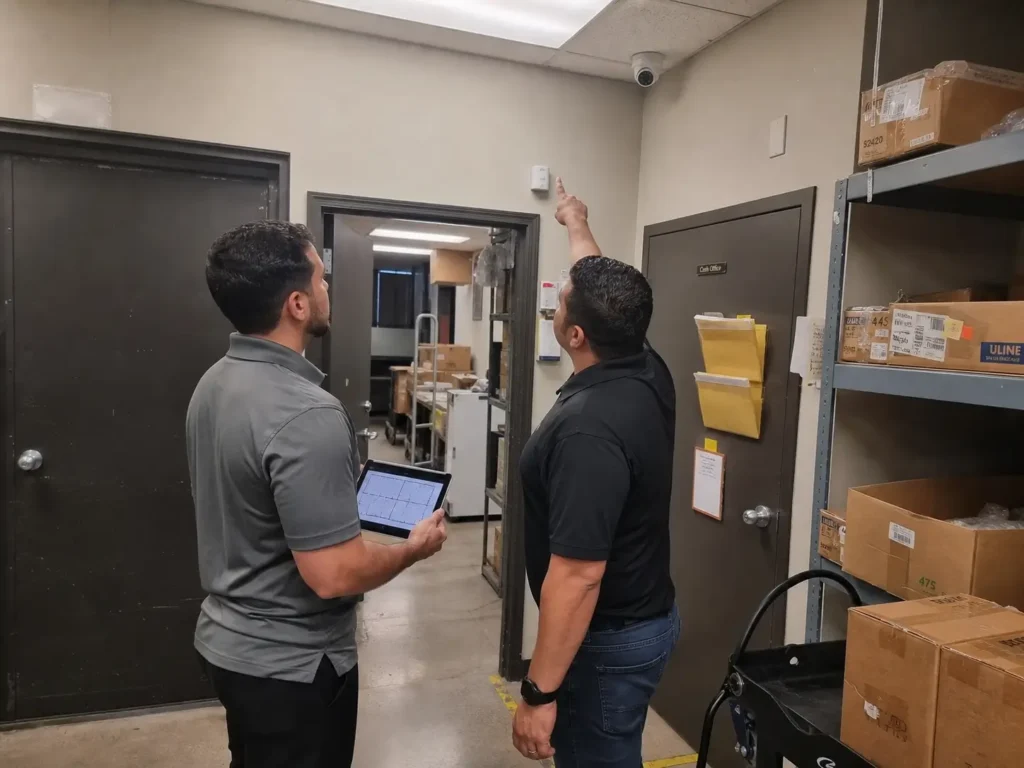
Security cameras are useful, but they are not magic.
A camera over a register should actually show the register. A camera near a stockroom should cover the entry point, not a blank wall. A camera system should have footage retention rules, access limits, and someone responsible for reviewing video when there is a problem.
Good camera locations often include:
- Main entrances and exits
- Registers and cash handling areas
- Stockrooms
- Loading docks
- Delivery areas
- Hallways near restricted rooms
- Parking lots
- Back doors
Also think about who can access the footage. Camera systems collect sensitive information. Access should not be casual. The FTC’s case involving Ring is a useful reminder that video access needs safeguards, not just a login. You can read the case summary on camera access and privacy concerns.
Our physical security assessment checklist is a good next step if you want to look at cameras, blind spots, lighting, access points, and response procedures in one pass.
Monitor visitors and employees without making it weird
Visitor and employee monitoring should feel normal, not creepy.
You want to know who is on site, where they are supposed to be, and whether they leave when they are supposed to leave. That is reasonable for offices, warehouses, retail properties, construction sites, and commercial buildings.
For visitors and vendors, use:
- Sign-in logs
- Temporary badges or passes
- Escort rules for restricted areas
- Delivery check-in procedures
- Vendor access limits
- After-hours entry rules
For employees, use:
- Badge access records
- Key and equipment checkout logs
- Shift handoff notes
- Restricted-area rules
- Camera coverage in business areas
- Clear reporting steps
The important part is consistency. If the rules only show up when someone is under suspicion, they feel personal. If everyone follows the same process, it becomes part of how the workplace runs.
Security guards add the human layer
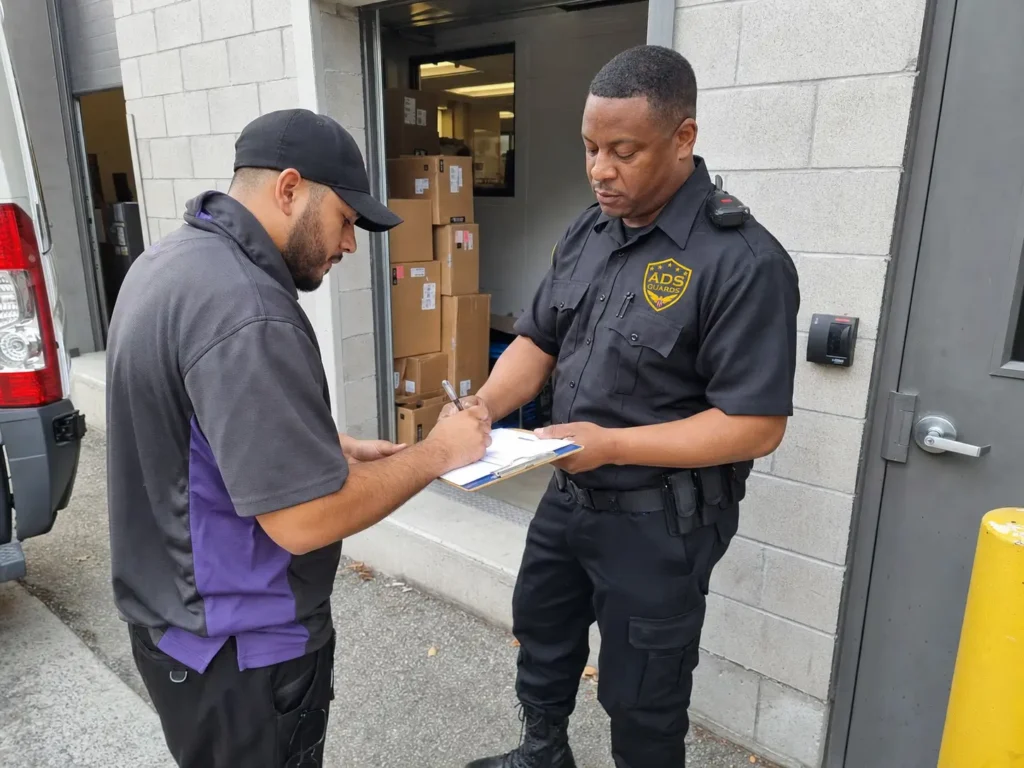
Locks restrict. Cameras record. Logs track.
Security guards can notice, ask, respond, and document.
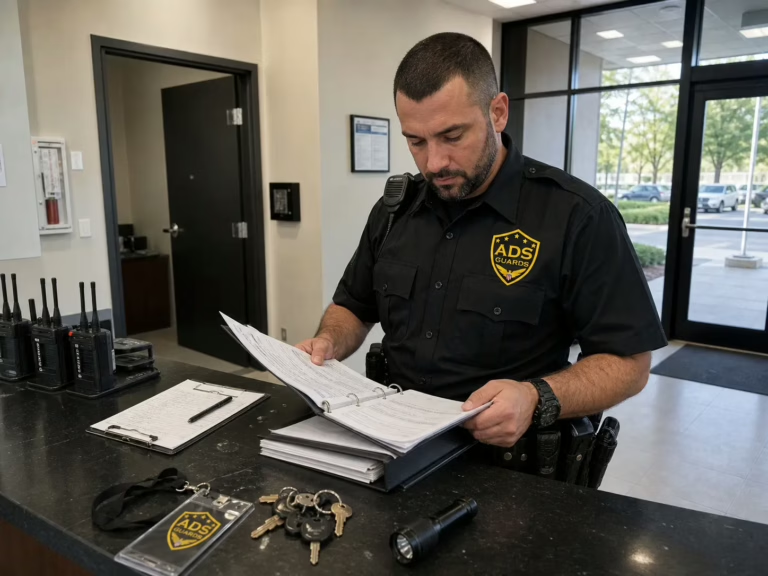
That matters when your workplace theft risk involves people moving through the property all day: employees, visitors, vendors, delivery drivers, contractors, customers, and trespassers. A guard can monitor entrances, check badges, patrol loading areas, watch parking lots, respond to suspicious behavior, and write incident reports that are actually useful later.
For office buildings and commercial properties, our office building security services can support access control, patrols, cameras, alarm response, and front desk procedures.
Retail properties have a different kind of chaos. Tenants, shoppers, employees, service corridors, deliveries, parking lots, and after-hours activity all overlap. Our shopping center security guards can help with patrols, access control, monitoring, and loss prevention support.
Some sites do not need a guard posted all day. They need checks at the right times. In that case, mobile patrol security can help with after-hours checks, parking lot patrols, lockups, alarm response, and random patrol times.
Incident reporting should be easy
If reporting theft is awkward, unclear, or risky for the person reporting it, people stay quiet.
A good incident reporting process tells employees what to do before they are stressed. It should answer:
- Who receives the report?
- What details should be included?
- How fast should it be submitted?
- What photos, footage, receipts, or logs should be attached?
- Who reviews the report?
- What happens if the report involves a supervisor?
- How does the company protect good-faith reporting?
OSHA recommends incident investigation because it helps employers find root causes and fix unsafe conditions. The same thinking works for theft. Do not only ask who did it. Ask what made it possible. Their guidance on incident investigation is written for safety, but the process mindset still applies.
If your site uses guards, good reporting gets even more important. Our guide to security guard incident reports explains what a useful report should include. Pair that with clear security guard post orders so guards know what to check, what to log, and when to escalate.
Write an employee theft policy people can understand
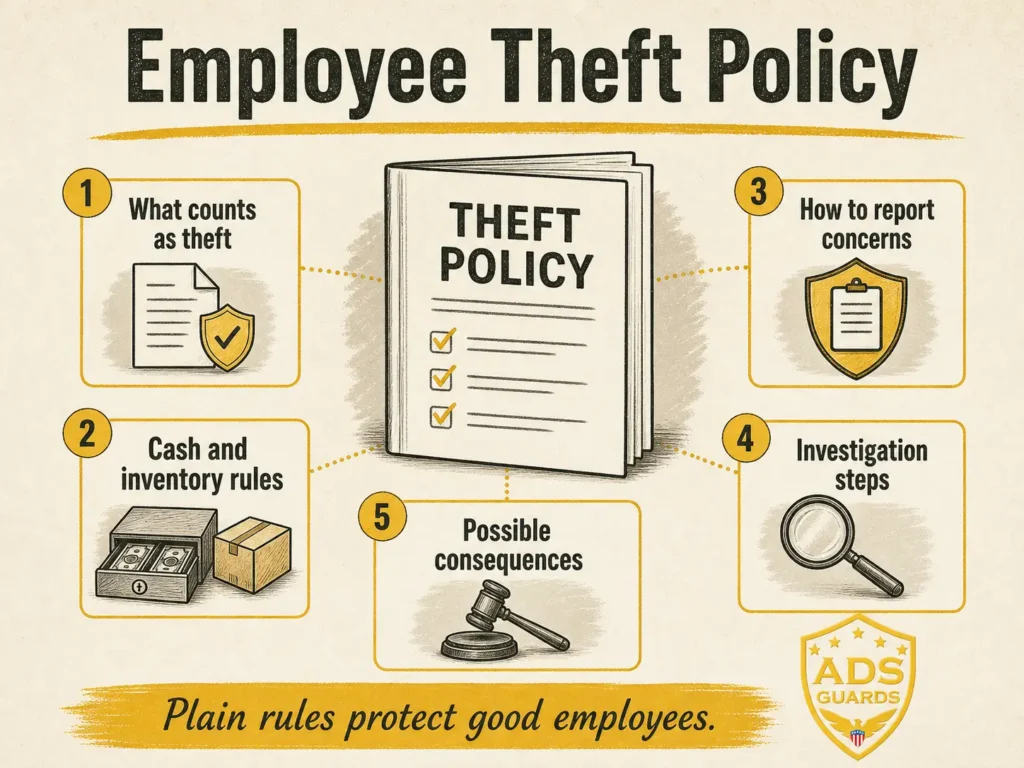
An employee theft policy should not sound like a legal threat taped to the break room wall.
It should be clear. Plain. Easy to follow.
A strong policy usually covers:
- What counts as theft
- Rules for cash, refunds, discounts, tips, and deposits
- Rules for inventory, tools, supplies, keys, badges, uniforms, and equipment
- Access control expectations
- Visitor and vendor procedures
- Camera and monitoring notice where legally appropriate
- How employees can report suspected theft
- What happens after a report
- Protection for good-faith reporting
- Investigation steps
- Possible discipline
- When law enforcement may be contacted
Have HR or an employment attorney review the policy, especially if your business operates in California or across multiple states. Searches, surveillance, privacy, discipline, wage deductions, and reporting rules can vary. A policy that sounds tough but causes legal problems is not helpful.
How to stop employee theft before it becomes a pattern
Trying to fix everything at once usually leads to a giant document nobody follows.
Start smaller.
Pick the three areas where theft would hurt most. Maybe it is cash, inventory, and back-door access. Maybe it is tools, parking lots, and after-hours entry. Once you know the weak spots, build simple controls around them.
A practical first pass might look like this:
- Limit access to sensitive areas.
- Count high-risk inventory more often.
- Require approval for refunds and voids.
- Review camera placement.
- Track visitors and vendors.
- Create a simple reporting process.
- Update the employee theft policy.
- Bring in security guards or patrols if the property needs eyes on site.
The goal is not perfection. The goal is fewer gaps.
Need a second set of eyes on your site?

If theft keeps showing up in the same places, the issue is usually bigger than one person. It might be access, camera placement, inventory checks, visitor flow, or after-hours activity.
Our team can walk the property, spot the gaps, and help you decide whether guards, patrols, better reporting, or tighter access control makes the most sense. Start with our commercial security services or use the physical security assessment checklist to review the basics first.
FAQ
What is workplace theft prevention?
Workplace theft prevention is the process of reducing theft risk through access control, inventory checks, cash handling rules, cameras, visitor logs, employee monitoring, incident reporting, security guards, and clear policies.
What are common signs of employee theft?
Common signs include repeated cash shortages, missing inventory, unusual refunds or voids, employees entering restricted areas without a reason, missing tools or supplies, blocked cameras, and patterns tied to certain shifts or locations.
How can a business prevent employee theft without accusing people?
Use consistent rules instead of suspicion. Track inventory, limit access, separate cash duties, review records, require approvals, and document incidents. Apply the same process to everyone.
Do cameras prevent employee theft?
Cameras can help, but they work best with access control, inventory checks, reporting, and regular review. A camera system should cover high-risk areas and limit who can access footage.
What should an employee theft policy include?
An employee theft policy should explain what counts as theft, how employees should handle cash and inventory, how suspected theft gets reported, what the investigation process looks like, and what consequences may apply.
Can security guards help with internal theft prevention?
Yes. Security guards can monitor entrances, patrol high-risk areas, check badges, watch loading zones, respond to suspicious activity, and document incidents. They are especially useful when theft risk involves people moving through the property.
Final thoughts
Workplace theft prevention works best when it is simple enough for people to follow every day.
Lock down the right areas. Count the items that matter. Clean up cash handling. Put cameras where they can actually help. Track visitors and vendors. Make reporting easy. Write an employee theft policy that normal people can understand.
And when the property needs more than locks and cameras, add trained guards or mobile patrols. A visible, alert security presence can catch small problems before they turn into expensive ones.