

How to Create a Workplace Violence Prevention Plan for Your Business
Most businesses don’t think they need a workplace violence prevention plan… until a “small” incident turns into a very big problem. And no, this isn’t just a big-corporate issue. Any business can deal with threats, harassment, fights, angry customers, or aggressive behavior. OSHA’s workplace violence resources make it clear this is a real hazard across many settings.
This guide walks you through a simple, step-by-step approach to workplace violence prevention, with a free template you can plug into your business and customize.
Workplace violence can happen anywhere (not just “big corporate”)

Workplace violence isn’t always headline-level chaos. Sometimes it looks like:
- A customer threatening staff over a return
- A heated argument that becomes physical
- A former employee coming back to “talk” (and refusing to leave)
- Harassment, intimidation, stalking, or repeated threats
- Someone wandering into employee-only areas like it’s a public park
If you’re thinking, “Okay… that sounds like Tuesday,” that’s exactly why having a plan matters.
What Is a Workplace Violence Prevention Plan?

A workplace violence prevention plan is a written plan that helps you:
- Identify risks before they become incidents
- Prevent problems through policy, training, and physical security
- Respond properly when something happens
- Document incidents so you can improve (and protect your business)
OSHA describes prevention programs as a way to evaluate hazards and implement controls (the boring-sounding stuff that prevents the scary stuff).
What it includes (and what it’s not)
It includes:
- A reporting procedure
- A workplace violence policy (simple, clear rules)
- Emergency response steps
- Training for employees and supervisors
- A workplace violence risk assessment process
- Recordkeeping and follow-up
It’s not:
- A 40-page binder that nobody reads
- A “HR problem” only
- Something you write once and forget forever
Free download: Workplace Violence Prevention Plan Template
To make this easy, here’s a free resource you can use while you build your plan:
If you’re in California, Cal/OSHA also provides a model workplace violence prevention plan template for general industry employers, which can be a useful reference when building your own
Why Every Business Needs a Workplace Violence Prevention Plan
This isn’t about being dramatic. It’s about being prepared.
Employee safety in the workplace
Your team should feel safe doing their job, period. A clear plan helps employees know what to do, what to report, and how to get help fast.
Customer safety + liability reduction
Incidents don’t just hurt people, they create liability, reputational damage, and messy “who did what” arguments later. A plan reduces risk by setting clear procedures and documenting response.
Faster response + stronger culture
When people know the process, things move faster:
- Who calls police
- Who handles the crowd
- Who documents
- Who supports the employees afterward
That builds a calmer workplace culture and improves workplace safety and security overall.
California note (important): If you operate in California, SB 553 (Labor Code 6401.9) made workplace violence prevention planning mandatory for most employers starting July 1, 2024.
Common Workplace Violence Risks Businesses Overlook

This is where your workplace violence risk assessment earns its paycheck.
Here are common risks businesses miss because they seem “normal”:
- Angry customers (especially at closing time)
- Terminated employees returning onsite
- poor access control (anyone can walk in)
- Isolated work areas (staff alone in back rooms, yards, loading docks)
- No clear reporting process (“tell your manager” isn’t a system)
- Lack of training (“just be careful” isn’t training)
- No defined response plan (everyone improvises under stress)
Workplace violence risk assessment: what to look for
A simple way to assess risk is to review people, place, and process:
People risks
- Customer-facing conflict
- Cash handling
- Late-night work
- Staffing shortages (employees working alone)
- High turnover or tense workplace dynamics
Place risks
- Blind spots (inside and outside)
- Poorly lit parking lots
- Unsecured side doors
- Open access to employee-only areas
- Limited visibility at reception/lobbies
Process risks
- Unclear reporting
- Inconsistent enforcement
- No incident logs
- No training
- No post-incident follow-up
How to Create a Workplace Violence Prevention Plan

Here’s the practical “how to prevent workplace violence” part, without turning this into a textbook.
1) Identify potential threats (risk assessment)
Start with a walkthrough:
- Entrances and exits
- Parking areas
- Reception/lobby
- Back offices, stock rooms, loading docks
- Any “alone work” zones
Ask:
- Where could someone enter unnoticed?
- Where could an employee get cornered?
- Where would a problem escalate before anyone sees it?
If you want a simple walkthrough approach for doors, lighting, cameras, and perimeter weak spots, check out our guide on keeping your business safe and successful.
2) Create a clear reporting procedure
Your reporting system should be simple enough that people actually use it.
Define:
- Who employees report to
- How they report (phone, form, app, email)
- What should be reported (threats, harassment, suspicious behavior, escalating conflict)
- What happens next (who reviews, how quickly, what’s documented)
3) Set a zero-tolerance policy
A workplace violence policy should be short and blunt:
- No threats
- No harassment
- No intimidation
- No physical violence
- No weapons on site (unless explicitly authorized)
Also define consequences and escalation steps. People behave better when boundaries are clear.
4) Define emergency response steps
Create a simple “if this, then that” flow:
- Immediate threat / violence: call 911
- Aggressive behavior escalating: notify manager/security, create distance, keep others safe
- Trespasser refusing to leave: call security/law enforcement as appropriate
- Medical emergency: call 911, provide first aid, document
Assign roles:
- Who calls
- Who guides employees/customers away
- Who locks doors
- Who documents
5) Train employees and supervisors
Training shouldn’t be a one-time slideshow nobody remembers.
Train on:
- Early warning signs (escalation cues, threats, stalking behavior)
- De-escalation basics (tone, distance, exits, not arguing)
- How to report and what details matter
- When to disengage and call for help
OSHA highlights training and program elements as part of prevention efforts.
6) Review and update the plan regularly
Plans expire when reality changes:
- New layout
- New staffing pattern
- New hours
- New risks
- A near-miss incident
At minimum, review it on a schedule, and immediately after any incident.
Workplace Security Measures That Support Violence Prevention
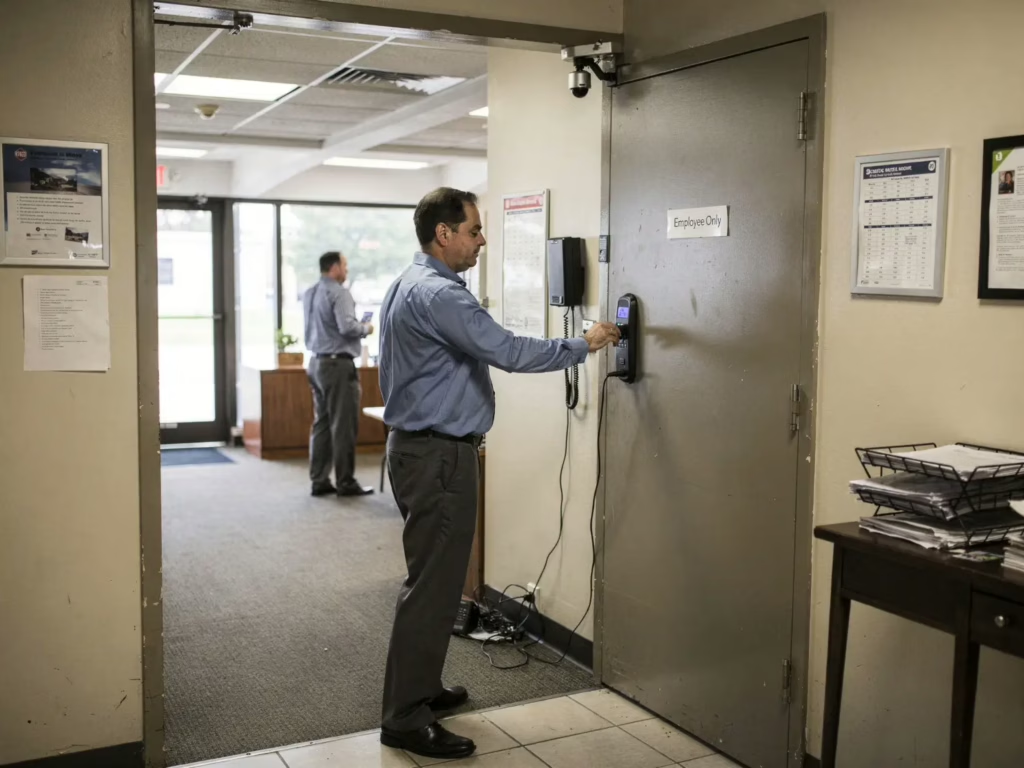
A workplace violence prevention plan works best when it’s backed by a real workplace security plan, meaning physical measures that help prevent and manage incidents.
Access control + visitor management
- Controlled entry points
- Visitor sign-in / badges
- Restricted areas clearly marked and enforced
- Consistent ID checks where appropriate (if you want a clean policy approach, see Can Security Guards Check IDs Legally in California?)
Cameras, monitoring, and panic buttons
- Cameras that actually cover entrances, lots, and high-risk areas
- Real-time monitoring (not just recording) where needed
- Panic buttons in reception / cash areas
If you’re exploring tech-backed coverage, Remote Security Monitoring Services pairs well with onsite security.
Lighting + layout tweaks
- Eliminate dark corners outside
- Improve visibility at reception
- Reduce “trap zones” where someone can get cornered
This is often the cheapest upgrade with the biggest payoff.
Incident reporting systems
- Simple reporting forms
- Logs for threats/harassment
- Documentation standards
This improves preventing violence in the workplace because patterns become visible early.
How Security Guards Help Prevent Workplace Violence

Security guards don’t replace policy and training, they support it.
Visible deterrence + calm de-escalation
A professional guard presence reduces the odds of someone trying something “bold.” More importantly, trained security can step in early, before a situation turns physical.
Security helps with prevention in real ways, deterrence, quicker response, and better documentation all add up.
Handling trespassers and policy enforcement
A big part of prevention is keeping the wrong people out:
- Former employees returning
- Aggressive individuals who were previously warned
- Unauthorized visitors entering restricted areas
Compliance matters here, because the wrong response can create liability fast. If you want the plain-English version, read Why Hiring a Licensed Security Company Is the Smartest Move You’ll Make and California security guard laws business owners ignore.
Faster incident response + better documentation
When something happens, speed and documentation matter:
- Quick response
- Clear communication with management and law enforcement
- Incident reports with timestamps and witness notes
If you’re hiring outside help, make sure the company has real supervision and reporting standards, not just a guard on a schedule (our checklist here helps: how to choose a security guard company)
Download the Workplace Violence Prevention Plan Template

If you want the fast track, use the template and customize it to your business:
Want a second set of eyes on your workplace security plan?

Most businesses miss things because they’re used to their environment. What feels “normal” to you can look like a security gap to an outside assessor.
If you want help building a workplace security plan that supports your prevention policy, Security guards, patrol strategy, access control, monitoring, and reporting, American Discount Security (A.D.S.) can review your site and recommend coverage that matches your risk level.
Next steps, depending on your business:
- Commercial Security for day-to-day coverage
- Office Buildings / Offices for access control and front-desk presence
- Unarmed Security & Armed Security based on risk
- Mobile Patrol Security for after-hours checks
And when you’re ready, the simplest path is your Contact Us page.
Final Thoughts
Every business should have a workplace violence prevention plan, and the best ones combine policy, training, and real physical security. OSHA and Cal/OSHA resources consistently point toward prevention programs, hazard assessment, and clear procedures as the backbone. (OSHA)
You don’t need a perfect plan. You need a plan people understand, can follow under stress, and can improve over time.
And if you want it easier: grab the template, customize it, and build from there.