6 CPTED Principles for Safer Commercial Properties
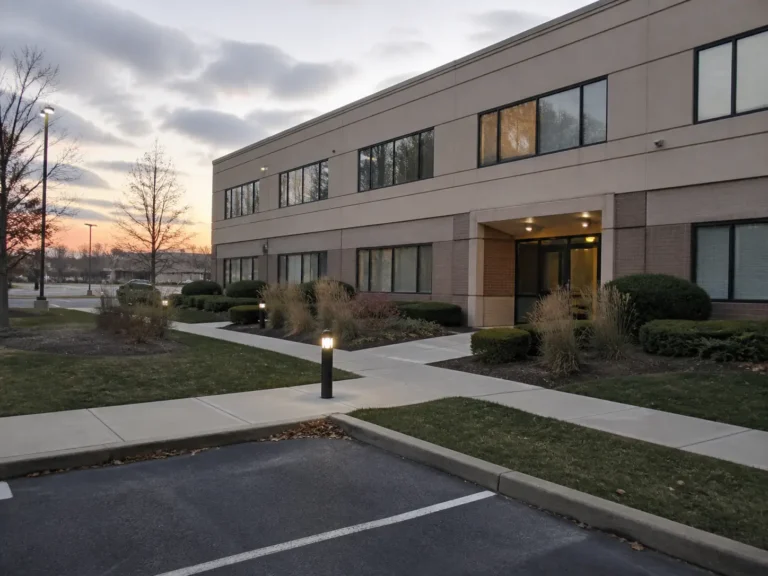
A property can have cameras, alarms, and sturdy locks and still make life surprisingly easy for the wrong person. A hedge blocks the view of a side door. Visitors can wander past reception without anyone noticing. The loading area is dark, and nobody is quite sure where the public space ends.
CPTED principles address those problems through the way a property is designed and managed. Shape the environment well and normal activity becomes easier to see. Visitors know where to go. A person who is somewhere they should not be stands out sooner.
What are CPTED principles?
CPTED stands for Crime Prevention Through Environmental Design, usually pronounced “sep-ted.” It is a practical approach to reducing opportunities for crime through building layout, landscaping, lighting, access routes, maintenance, and the way people use a space.
The National Institute of Justice describes CPTED as a combination of physical design, management, community involvement, and human behavior. Fences and equipment are only part of it.
Different agencies group CPTED strategies in slightly different ways. For a commercial property, six principles make a useful working model:
- Natural surveillance
- Natural access control
- Territorial reinforcement
- Activity support
- Maintenance
- Target hardening
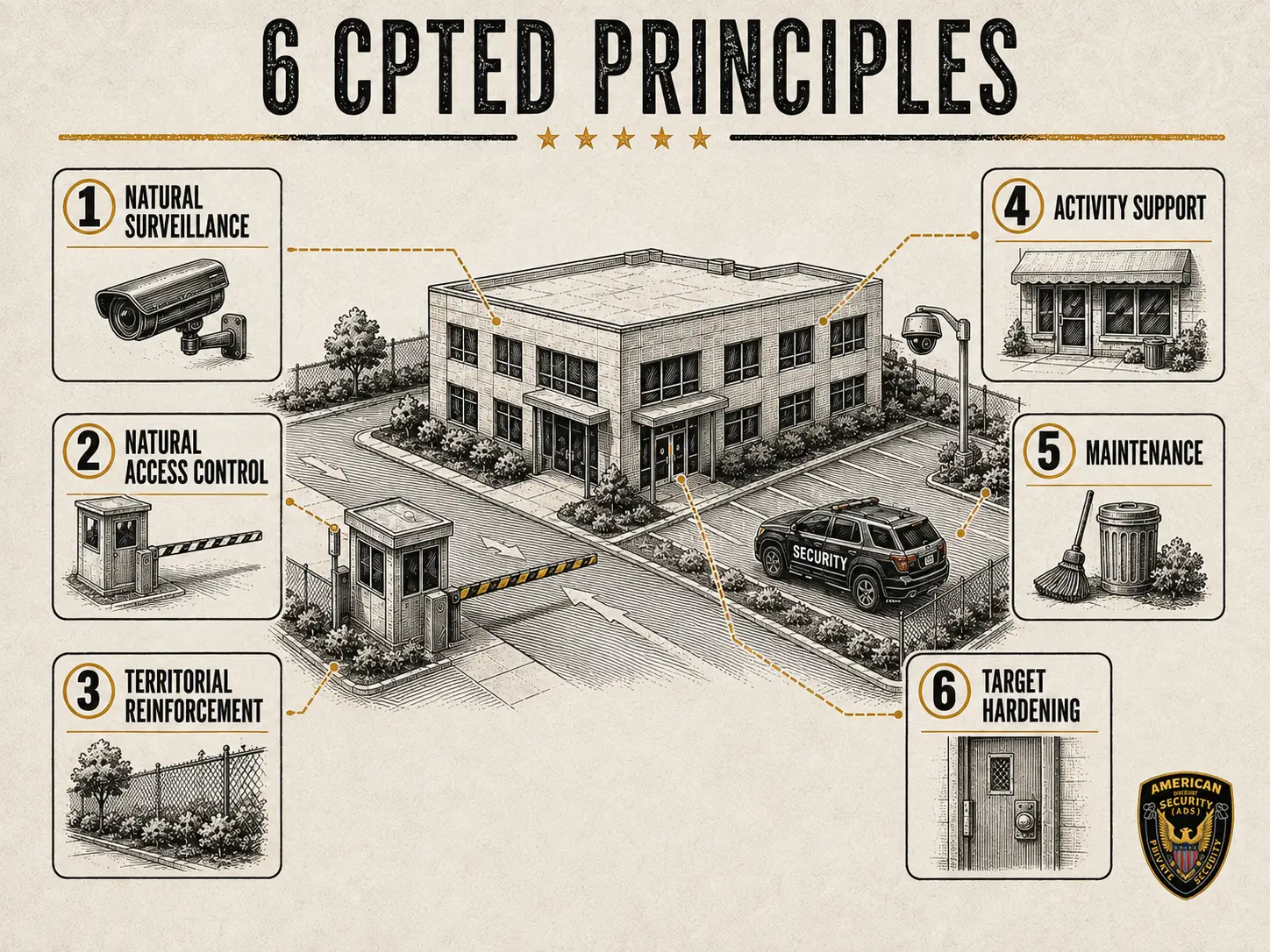
The categories overlap. One repaired light may improve visibility and help a night patrol do its job.
1. Natural surveillance
Natural surveillance means arranging a property so people can see what is happening around them. Clear sightlines make legitimate users feel more comfortable and give someone with bad intentions fewer hidden places to work.
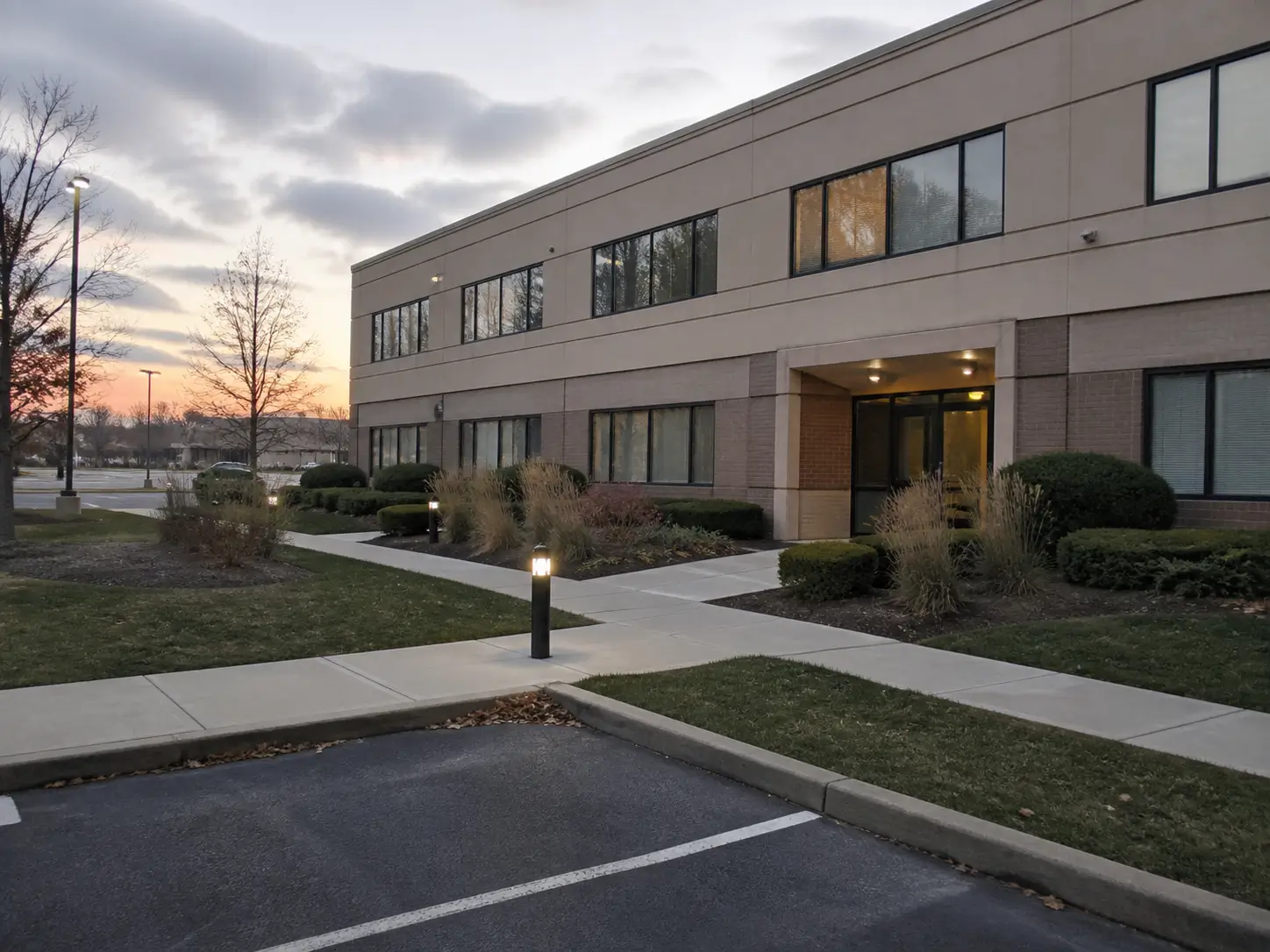
Walk the property during business hours and again after dark. Look from the lobby desk, employee entrances, parking spaces, loading docks, stairwells, and sidewalks. You may find that a camera, window, or guard station technically covers an area but a tree, sign, delivery vehicle, or deep shadow blocks the useful view.
Common improvements include:
- Trimming shrubs near doors and walkways
- Keeping tree canopies above eye level where appropriate
- Moving displays that block a cashier’s view of an entrance
- Using lighting that reveals faces and paths without harsh glare
- Placing windows or staffed desks where they overlook active areas
- Adjusting camera positions when landscaping or property use changes
Our guide on where to place security cameras can help when poor camera coverage is part of the issue.
2. Natural access control
Good access control guides people toward the correct entrance and away from places where they have no reason to be. It can be subtle. A walkway, reception desk, planter, gate, or change in pavement may direct movement without making the property feel closed off.
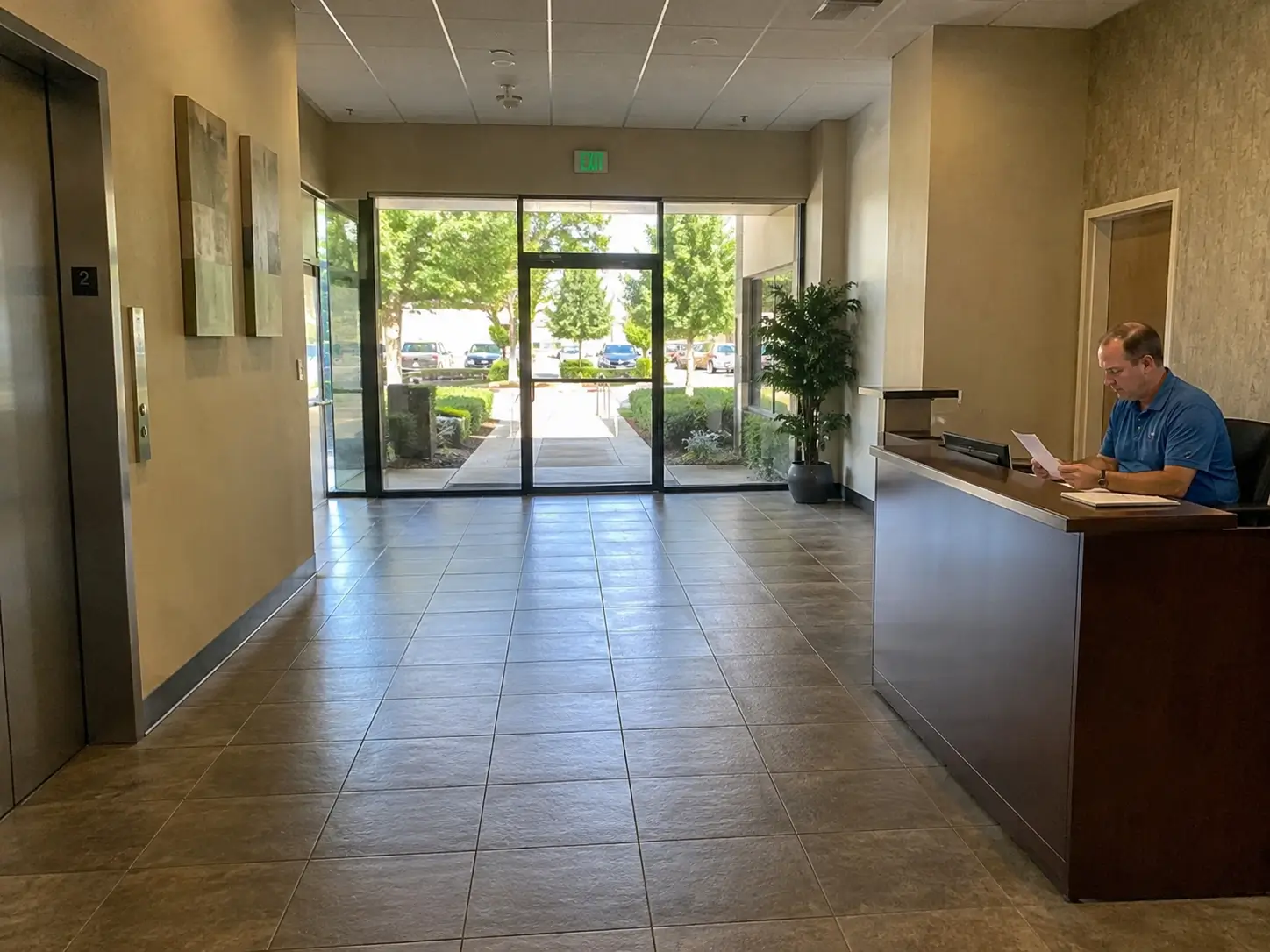
Start by tracing the route for employees, customers, vendors, delivery drivers, and contractors. Each group may need a different path. Problems appear when those paths cross restricted areas or when an unofficial shortcut becomes easier than the intended entrance.
Check for:
- Side doors that are routinely propped open
- Delivery routes that pass employee-only rooms
- Gates that can be walked around
- Unmarked visitor entrances
- Reception areas that are easy to bypass
- Doors that do not close or latch reliably
- Confusing signs that send people to the wrong place
The correct route should be obvious before someone has to ask. When a person moves against that normal flow, staff have a reason to pay attention.
3. Territorial reinforcement
People tend to protect spaces they recognize as their own. Territorial reinforcement makes ownership and responsibility visible through design.
A customer should be able to tell the difference between a public lobby, a tenant area, an employee corridor, and a restricted equipment yard. Staff should know which areas they are expected to watch and who handles a problem there.
Property lines do not always need tall fences. Low walls, landscaping, pavement changes, signs, and seating can show where one zone ends and another begins. The City of Saint Paul’s CPTED guidance gives practical examples such as plants, bollards, paving treatments, and directional signs.
This part falls apart when nobody owns the details. If every tenant assumes the property manager checks the rear alley, or every shift leaves a damaged gate for the next one to report, the neat line on the site plan does not help much.
4. Activity support
An empty space is not automatically dangerous, but unused areas often receive less attention. Activity support places normal, legitimate activity where it improves visibility and informal oversight.
For example, a break area facing a quiet courtyard can bring regular eyes to that part of the property. A waiting area placed near reception is easier to supervise than chairs scattered down an isolated hallway. Visitor parking near an attended entrance is easier to manage than unmarked spaces beside a loading dock.
There is no need to fill every corner with people. Look at where people already spend time, where they never go, and whether that pattern helps anyone notice trouble.
Be careful not to create new conflicts. A bench that adds activity may also block a walkway. A smoking area beside an emergency exit may lead to a propped door. Each change should be reviewed in the context of how the property actually operates.
5. Maintenance
Maintenance is the boring CPTED principle, right up until a burned-out light or broken latch becomes part of an incident report.
Broken lights, faded signs, damaged fencing, overgrown plants, and doors that never quite latch create practical security gaps.
A simple maintenance routine should cover:
- Exterior and parking lot lighting
- Door hardware, locks, and closers
- Fences, gates, and bollards
- Directional and warning signs
- Landscaping around paths and windows
- Camera views and protective housings
- Graffiti, dumped items, and abandoned vehicles
Assign each issue to a person and a deadline. “Facilities knows about it” is not a repair process.
Parking areas deserve special attention because problems with lighting, landscaping, traffic flow, and access often collect there. Use our parking lot safety checklist for a closer inspection.
6. Target hardening
Target hardening adds physical resistance where the risk justifies it. Locks, gates, shutters, reinforced doors, alarms, access cards, security film, and barriers all fit here.
Use the right amount. Too little protection leaves obvious vulnerabilities. Too much can interfere with emergency exits, accessibility, customer experience, or everyday work. It may simply push the problem toward a weaker entrance.
Prioritize controls based on the asset, the threat, and the likely consequence. A cash office, pharmacy storage room, server room, and public restroom do not need identical protection. Neither do a daytime storefront and a vacant construction site after hours.
Physical barriers also work better when someone monitors and maintains them. A gate does little if staff routinely leave it open. An alarm loses value when employees ignore repeated false alerts. Target hardening should support the other CPTED principles, not replace them.
How to apply CPTED at an existing property
You do not need a renovation budget to get started. A careful walk-through will usually find a few cheap, obvious fixes.
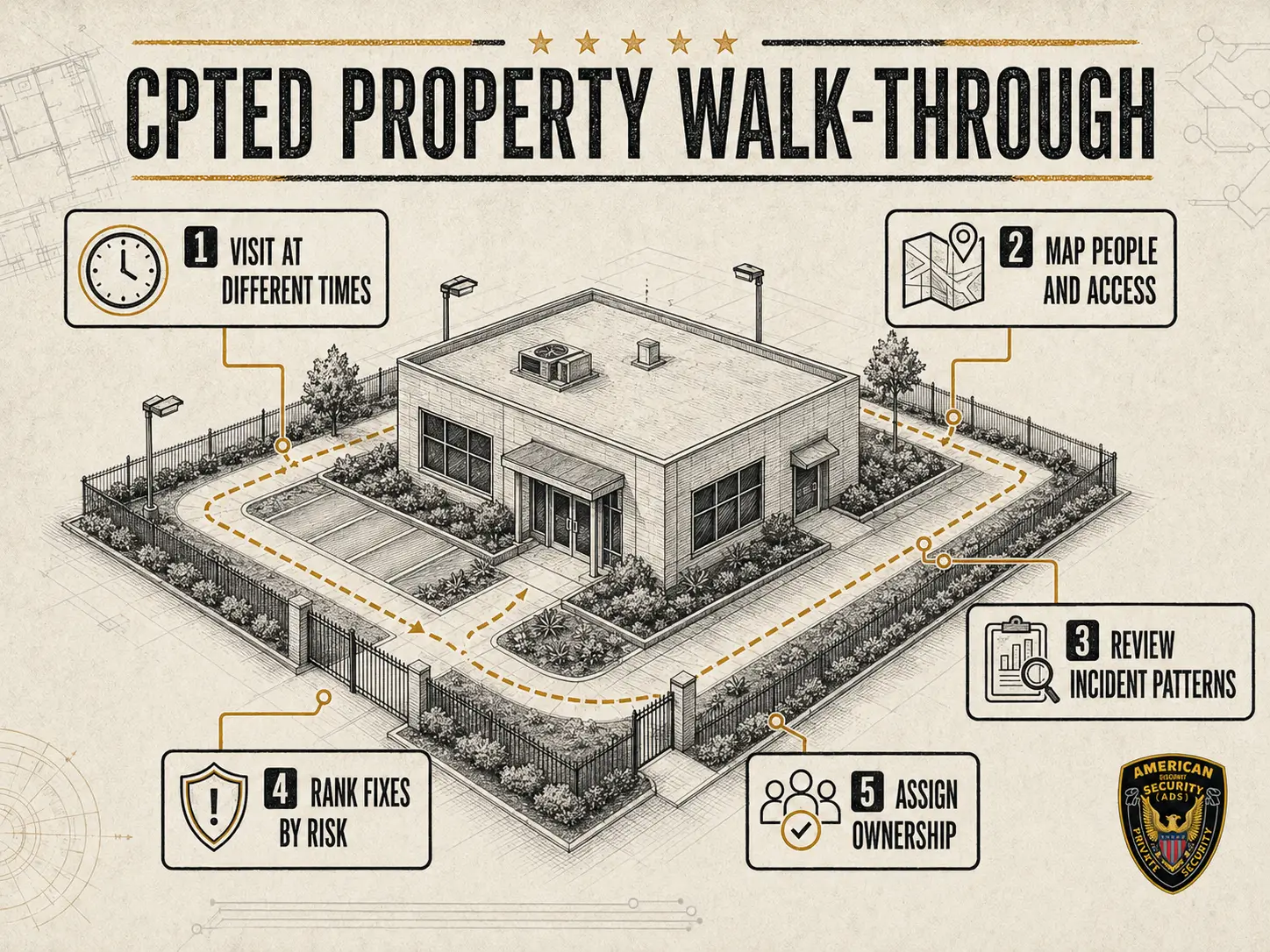
Walk the site at different times
Visit during opening, closing, shift changes, deliveries, and after dark. A safe-looking front entrance at noon may have poor visibility when only one employee remains on site.
Map people and access points
List who enters, where they enter, where they should go, and which areas need restrictions. Include vendors, cleaners, maintenance crews, temporary workers, and emergency responders.
Review recent incidents and near misses
Look for patterns rather than treating every event as random. Repeated trespassing near one gate, theft beside one exit, or employee complaints about one walkway can point to a design or management problem.
Rank fixes by risk and effort
Some improvements take an afternoon. Trim a shrub, replace a sign, repair a door closer, or move a display. Other work needs a budget and coordination. Deal with urgent life-safety and access problems first, then put the larger jobs on a real schedule.
Give someone ownership
Set inspection intervals and assign responsibility. The same site should be checked after construction, tenant changes, landscaping work, an incident, or a change in operating hours.
A broader physical security assessment checklist can help you review risks that extend beyond the property layout.
Where security guards fit into CPTED
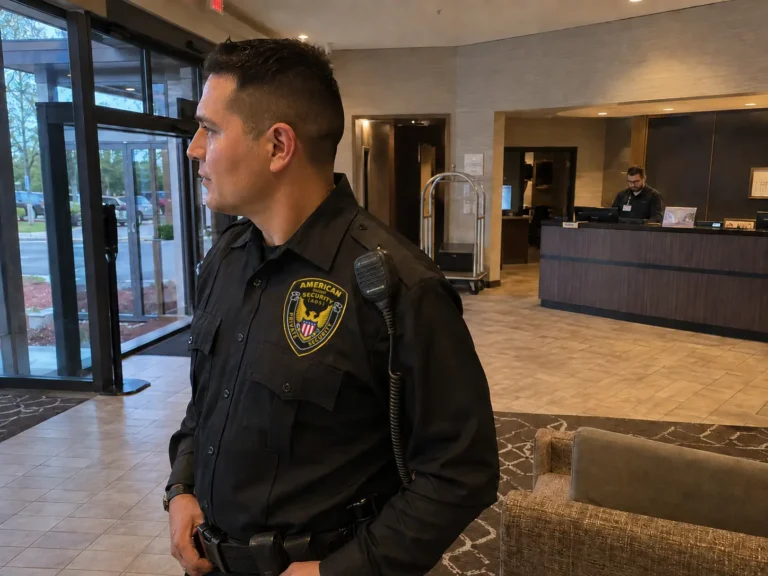
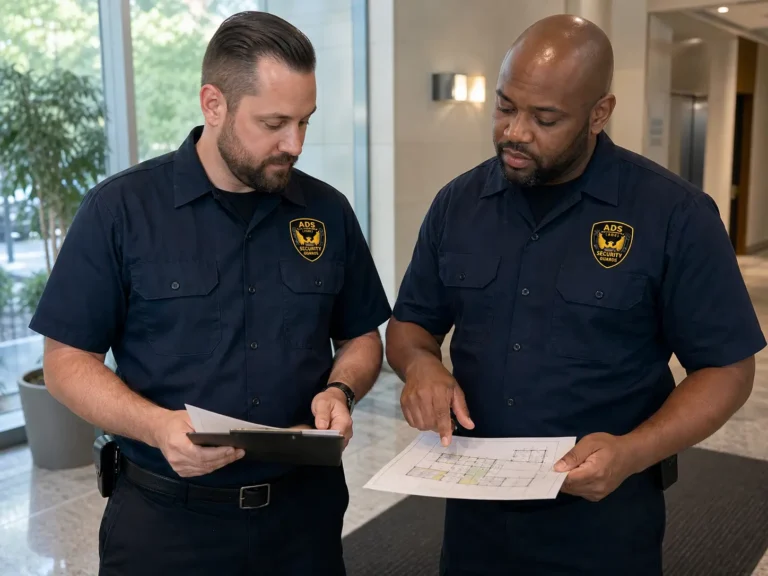
CPTED does not replace guards, cameras, alarms, or good procedures. It gives them a better environment to work in.
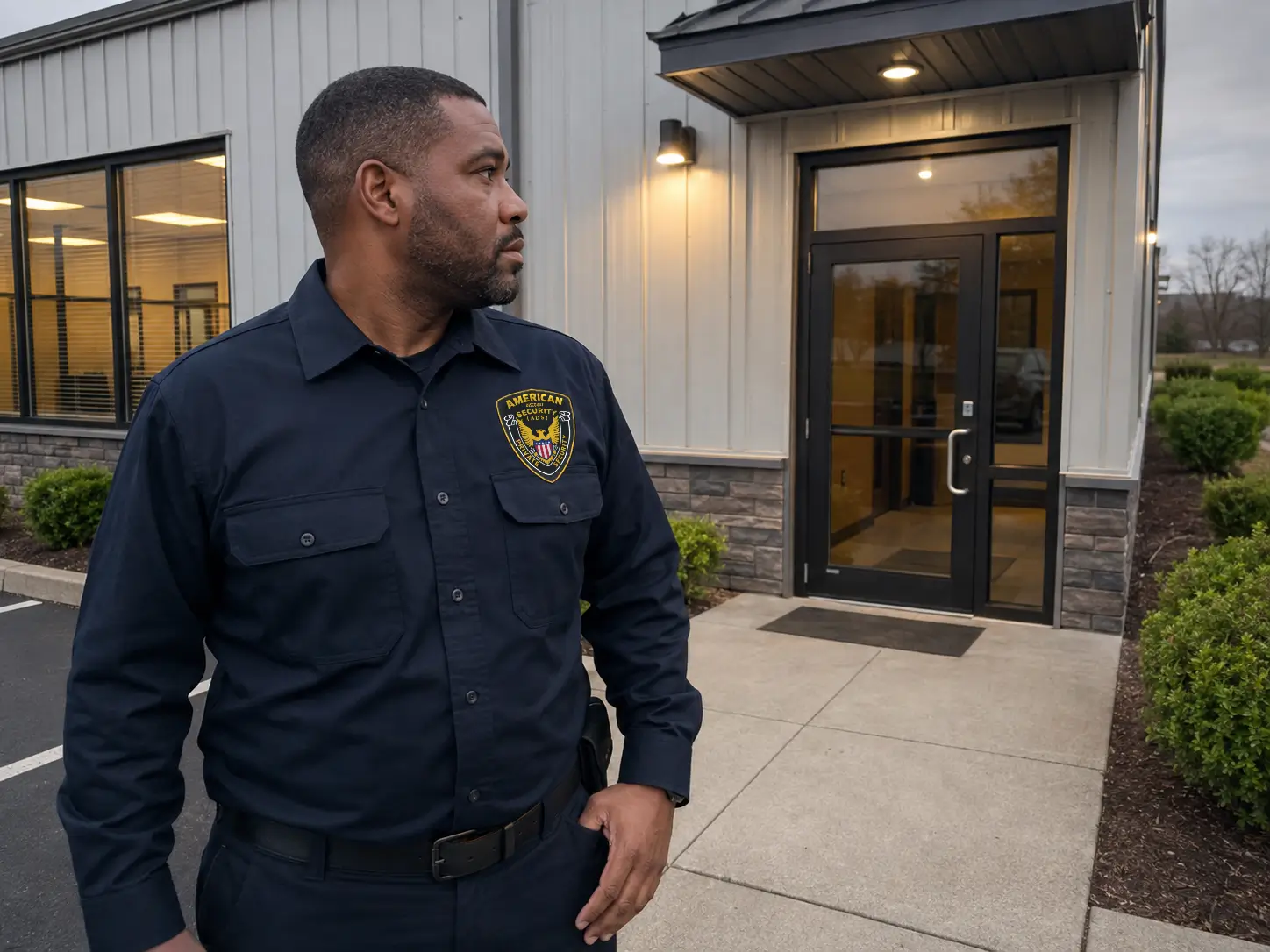
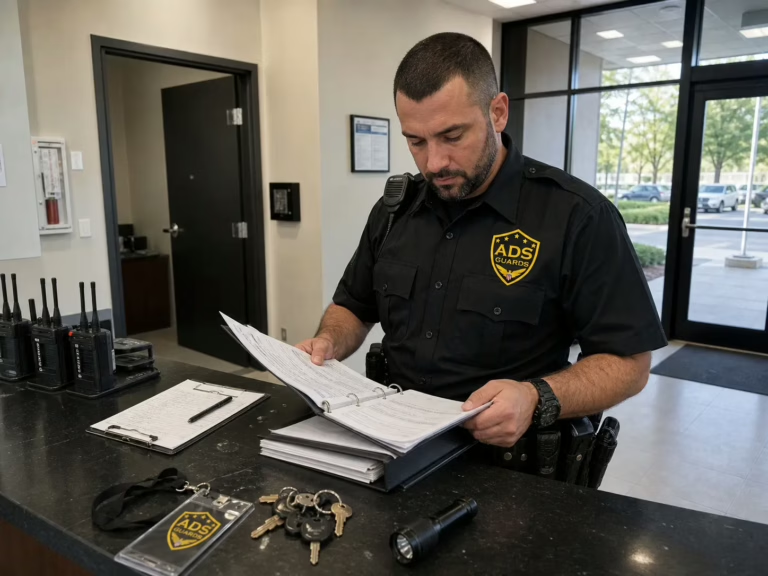
A guard can see more when landscaping and lighting preserve sightlines. Patrol routes are more useful when restricted zones are clearly marked. Access rules are easier to enforce when visitors naturally arrive at one staffed entrance. Incident reports become more actionable when the property team can connect recurring activity to a particular gate, stairwell, or time of day.
For properties with wide grounds, parking areas, or recurring after-hours problems, mobile patrol security can add a visible, documented presence to the controls already in place. Our commercial security services can also combine access control, surveillance, patrols, and site-specific procedures around the risks found during a property review.
FAQ
What does CPTED stand for?
CPTED stands for Crime Prevention Through Environmental Design. It uses property design, maintenance, access patterns, and legitimate activity to reduce opportunities for crime and make unusual behavior easier to notice.
What are the main CPTED principles?
The core ideas are natural surveillance, natural access control, and territorial reinforcement. Many practical models also include activity support, maintenance, and target hardening. The labels vary, but the purpose stays the same: make spaces easier to use correctly and harder to misuse.
Does CPTED require expensive construction?
Not always. Trimming landscaping, repairing lights, improving signs, moving a reception desk, clarifying visitor routes, and fixing door hardware may address meaningful gaps. Larger changes can be prioritized after a risk assessment.
Can CPTED prevent every crime?
No. It can reduce opportunities and help people notice suspicious activity sooner, but it is still one layer of a broader security plan.
How often should a business review its CPTED measures?
Review them at least annually and whenever the property, tenants, operating hours, landscaping, or access procedures change. A new incident or repeated near miss is also a good reason to inspect the site again.
Final thoughts
CPTED principles are most useful when they move off the planning document and into the property. Clear sightlines, sensible entrances, visible boundaries, active spaces, consistent maintenance, and proportionate barriers can close gaps that expensive equipment alone may miss.
Start with one walk-through after dark. Follow the route a visitor takes, check what an employee can see, and note every place where the property becomes confusing or hidden. Those small observations usually reveal the first fixes worth making.