
Where to Place Security Cameras for Better Business Coverage

A security camera can have sharp video, night vision, and every smart feature available. None of that helps much when it is aimed at a blank wall, blocked by a tree, or mounted so high that every person looks like the top of a baseball cap.
When deciding where to place security cameras, focus on what you need to see during an actual incident. That could be a face at an entrance, a vehicle entering a parking lot, someone approaching a side gate, or activity near a register.
Good security camera placement is less about adding cameras everywhere and more about giving each camera a clear job.
Start with the job each camera needs to do
Before drilling holes or running cables, decide what you want each camera to capture.
A camera may be used to:
- Detect someone entering an area
- Observe activity across a wider space
- Recognize a familiar person or vehicle
- Capture enough detail to help identify someone
One camera rarely does all four jobs equally well. A wide camera can show the whole parking lot, but a person at the far end may appear too small to identify. A tighter camera at an entrance can capture a face clearly, but it will not cover the entire property.
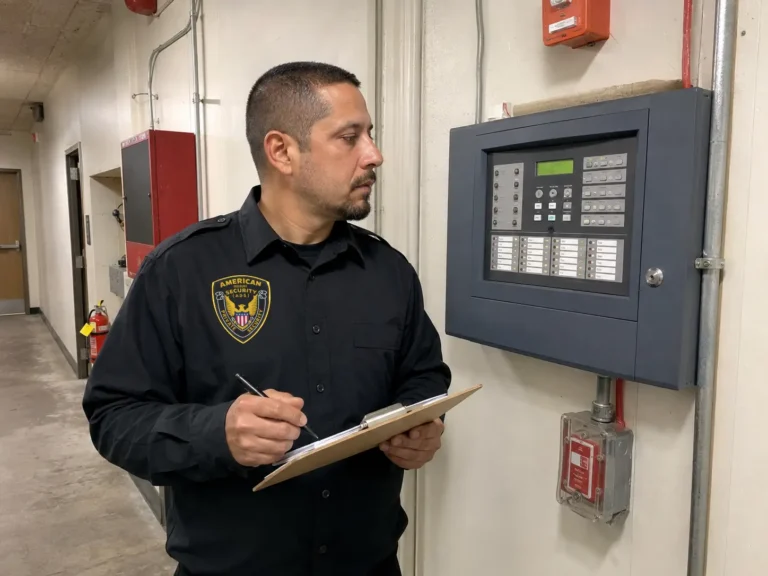
This is why a quick property walkthrough helps. Our physical security assessment checklist can help you map entrances, lighting problems, restricted areas, and existing security camera blind spots before you choose mounting locations.
Where to place security cameras around a home or business

The best security camera placement depends on how people enter, move through, and leave the property.
| Area | Recommended placement | What the camera should capture |
|---|---|---|
| Main entrance | Above or beside the entrance, angled toward approaching visitors | Faces, packages, and entry activity |
| Side and rear doors | Facing the approach to the door | People before they reach the handle |
| Driveway or vehicle entrance | Angled across the driveway rather than straight down | Vehicles, direction of travel, and activity near parked cars |
| Parking lot | Overlooking entrances, walkways, payment areas, and problem zones | Vehicle movement and pedestrian activity |
| Loading dock | Covering dock doors, delivery lanes, and staging areas | Deliveries, vehicles, and after-hours access |
| Cash handling area | Positioned to show the counter and transaction area | Activity around the register without exposing PIN entry |
| Hallway or stairwell | Looking along the travel path | Movement between areas |
| Stockroom or equipment room | Covering the doorway and nearby access route | Who enters and exits |
| Side gate or alley | Facing the approach and latch area | Trespassing and unauthorized access |
Main entrances
Front entrances deserve priority because almost everyone uses them. Position the camera so it captures people as they approach, not after they have already walked underneath it.
Avoid an extreme overhead angle. You may get a perfect view of someone’s hair and almost nothing useful about their face.
For homes, a doorbell camera can cover the immediate doorway while a second camera watches the porch, walkway, or driveway. For businesses, one wider camera can show the entrance area while a tighter camera records people crossing the threshold.
Side doors, back doors, and gates
Side and rear entrances are easy to forget because they receive less normal traffic. That can also make them attractive access points for trespassing or theft.
Aim the camera toward the route someone would use to reach the door. A camera pointed straight down at the doorway may record the final few seconds of an approach but miss where the person came from.
Check service doors, fire exits, fenced gates, alley entrances, and doors hidden by landscaping.
Driveways and parking lots
Outdoor security camera placement should follow the way vehicles and pedestrians move through the property.
For a driveway, angle the camera across the expected path. Many motion sensors respond more reliably when a person or vehicle moves across the security camera field of view instead of coming directly toward the lens. Arlo’s camera placement guidance also recommends positioning cameras so side-to-side traffic crosses the field of view.
Parking lots usually need more than one view. Cover vehicle entrances, pedestrian walkways, building doors, payment areas, and corners where visibility drops after dark. Our guide to parking lot safety for businesses and employees covers lighting, patrols, landscaping, and other issues that affect camera performance.
Registers, stockrooms, and loading areas
For businesses, cameras should watch the places where cash, inventory, equipment, and deliveries change hands.
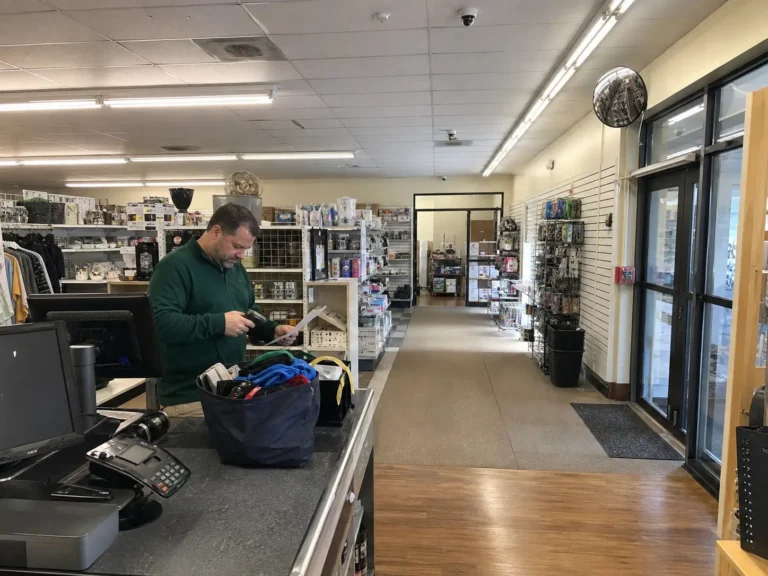
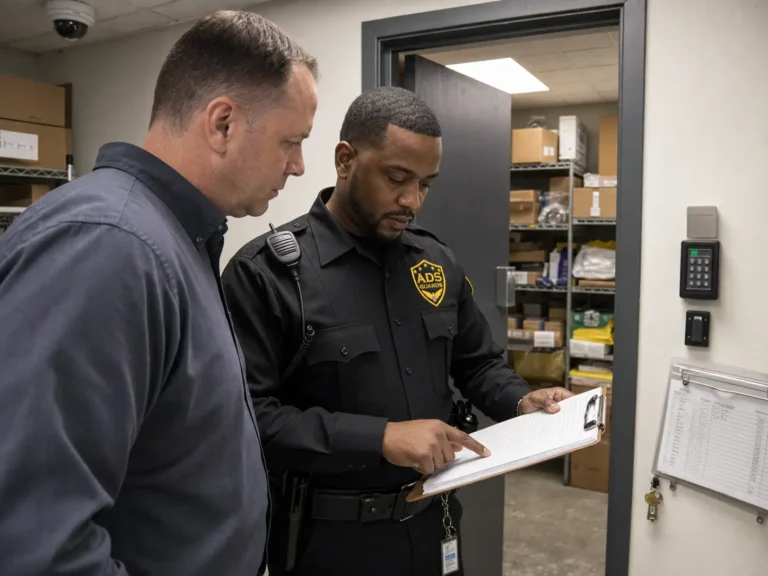
A register camera should show the transaction area clearly without recording customer PINs or private information on screens. Stockroom cameras should cover the entrance and main movement path rather than trying to watch every shelf.
At loading docks, include the dock door, vehicle approach, staging area, and any route leading deeper into the building. This gives you a better sequence of events when a delivery is disputed or inventory disappears.
Our workplace theft prevention guide explains how cameras can work alongside access rules, register controls, visitor logs, and incident reporting.
Hallways and stairwells
Long, narrow spaces are usually better covered by looking down the length of the hallway instead of across it. This keeps people in view longer and reduces wasted footage of walls.
Do not point the camera so a nearby door frame, hanging sign, or ceiling fixture blocks part of the image. Small obstructions become much more noticeable when infrared night vision turns on.
What is the best height for security cameras?

For many residential and small commercial installations, about 8 to 10 feet above the ground is a useful starting point. It is high enough to make casual tampering harder but still low enough to capture faces and useful detail.
The exact height depends on the lens, viewing distance, building layout, and purpose of the camera. Ring, for example, recommends mounting one of its outdoor camera models at about 9 feet while using lower positions indoors.
Higher is not automatically better. A camera mounted 20 feet above a doorway may cover a large area but produce a steep angle that hides faces under hats or hoods.
The best height for security cameras is the lowest practical height that provides the required view without making the device easy to reach. Test the image before permanently tightening the mount.
How to improve security camera coverage

Security camera coverage should be tested as a connected system. Looking at each camera separately can leave gaps between views.
Overlap important areas
A small amount of overlap helps one camera pick up where another stops. This is especially useful around building corners, parking lot entrances, gates, and hallways.
You do not need every inch covered twice. Focus the overlap on routes someone could use to approach or leave the property.
Watch the edges of the image
People often pay attention to the center of a camera view and ignore the edges. Walk the property while watching the live feed. Check whether someone can move behind a wall, hedge, vehicle, column, or dumpster without appearing on another camera.
Those gaps are your real security camera blind spots.
Test during the day and at night
A view that looks good at noon can become nearly useless after dark. Headlights may wash out the image. A bright doorway can turn a person into a silhouette. Infrared light can bounce off a wall, roof overhang, or spiderweb near the lens.
Review live and recorded footage after sunset. Walk toward the camera, away from it, and across it. Check whether you can see a face instead of simply confirming that a person was present.
Keep the lens clean and the view clear
Outdoor cameras collect dust, water spots, pollen, and spiderwebs. Landscaping also grows into the frame.
Add camera cleaning and view checks to your maintenance schedule. A camera can be online and recording while producing footage nobody can use.
Where not to put security cameras

Do not install cameras in places where people reasonably expect privacy, including bathrooms, changing areas, and private bedrooms used by guests, employees, tenants, or customers.
You should also avoid placing cameras:
- Behind glass, especially when infrared night vision is enabled
- Directly toward the rising or setting sun
- Beside reflective walls or metal surfaces
- Inside thick landscaping
- So high that faces cannot be seen
- Where a door, sign, or light blocks part of the view
- In locations with unreliable power, Wi-Fi, or network access
- Where the camera records more of a neighboring property than necessary
Indoor cameras also deserve proper digital protection. The Federal Trade Commission’s security camera guidance recommends considering what private areas a connected camera can see and securing remote access to the feed.
Should a security camera go above or below a light?

A separate security camera usually works best above or slightly beside the light, with enough distance to keep the fixture out of the image.
Putting the camera directly below a bright light can create glare, harsh shadows, insects near the lens, or an overexposed area that hides facial details. Mounting it too close above the light can cause similar problems.
Check the view while the light is on and off. For a combined floodlight camera, follow the manufacturer’s mounting instructions because the lens and lights are designed to work together.
What about privacy and neighbor cameras?
A neighbor can often use a camera to monitor their entrance, yard, driveway, or another area visible from their property. Problems can arise when the camera is deliberately aimed into a private interior, bedroom, bathroom, enclosed yard, or another place where someone may reasonably expect privacy.
A camera facing your front door is not automatically illegal. Front doors and walkways are commonly visible from streets, sidewalks, neighboring homes, and shared areas. The angle, purpose, audio recording, zoom level, and local law all matter.
Privacy law varies by state and city, especially when cameras also record sound. The legal idea of a reasonable expectation of privacy is often relevant, but a local attorney or law enforcement agency may be needed for a specific dispute.
When possible, start with a calm conversation. The owner may be able to adjust the angle, narrow the motion zone, or add a privacy mask that blocks part of the image.
Do burglars avoid security cameras?
Visible cameras can affect a person’s decision to target a property, but they do not guarantee that a crime will not happen.
A review listed by the U.S. Department of Justice found CCTV surveillance produced a modest reduction in crime, with stronger results for property and vehicle crime than violent crime. The effect was particularly noticeable in parking lots and residential areas.
Cameras work better as part of a wider plan that includes lighting, locks, access control, alarms, patrols, and a clear response process. A camera can document an incident. It cannot unlock a stuck gate, challenge a trespasser, or respond to an employee asking for help.
Businesses with larger properties can combine cameras with commercial security services so suspicious activity is noticed and handled instead of only recorded.
How far back do most security cameras go?
There is no single standard retention period.
Many cloud camera systems use about 30 days as a common baseline, though plans and devices vary. Ring currently defaults to 30 days for some 4K devices and 60 days for many 1080p and 2K devices in the United States, with options extending up to 180 days.
Local CCTV and NVR systems depend on the number of cameras, video resolution, frame rate, recording schedule, compression, and available drive space. Continuous recording uses storage faster than motion-only recording.
Choose retention based on how quickly incidents are normally discovered. A retail shortage may be noticed the next day. Missing construction equipment may not be reported until the following week. A billing or delivery dispute could take longer to surface.
The most common security camera placement mistakes

Most CCTV camera placement problems come from skipping the test phase.
Common mistakes include:
- Mounting every camera as high as possible
- Buying wide-angle cameras and expecting clear faces at long distances
- Covering open space while ignoring entrances and travel routes
- Pointing cameras directly into lights or windows
- Leaving gaps between camera views
- Ignoring trees, signs, columns, and parked vehicles
- Testing only during daylight
- Recording audio without checking local laws
- Keeping footage for less time than the business needs
- Giving too many people access to stored video
- Installing cameras without deciding who reviews alerts or incidents
Before finalizing the system, save sample footage from each camera. Check whether it shows the detail you expected. Live video can look fine on a phone while recorded footage becomes blurry once a person starts moving.
Frequently asked questions
Where should outdoor security cameras be placed?
Place outdoor cameras at main entrances, side and rear doors, driveways, gates, parking areas, loading docks, and routes hidden from normal view. Aim each camera toward the approach to the area so it records people before they reach the door, vehicle, or gate.
Where should you not put security cameras?
Do not place cameras in bathrooms, changing rooms, private bedrooms, or other areas where people reasonably expect privacy. Avoid positions behind glass, directly facing bright lights, inside thick landscaping, or so high that facial details disappear.
Can a neighbor have a security camera pointed at my house?
Often, yes, especially when the camera records a driveway, front yard, street, or another area visible from the neighbor’s property. It may become a legal concern when it deliberately records private interiors, secluded spaces, or private conversations. Local privacy and audio recording laws apply.
Where is the best place to put security cameras in your house?
Start with the front door, back door, ground-floor entrances, attached garage, and the main path between entry points. Indoors, point cameras toward entrances and shared movement areas rather than private rooms.
Should a security camera go above or below a light?
Usually, place the camera above or slightly beside the light. Keep enough distance between them to prevent glare, shadows, insects, or reflected infrared light from interfering with the image.
Do burglars avoid security cameras?
Some burglars may avoid a clearly monitored property, and research has found modest crime reduction from CCTV, particularly for property and vehicle crime. Cameras are more effective when combined with lighting, locks, alarms, access control, and a response plan.
How far back do most security cameras go?
Many cloud systems keep footage for around 30 days, but retention can range from a few days to several months. Local recording systems depend on storage capacity, resolution, frame rate, and whether cameras record continuously or only after motion.
Can a neighbour have a camera pointing at my front door?
A camera may legally capture a front door that is visible from a public or neighboring area, but rules vary. Recording through windows, into private interiors, or capturing private audio may create additional privacy concerns.
What are the most common mistakes when installing security cameras?
The biggest mistakes are mounting cameras too high, leaving blind spots, using a field of view that is too wide, ignoring lighting, failing to test footage at night, and placing cameras where landscaping or building features block the image.
Final thoughts on where to place security cameras
The best surveillance camera placement gives you useful footage, not simply more footage.
Start with entrances and travel routes. Check the security camera field of view from a person’s height, test every angle after dark, and make sure important areas overlap. Then review the system again after landscaping changes, construction work, lighting upgrades, or a security incident.
For homes, our residential security services can help connect cameras with monitoring and other protective measures. For offices, parking lots, warehouses, and commercial properties, our team can assess how camera coverage fits with access control, patrols, and on-site security.