Security Guard Incident Report: What to Include and How to Write One
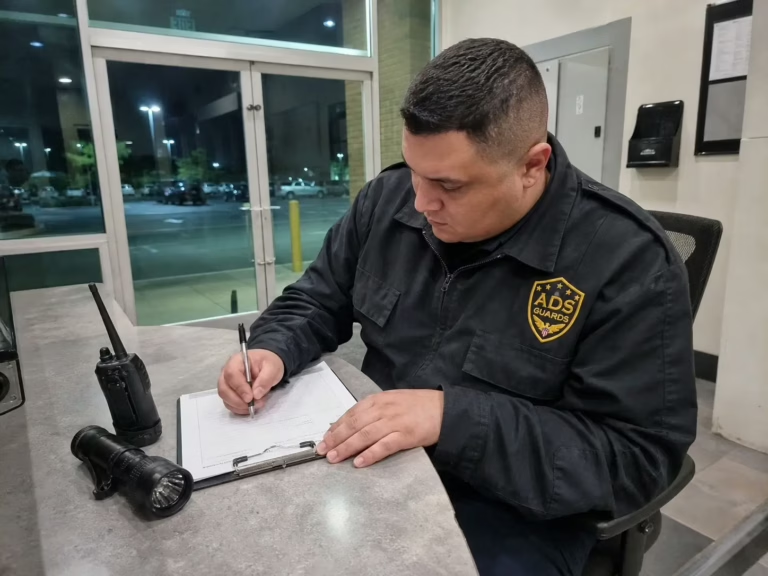
A security guard incident report is easy to ignore until something goes sideways.
Then everyone wants the details.
Who was there? What time did it happen? Did the guard call anyone? Was there video? Was anything damaged? Did the person leave? Did the guard follow the post orders?
A good report answers those questions without guessing, rambling, or making the situation sound bigger than it was. It gives the business a clean record of what happened and gives the security team something useful to look back on later.
If you manage an office, job site, retail center, apartment community, warehouse, event, or parking lot, this kind of paperwork matters more than it seems.
We’re also adding a downloadable Security Guard Incident Report Template you can use with your team.
What is a security guard incident report?
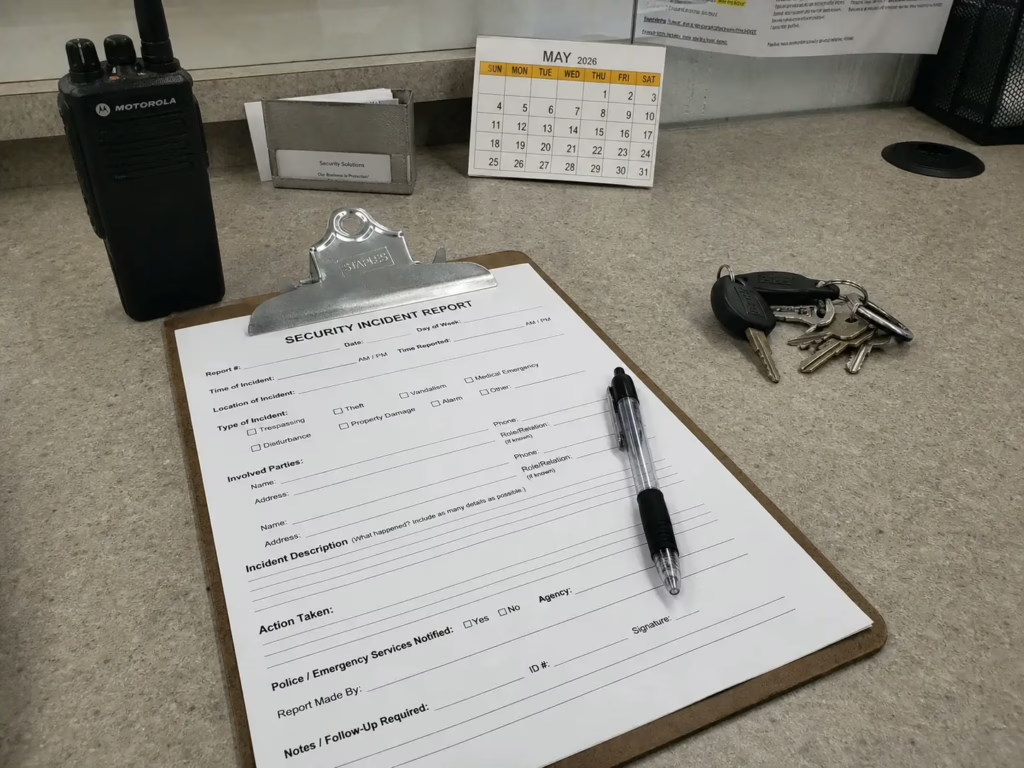
A security guard incident report is a written record of something unusual, unsafe, suspicious, or disruptive that happened during a guard’s shift.
That might be:
- trespassing
- theft
- vandalism
- a medical emergency
- a workplace violence threat
- a fire alarm
- an unlocked door
- a vehicle break-in
- a confrontation with a visitor
- property damage
- an emergency response call
- a post order violation
The goal is simple: write down what happened clearly enough that someone else can understand it later.
A useful report covers the basics. What happened? When did it happen? Where did it happen? Who was involved? What did the guard see or hear? What did the guard do? Who was notified?
For businesses using mobile patrol security, reports are especially helpful because the officer may only be on site during certain patrol windows. A clear report helps connect what happened before, during, and after the patrol.
Why incident reports matter more than people think
A lot of business owners think of security reports as paperwork. Fair enough. Sometimes they are.
But when something goes wrong, those reports can become the thing everyone needs.
A strong incident report can help with:
- insurance claims
- internal investigations
- law enforcement follow-up
- employee safety concerns
- property damage records
- client communication
- guard accountability
- post order updates
- repeat problem tracking
One broken gate might be a maintenance issue. Five reports about the same gate in two months is a pattern.
That’s where reporting starts to earn its keep. It shows what keeps happening when the manager, owner, or supervisor is not standing there watching it happen.
Good reporting is also one of the practical security guard benefits for businesses because it gives owners more than a visible guard. It gives them a usable record.
For higher-risk sites, like construction site security or commercial security, reports can show where the setup is weak. Maybe the fence line keeps getting hit after midnight. Maybe delivery doors are being left open. Maybe the same parking area keeps attracting trespassers.
If the reports keep pointing to the same weak spots, a physical security assessment checklist can help you decide what to fix first.
The report does not solve the problem by itself. It tells you where to look.
What should be included in a security guard incident report?
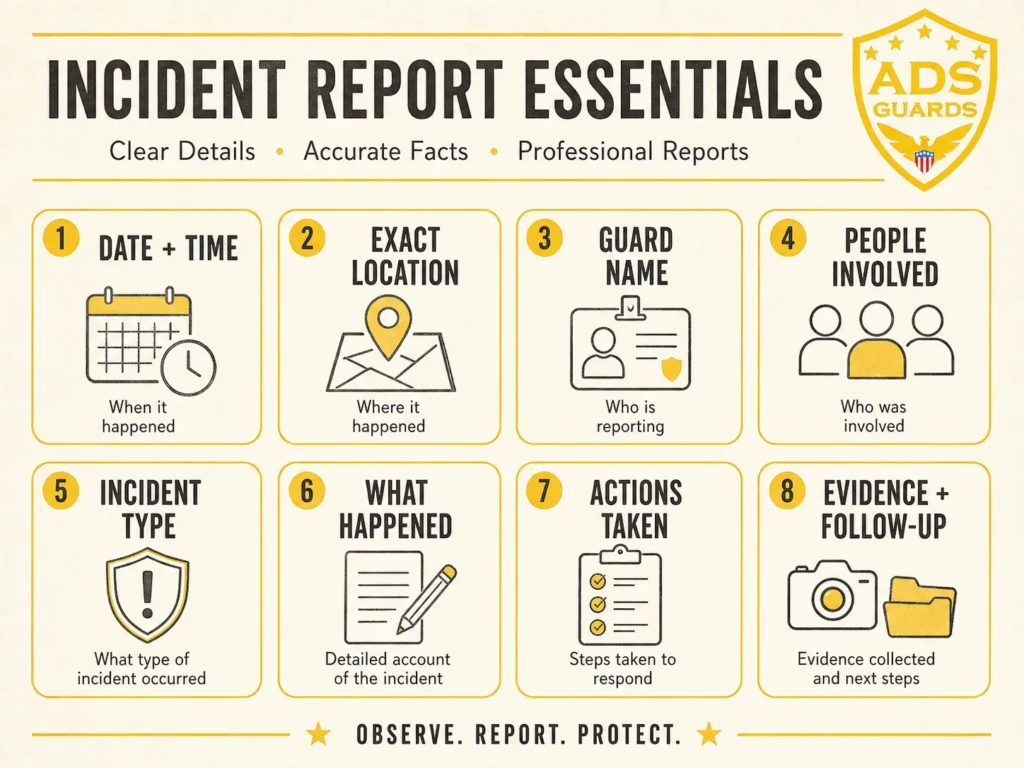
A security guard incident report should be simple, specific, and easy to read later.
At minimum, include:
| Report section | What to include |
|---|---|
| Date and time | When the incident started, when it ended, and when the report was written |
| Location | Exact building, floor, gate, unit, parking area, or patrol zone |
| Guard name | Name and ID number if your company uses one |
| People involved | Names, descriptions, roles, and contact info when available |
| Incident type | Theft, trespassing, medical emergency, disturbance, property damage, alarm, etc. |
| What happened | The facts in the order they happened |
| Actions taken | Patrol, warning, access denial, emergency call, first aid request, client notification |
| Notifications | Supervisor, property manager, police, fire department, EMS |
| Evidence | Photos, video footage, witness statements, damaged property, access logs |
| Follow-up needed | Repairs, extra patrols, report review, camera check, updated post orders |
The report should make sense to someone who was not there.
Weak version:
“Subject acted suspicious.”
Better version:
“At 9:42 p.m., I saw an unknown male wearing a gray hoodie and black backpack walking behind Building C near the locked maintenance gate. The subject looked into three parked vehicles and pulled on the driver-side handle of a white Ford pickup.”
That second version gives the reader something they can use.
Security guard report writing should stick to facts
Security guard report writing gets messy when officers start adding opinions.
A guard should not write:
“The guy was clearly trying to steal something.”
Unless the guard saw an actual theft attempt, that is an assumption.
A better version:
“I saw the subject looking into parked vehicles and pulling on the door handle of one vehicle. The subject left the property after I identified myself and instructed him to leave.”
That says what happened. No guessing needed.
Good report writing should be:
- factual
- chronological
- specific
- easy to read
- professional
- free of emotional language
Bad report writing usually sounds like this:
“Some crazy guy came in yelling and making everyone uncomfortable.”
Better:
“At approximately 3:15 p.m., an unknown male entered the lobby and began shouting at the front desk employee. The subject used profanity and refused to leave after being asked twice by staff. I approached the subject, identified myself as security, and asked him to exit the building.”
Still plain English. Just cleaner.
How post orders shape incident reporting
Security guard post orders are the written instructions for a specific site. They tell the guard what to check, where to patrol, who to call, and how to respond to common problems.
Incident reports should connect back to those post orders.
If the post orders say the guard must check all exterior doors every hour, the report should mention which door was found unsecured, what time it happened, what the guard did, and who was notified.
If the post orders say all trespassers must be documented, the guard should not just tell someone to leave and move on. The guard should write the report.
Post orders often cover:
- patrol routes
- access control procedures
- visitor rules
- emergency contacts
- alarm response
- parking rules
- lockup procedures
- delivery procedures
- reporting requirements
For sites with armed security, post orders matter even more. The report needs to stay factual and tied to what the guard actually did.
A simple security guard checklist for better reports
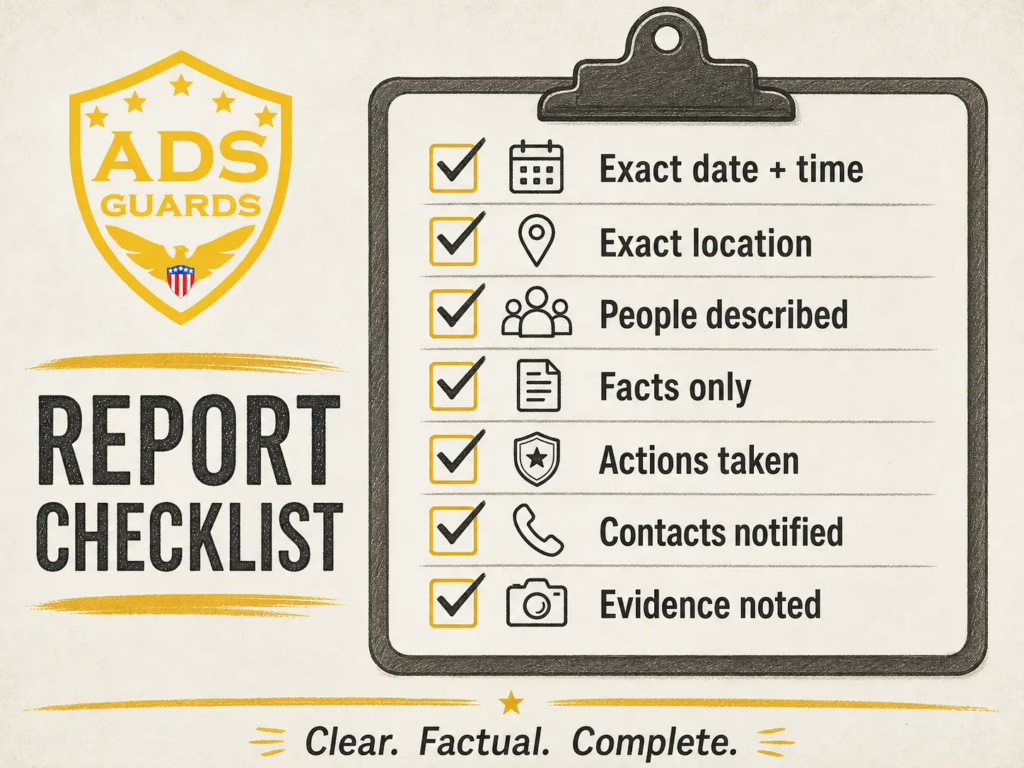
A security guard checklist helps officers avoid missing the basics, especially when the incident was stressful.
Before submitting a report, the guard should check:
| Question | Why it matters |
|---|---|
| Did I include the exact date and time? | A vague timeline makes the report harder to use |
| Did I list the exact location? | “Parking lot” is not enough for large properties |
| Did I describe the people involved? | Names are best, but descriptions help when names are unknown |
| Did I write what I saw, not what I assumed? | Reports should separate facts from guesses |
| Did I include my actions? | The client needs to know how security responded |
| Did I note who was contacted? | This shows the right people were notified |
| Did I mention photos, video, or witnesses? | Evidence may matter later |
| Did I avoid slang and emotional wording? | The report may be read by managers, attorneys, or law enforcement |
This should become a habit, not something guards only think about after a serious incident.
How patrol duties connect to incident reports
Security guard patrol duties are not just walking around so people see a uniform.
A useful patrol has a purpose. The guard is checking for access problems, safety issues, suspicious activity, damage, and anything that looks out of place.
Common patrol duties include:
- checking doors, gates, windows, and fences
- watching parking lots and loading areas
- checking for trespassers
- reporting leaks, fire hazards, or damaged property
- confirming lights and cameras are working
- watching for vehicle break-ins
- documenting unsafe conditions
- checking vacant units or restricted areas
When a guard finds something unusual, the report should explain how it was found.
For example:
“During my 11:00 p.m. exterior patrol, I found the east pedestrian gate propped open with a rock. I removed the rock, secured the gate, and checked the nearby fence line. I found no visible damage. I notified the shift supervisor at 11:08 p.m.”
That is the kind of report people can actually use.
For properties using residential security, this kind of reporting helps HOA boards, apartment managers, and property owners understand what is happening after hours.
Incident reporting during emergency response
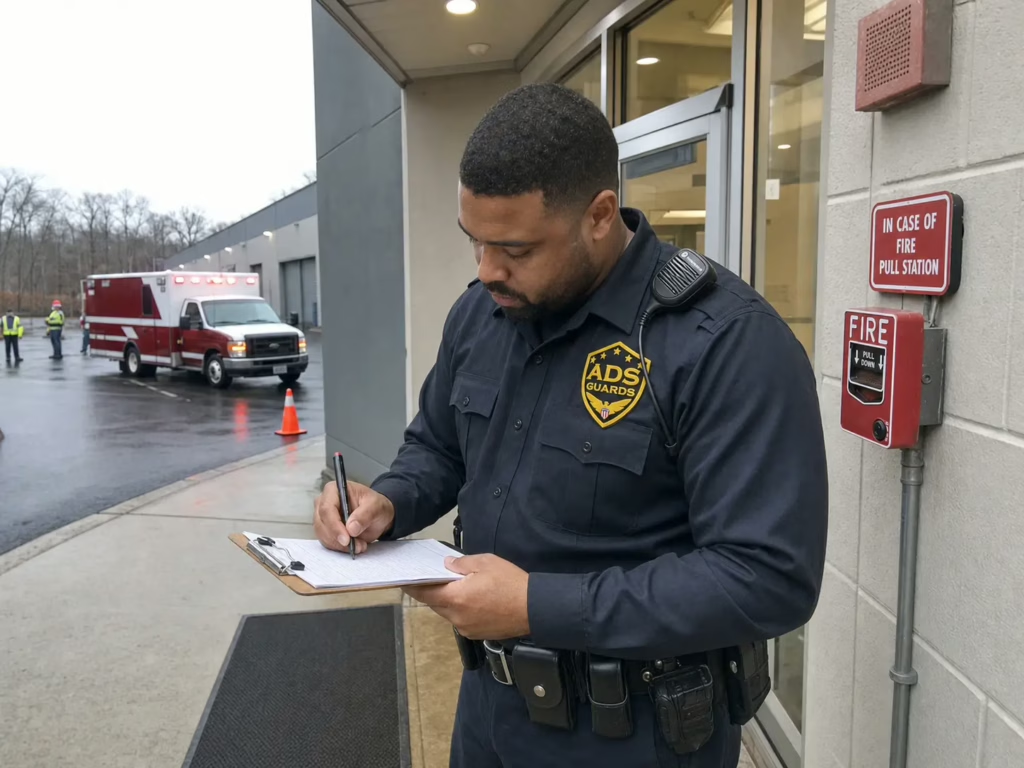
Security guard emergency response reports need extra care because the stakes are higher.
During an emergency, the guard’s first job is to help protect people and follow the site’s emergency procedures. The report comes after the immediate situation is under control.
Emergency incidents may include:
- fire alarms
- medical emergencies
- workplace violence threats
- active disturbances
- gas leaks
- flooding
- power outages
- serious injuries
- suspicious packages
- criminal activity in progress
The report should include the timeline.
For example:
- When did the guard become aware of the emergency?
- Who reported it?
- What did the guard see or hear?
- Was 911 called?
- What time did police, fire, or EMS arrive?
- Did anyone evacuate?
- Who was notified?
- What happened after emergency responders left?
For serious threats or aggressive behavior, it also helps to have a clear workplace violence prevention plan so guards and managers know what happens next.
Security teams are often the first people dealing with a situation before police, fire, EMS, or management arrives. The report should show what the guard knew at the time, what they did, and who took over from there.
Common security guard tasks that should be documented
Not every security guard task needs a full incident report. Routine work usually belongs in a daily activity report.
But some things should be written up because they involve risk, conflict, damage, policy violations, or unusual activity.
These include:
- removing a trespasser
- denying entry to someone
- finding a broken door, lock, camera, or gate
- responding to an alarm
- helping during a medical emergency
- calling law enforcement
- documenting a theft complaint
- reporting vandalism
- finding property damage
- dealing with a hostile visitor
- discovering an unsecured area
- responding to a noise complaint
- observing suspicious activity
For event security, reports may also include crowd issues, denied entry, intoxicated guests, medical calls, fights, or restricted area breaches.
The point is not to bury the client in paperwork. The point is to document the things that could matter later.
What makes a bad incident report?
Bad incident reports usually have the same problems. They are too vague, too emotional, or written too late.
Here’s a bad example:
“Had an issue with a guy near the front. He was being weird. Told him to leave. Everything okay.”
That report barely helps anyone.
Who was the person? What did he do? What time did it happen? Where exactly was he? Did he leave the property? Did anyone else see it? Was management told?
A better version:
“At approximately 6:35 p.m., I saw an unknown male standing near the main entrance of Building A. The subject was asking employees for money and blocking the right-side entry door. I approached the subject, identified myself as security, and asked him to move away from the entrance. The subject refused at first, then left the property at 6:41 p.m. walking south on Main Street. I notified the property manager by phone at 6:45 p.m.”
Now the reader has the facts.
Security guard incident report template
A strong incident report template makes reporting easier for guards and more consistent for clients.
Your template should include fields for:
- report number
- date
- time
- site name
- exact location
- guard name
- supervisor name
- type of incident
- people involved
- witnesses
- incident description
- action taken
- emergency services contacted
- client contact notified
- photos or video available
- follow-up needed
- guard signature
The template should also remind guards to write events in order and stick to what they saw, heard, and did.
How ADS Guards handles reporting
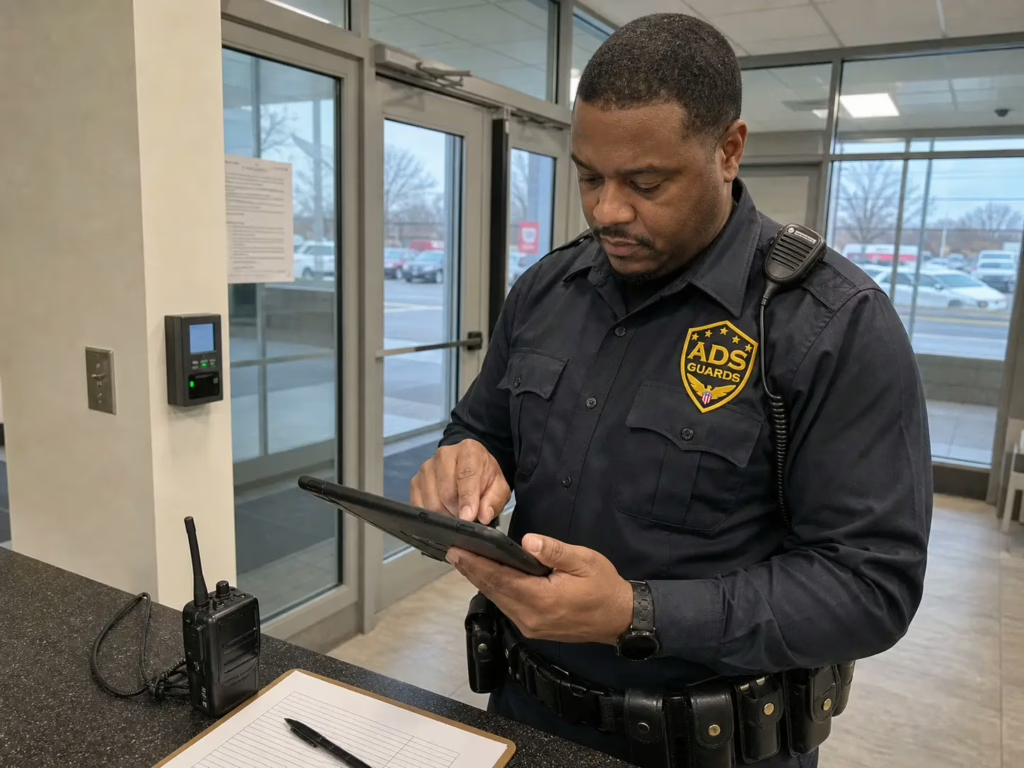
At ADS Guards, we care about what happens after the guard arrives, not just whether a guard is standing at the property.
Clear reporting helps our clients see what occurred, how our guard responded, and what may need attention next. On some sites, that means documenting patrol findings. On others, it means reporting access issues, trespassers, alarm activity, parking problems, or emergency response details.
If you’re comparing providers, this guide on how to choose the right security guard company can help you ask better questions about reporting, supervision, and post orders.
And if your property needs better reporting, tighter post orders, or more reliable guard coverage, our team can help build a security setup around the actual risks on your site. You can start with a quote through our contact page.
FAQ
What is a security guard incident report?
A security guard incident report is a written record of an unusual or important event during a guard’s shift. It explains what happened, when it happened, where it happened, who was involved, what the guard did, and who was notified.
What should a security guard write in an incident report?
A guard should write the facts in chronological order. Include the date, time, location, people involved, observations, actions taken, notifications, evidence, and any follow-up needed.
What should security guards avoid in report writing?
Security guards should avoid guesses, opinions, slang, emotional wording, exaggeration, and missing details. A report should say what the guard saw, heard, and did.
How do post orders affect incident reports?
Post orders tell guards what to check, how to respond, and when to report certain issues. Incident reports should show whether the guard followed those instructions during the shift.
Do all security guard tasks need an incident report?
No. Routine tasks usually belong in a daily activity report. A full incident report is better for unusual activity, safety risks, rule violations, emergencies, property damage, theft, trespassing, or anything that may need follow-up.
Why is a security guard checklist useful?
A checklist helps guards remember the details that make a report useful. It reduces missed information and keeps reports consistent from one shift to the next.
Final thoughts
A security guard incident report does not need fancy language. It needs facts.
Good reporting protects the client, helps supervisors understand what happened, and gives the security team a better way to improve post orders, patrol duties, emergency response, and daily guard tasks.
The best reports are clear enough that someone can read them weeks later and still understand the incident without calling the guard for an explanation.
That’s the standard worth aiming for.