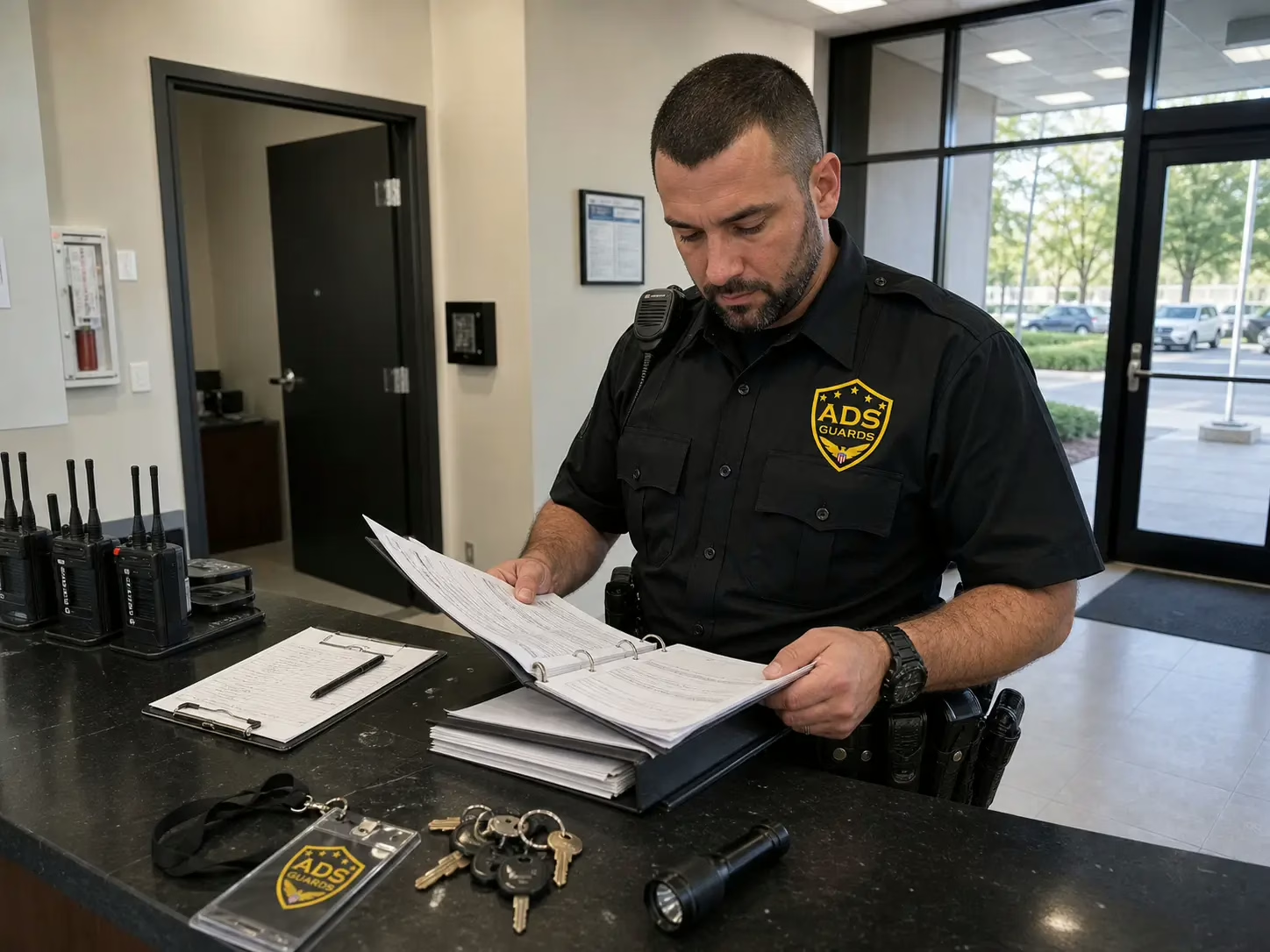
Security Guard Post Orders That Actually Help on Site
A security guard can show up liceansed, trained, and ready to work. That still does not mean they know your building.
They do not automatically know which back door sticks, which gate delivery drivers keep using, which tenant calls after hours, or which corner of the parking lot always has problems.
That is why security guard post orders matter.
Post orders give guards the site-specific instructions they need before the shift starts. Not vague stuff like “watch the property.” Real instructions. Where to patrol. Who can enter. What to document. Who to call. What to do during an emergency.
Without that, guards have to guess. And guessing is not a security plan.
Want the checklist version? Download the security guard post orders PDF and use it while building or reviewing your site instructions.
What are security guard post orders?
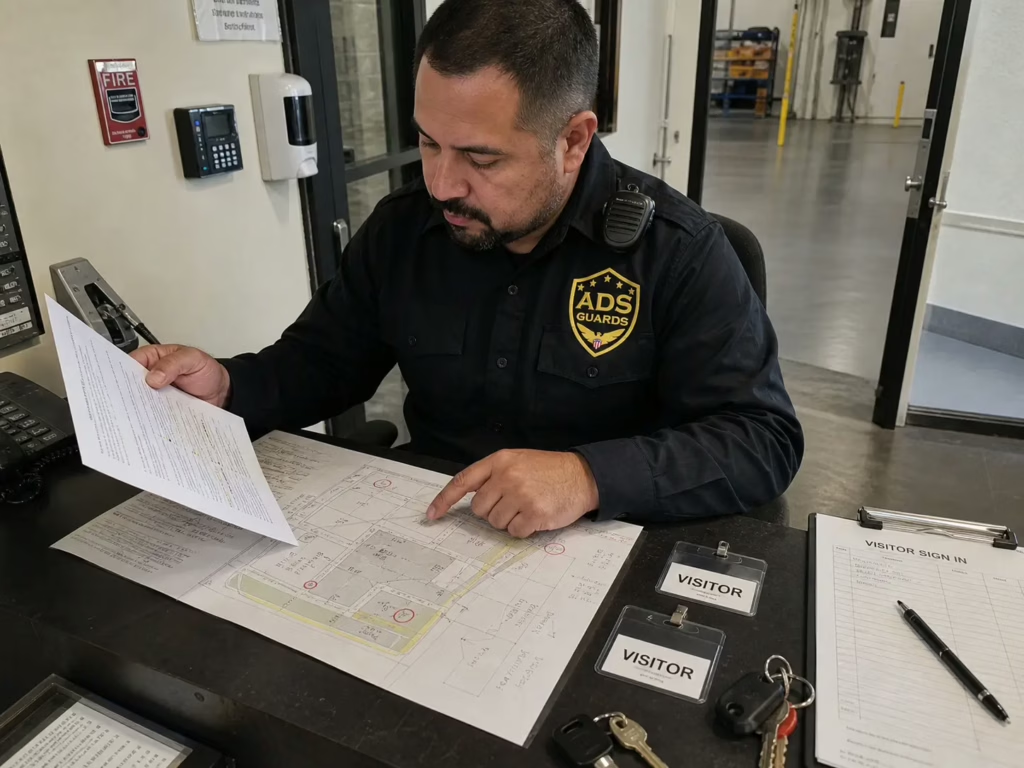
Security guard post orders are written instructions for one specific site or assignment. They tell the officer what to do during the shift and how the client wants the property handled.
You may also hear them called:
- security post orders
- post orders for security guards
- security officer post orders
- security guard site orders
- security guard assignment instructions
- security guard instructions
Same general idea. Different names.
Good post orders answer the questions a guard will run into during a real shift:
- Where do I report when I arrive?
- What areas need patrol?
- Who is allowed past the front desk?
- What do I do if a vendor shows up after hours?
- Who do I call if there is a water leak?
- What counts as an incident?
- How do I handle trespassing?
- What should I write in the report?
California’s Bureau of Security and Investigative Services includes “Post Orders & Assignments” in its security guard training topics. The state lists things like site-specific training, equipment, emergency response issues, lost and found, and liability implications under that topic. You can review it through the California BSIS security guard training regulation.
That matters because post orders are part of how guards do the job the right way.
Why post orders matter
Most security problems do not start with some huge failure.
They start smaller.
A guard lets someone through the side entrance because nobody said that door was restricted.
A delivery driver is allowed into the loading area after hours because the instructions were not clear.
A night officer sees a broken gate but does not know who handles maintenance.
A weekend guard has no idea whether to call the property manager or the security supervisor.
None of this is complicated. That is the frustrating part.
Security post orders remove a lot of that confusion. They give the officer a written playbook for the property. They also give the business owner, manager, or site supervisor a fair way to measure the work. If expectations are written clearly, everyone has something to follow.
For business properties, this is especially important. Office buildings, retail centers, construction sites, warehouses, events, and residential communities all have different risks. The same guard can do excellent work at each one, but only if the assignment is clear.
At American Discount Security (A.D.S.), we build site instructions into services like commercial security, construction site security, event security, and mobile patrol security.
What should be included in security guard post orders?
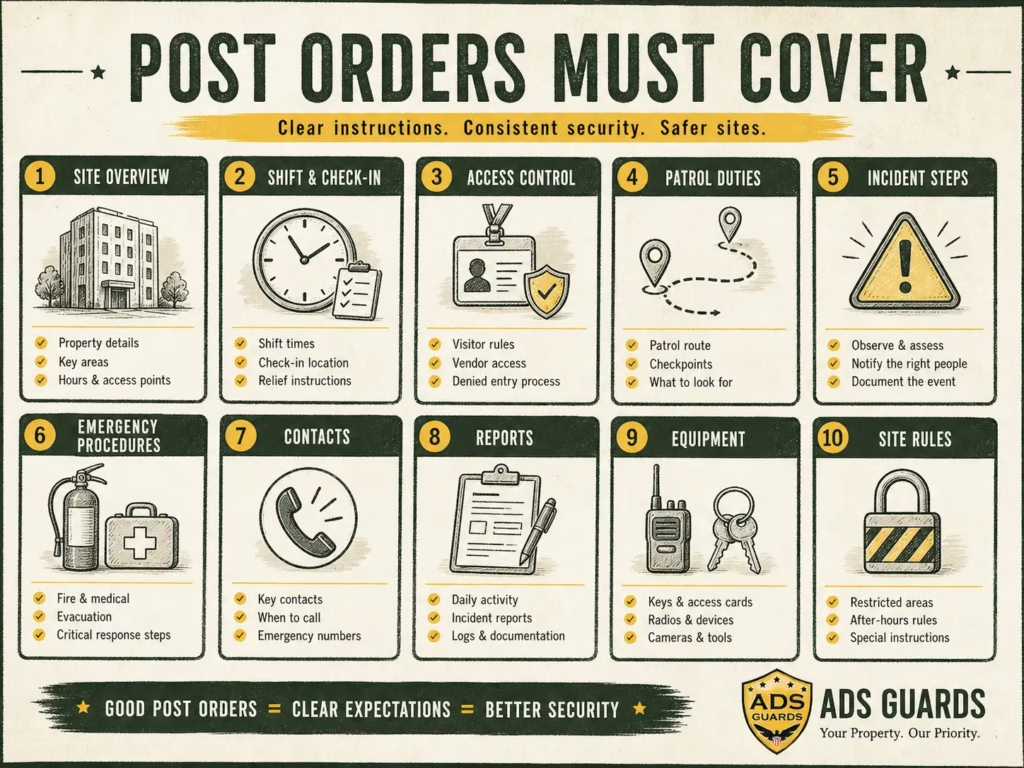
Post orders should be clear enough to use during a shift. That sounds obvious, but a lot of sites get this wrong.
A giant binder full of stiff policy language will not help much. A one-page note with almost no detail will not help either.
The best post orders are specific, organized, and easy to read.
Site overview
Start with the basics.
Include the property name, address, type of site, hours of operation, and main areas the guard needs to know.
This may include:
- lobby
- front desk
- parking lot
- loading dock
- storage rooms
- roof access
- stairwells
- elevators
- vacant units
- equipment yards
- fire lanes
- restricted offices
- tenant-only areas
- gates and perimeter fencing
The point is to give the officer a quick feel for the site.
A construction site with tools, fuel, open fencing, and after-hours theft risk needs different instructions than a quiet office building. A retail center needs different instructions than a warehouse. The guard should not have to figure that out by wandering around for the first hour.
For office buildings, high rises, and parking areas, you can also review our office building and parking lot security services.
Shift schedule and check-in instructions
This section should tell the guard how the shift starts and ends.
Include:
- shift start time
- shift end time
- check-in location
- supervisor or client contact at arrival
- where keys, badges, radios, or devices are kept
- what the guard checks before starting patrol
- break rules
- relief officer instructions
- what to do if relief is late
This is basic, but it prevents a lot of messy starts.
If the guard arrives and nobody knows where the keys are, the shift is already off. If the officer leaves before relief arrives because nobody wrote down the handoff rule, you may end up with an uncovered post.
Write it plainly.
Access control instructions
Access control is one of the biggest reasons businesses hire security guards.
Post orders should explain who can enter, how they enter, and what happens when someone does not meet the requirements.
Include instructions for:
- employee access
- visitor sign-in
- ID checks
- vendor badges
- delivery drivers
- contractors
- after-hours entry
- denied entry
- restricted areas
- tailgating
- lost badges or access cards
- escort rules
“Check people in” is not enough.
A better instruction would be:
“All visitors must sign in at the front desk, show valid ID, receive a temporary visitor badge, and wait in the lobby until the tenant confirms access.”
That gives the guard something useful to follow.
If your site uses ID checks, this guide may help too: Can Security Guards Check IDs Legally? California (2026).
Patrol duties
A security guard duties checklist should spell out the patrol route, patrol frequency, and what the officer should look for.
Common patrol duties include checking:
- doors
- windows
- gates
- fences
- stairwells
- elevators
- restrooms
- parking areas
- lighting
- alarm panels
- cameras
- fire exits
- mechanical rooms
- electrical rooms
- signs of forced entry
- water leaks
- vandalism
- suspicious vehicles
- loitering
- unsafe conditions
Avoid soft instructions like “patrol regularly.”
Regularly can mean every 20 minutes to one person and twice a shift to someone else.
Write something more direct:
“Patrol the exterior perimeter once every hour. Check the north gate, loading dock, rear stairwell, and employee parking lot during each patrol. Record each patrol in the activity report.”
That is easier to follow and easier to review later.
Incident procedures
Security guard procedures should explain what the officer does when something out of the ordinary happens.
This may include:
- trespassing
- theft
- vandalism
- property damage
- unauthorized entry
- aggressive behavior
- workplace violence concerns
- medical emergencies
- fire alarms
- power outages
- flooding
- suspicious packages
- vehicle accidents
- elevator issues
- lost children
- missing property
- after-hours tenant problems
The goal is not to turn the guard into a police officer, firefighter, medic, or attorney.
The goal is to give the guard clear steps: observe, stay safe, notify the right people, document what happened, and follow the limits of the role.
That last part matters. Guards need to know what they can do, what they should not do, and when to call law enforcement or emergency services.
For California businesses, our guide on what security guards can and can’t do is a useful starting point.
Emergency procedures
Emergency instructions deserve their own section. Do not hide them inside general notes.
Your security guard emergency procedures should cover:
- fire
- medical emergency
- evacuation
- shelter in place
- active threat
- earthquake
- severe weather
- gas smell
- power outage
- alarm activation
- hazardous material issue
- police response
- emergency access for first responders
OSHA says an emergency action plan should include procedures for reporting fires and other emergencies, evacuation procedures, instructions for employees who stay behind for critical operations, rescue or medical duties, and names or job titles of people who can explain the plan. You can review the standard here: OSHA emergency action plans.
Your security guard instructions should match your company’s emergency plan. If your evacuation plan says one thing and your post orders say another, the guard is stuck in the middle.
California employers should also review Cal/OSHA’s workplace violence prevention guidance. Cal/OSHA explains that covered employers must establish, implement, and maintain a written workplace violence prevention plan. You can find the state guidance here: Cal/OSHA workplace violence prevention for general industry.
We also put together a simpler guide here: How to Create a Workplace Violence Prevention Plan for Your Business.
Communication rules
A guard should never have to dig around for the right phone number during a problem.
Post orders should include:
- property manager contact
- business owner contact
- security supervisor contact
- emergency contact
- maintenance contact
- alarm company contact
- elevator service contact
- locksmith contact
- utility contacts
- law enforcement non-emergency number
- fire department non-emergency number
Also explain when each contact should be used.
For example:
Call 911 for immediate threats to life or safety.
Call the property manager for after-hours access questions, tenant disputes, lockouts, or building policy issues.
Call maintenance for broken doors, leaks, lighting problems, gate issues, or unsafe property conditions.
Call the security supervisor for incident support, shift coverage problems, or questions about the assignment.
This section does not need fancy wording. It needs to be useful at 2:00 a.m. when something is going wrong.
Report writing and documentation
Post orders should tell guards what to document and how to document it.
Include instructions for:
- daily activity reports
- incident reports
- patrol logs
- visitor logs
- delivery logs
- vehicle logs
- lost and found logs
- photos, when appropriate
- time stamps
- who was notified
- follow-up action taken
Good reports help the client see what is happening on the property. They also help spot patterns.
If people are trespassing behind the building every Friday night, the reports should show that. If one gate keeps getting left open, the reports should show that too.
The report does not need to read like a novel. It needs dates, times, facts, names when available, and clear action taken.
Equipment and technology
Post orders should list the equipment the guard uses during the shift.
This may include:
- keys
- badges
- access cards
- radios
- flashlights
- patrol devices
- guard tour systems
- CCTV monitors
- alarm panels
- visitor management software
- first aid kits
- AEDs
- parking permits
- fire watch logs
Include where each item is stored, who issues it, and what to do if something is missing, broken, or not working.
If the guard monitors cameras, be specific. Which cameras matter most? What counts as suspicious activity? Should the officer call a supervisor, notify the client, dispatch another guard, or document it only?
Do not assume the guard will know how your site uses its equipment. Put it in the post orders.
Site-specific rules
This is where post orders become genuinely helpful.
Every property has its own rules. Some are small. Some are weird. Some only make sense if you work there.
Add details such as:
- no overnight parking
- contractors check in at the loading dock
- roof access requires written approval
- security cannot accept packages after hours
- employees must use a specific entrance after 7 p.m.
- visitors cannot pass reception without an escort
- food delivery drivers must wait in the lobby
- tenants cannot prop open stairwell doors
- gates stay locked outside delivery hours
- guards must not move tenant property unless approved
These details often matter more than the generic instructions.
A new guard may not know that one tenant always has late vendors. Or that the rear stairwell door gets propped open. Or that delivery drivers keep trying to use the wrong entrance.
Post orders should capture those details before they become problems.
Security guard post orders template
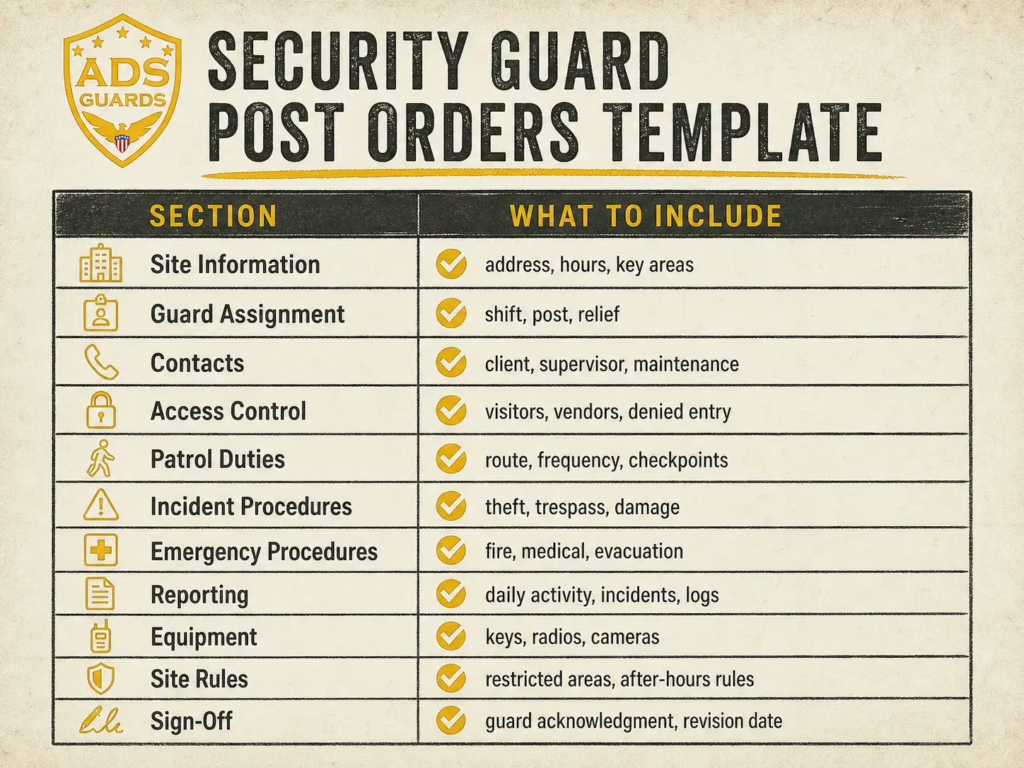
A basic security guard post orders template should include these sections:
| Section | What to include |
|---|---|
| Site information | Property name, address, site type, operating hours, important areas |
| Guard assignment | Shift hours, post location, check-in steps, relief instructions |
| Contacts | Client contacts, supervisor, maintenance, emergency contacts |
| Access control | Visitor rules, employee access, vendors, denied entry process |
| Patrol duties | Patrol route, frequency, checkpoints, areas needing extra attention |
| Incident procedures | Theft, trespassing, vandalism, suspicious activity, aggressive behavior |
| Emergency procedures | Fire, medical emergency, evacuation, active threat, power outage |
| Reporting | Daily reports, incident reports, logs, photos, notification rules |
| Equipment | Keys, radios, cameras, alarm panels, guard tour devices |
| Site rules | Restricted areas, client policies, after-hours rules |
| Sign-off | Guard acknowledgment, supervisor approval, revision date |
Use this as a starting point, not a one-size-fits-all answer.
A warehouse, apartment community, shopping center, medical office, and construction project should not all have the same post orders. The structure can be similar. The instructions should be different.
Download the security guard post orders checklist
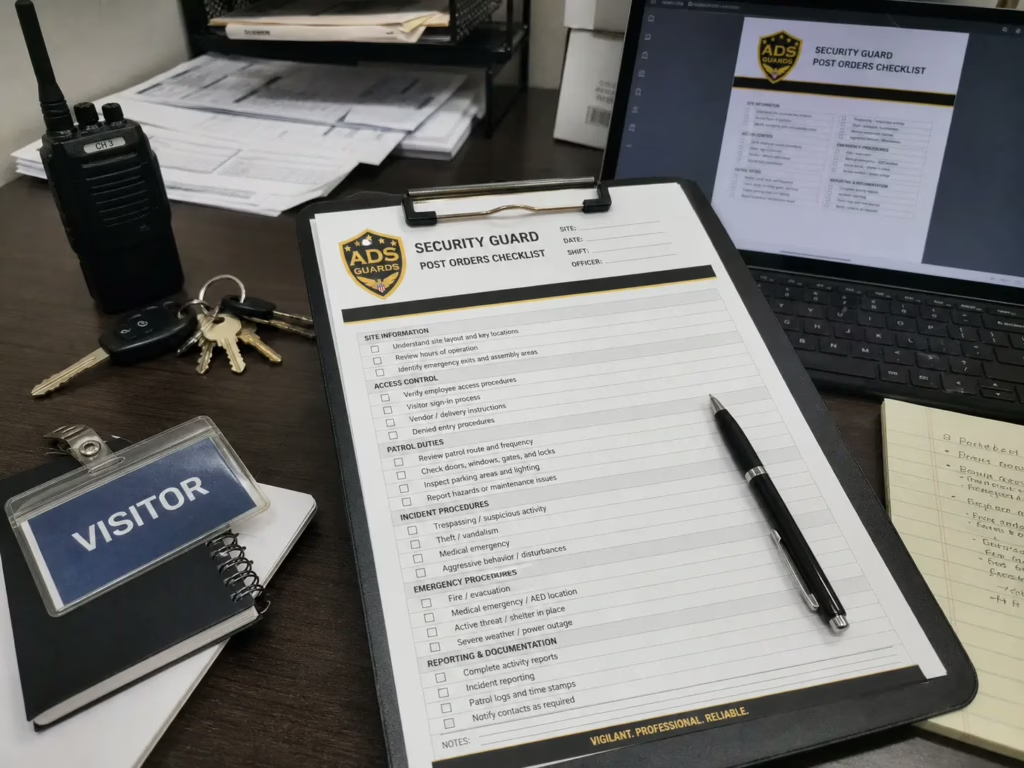
We’re adding a downloadable PDF checklist to make this easier.
Use it when you are writing post orders from scratch, reviewing old site orders, or preparing to hire a security company. It will help you catch the details that are easy to miss until a guard is already on site.
It is especially useful for property managers, business owners, construction site supervisors, event organizers, and anyone responsible for guard coverage.
Common mistakes to avoid
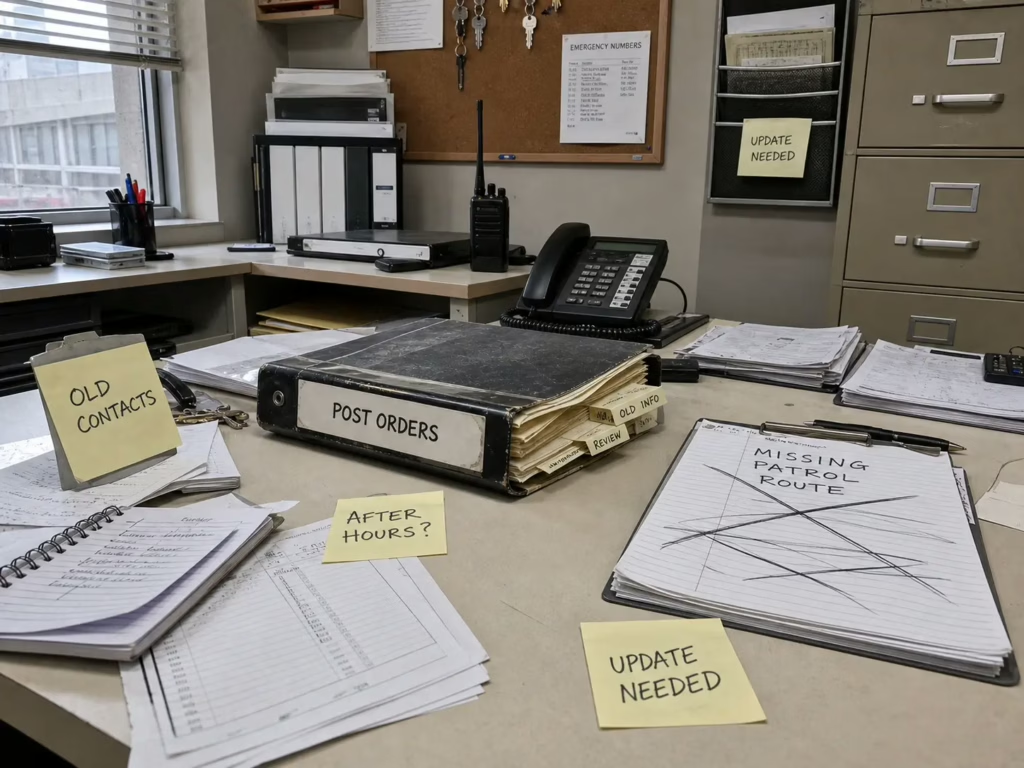
Post orders do not need to sound fancy. They need to be clear.
The problems usually come from vague instructions, outdated contacts, or copied templates that do not match the site.
Making the instructions too vague
“Monitor the property” does not tell the guard enough.
Monitor which areas? How often? From where? What should be reported? What counts as suspicious? Who should be notified?
A vague order forces the guard to make judgment calls the client should have made ahead of time.
Using the same post orders for every site
Generic post orders are better than nothing, but barely.
A construction site may need fence checks, material storage checks, equipment yard patrols, trespassing instructions, and weekend procedures.
An office building may need lobby instructions, visitor badges, elevator rules, tenant contacts, and after-hours access procedures.
The structure can repeat. The actual instructions should fit the property.
Leaving out emergency contacts
If the guard has to call three people to find the right person, the post orders need work.
Keep the contact list current. Remove former employees. Add backup contacts. Check phone numbers regularly. A beautiful set of instructions does not help if the emergency contact left the company six months ago.
Forgetting after-hours rules
Many sites operate one way during business hours and a completely different way at night.
Post orders should explain what changes after hours:
- which doors lock
- who can enter
- where deliveries go
- what areas need extra patrol
- when management should be called
- when police should be called
- how vendors or contractors are handled
After-hours confusion can create security gaps fast.
Not updating post orders after incidents
If something happens, the post orders should be reviewed.
A gate was left open? Add a gate check.
A vendor used the wrong entrance? Update vendor instructions.
A tenant called the wrong number? Fix the contact list.
A patrol missed a dark corner of the parking lot? Add that area to the route.
Post orders should not sit untouched forever. The property changes. The instructions should change with it.
How often should post orders be reviewed?
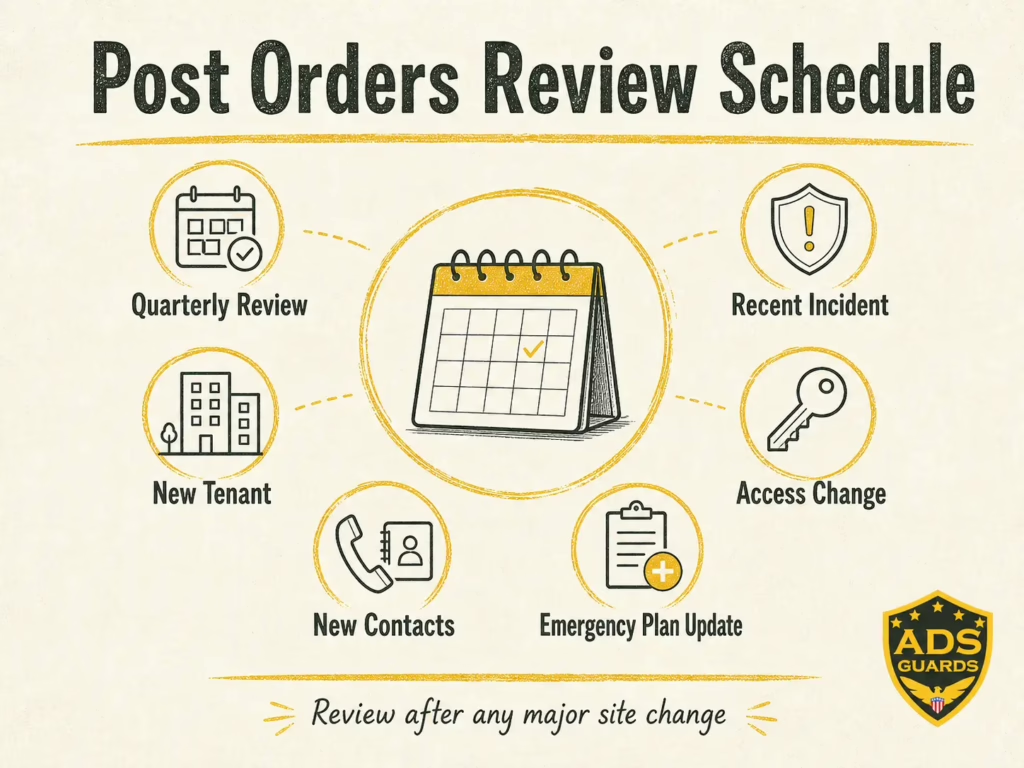
Review security guard site orders whenever the property, schedule, contact list, or risk changes.
That includes:
- new tenants
- construction work
- recent incidents
- new access systems
- changed business hours
- new parking rules
- seasonal events
- new emergency contacts
- staffing changes
- updated workplace violence procedures
- new problem areas around the property
For many businesses, a quarterly review is a good habit. Higher-risk sites may need more frequent updates.
After a serious incident, review the post orders once things are stable. Ask a simple question: did the guard have clear instructions, or did the instructions leave a gap?
Who should write post orders?
The best post orders usually come from a few people, not just one.
The property manager knows the building.
The business owner knows the priorities.
The security company knows guard operations.
Maintenance knows the recurring problems.
Front desk staff know how visitors really behave.
Supervisors know what has gone wrong before.
That mix matters.
If one person writes the whole thing alone, something usually gets missed.
At American Discount Security (A.D.S.), we help clients turn those site details into practical security guard assignment instructions. That may include patrol routes, access control steps, reporting expectations, emergency contacts, and instructions for incidents.
If your property needs armed guards, unarmed guards, patrol service, construction security, event staffing, or commercial security, start with our security guard services in California or reach us through our contact page.
FAQs
What are post orders for security guards?
Post orders for security guards are written instructions for a specific site. They tell the guard where to report, what duties to perform, where to patrol, who to contact, how to document activity, and what to do during incidents or emergencies.
Are security guard post orders required?
It depends on the state, contract, industry, and site. Even when the term “post orders” is not specifically required, written site instructions are still a smart way to reduce confusion. In California, BSIS includes “Post Orders & Assignments” in its security guard training topics.
What is the difference between post orders and general security procedures?
General security procedures explain broad company rules. Post orders explain what a guard should do at one specific site. A company may have a general report writing policy, while the post orders explain what the guard at a certain office building must document during each shift.
What should a security guard duties checklist include?
A security guard duties checklist should include access control, patrol areas, door and gate checks, visitor logs, incident reporting, emergency contacts, equipment checks, parking lot checks, restricted area checks, and any special site rules.
How detailed should security officer post orders be?
They should be detailed enough that a trained guard can work the site without guessing. Keep them specific, but readable. If a checklist or short step-by-step instruction works better than a long paragraph, use that.
Who updates security guard assignment instructions?
The client and the security company should update them together. The client knows the property, tenant issues, access rules, and business changes. The security company knows how to turn those details into guard instructions that work during a shift.
Should emergency procedures be included in post orders?
Yes. Security guard emergency procedures should be easy to find and easy to follow. Include instructions for fire, medical emergencies, evacuation, workplace violence concerns, power outages, suspicious activity, and emergency service response.
Final thoughts
Security guard post orders are the guard’s roadmap for your property.
When the instructions are clear, guards do not have to guess. Managers know what to expect. Reports are cleaner. Incidents are handled more consistently. The whole operation feels less loose.
If your current security guard instructions are old, vague, missing contacts, or sitting in a binder nobody opens, it is time to fix them.
American Discount Security (A.D.S.) can help create clear security guard assignment instructions as part of a custom security plan. Start with our commercial security services or request a quote.