12 hotel security measures to protect guests and staff
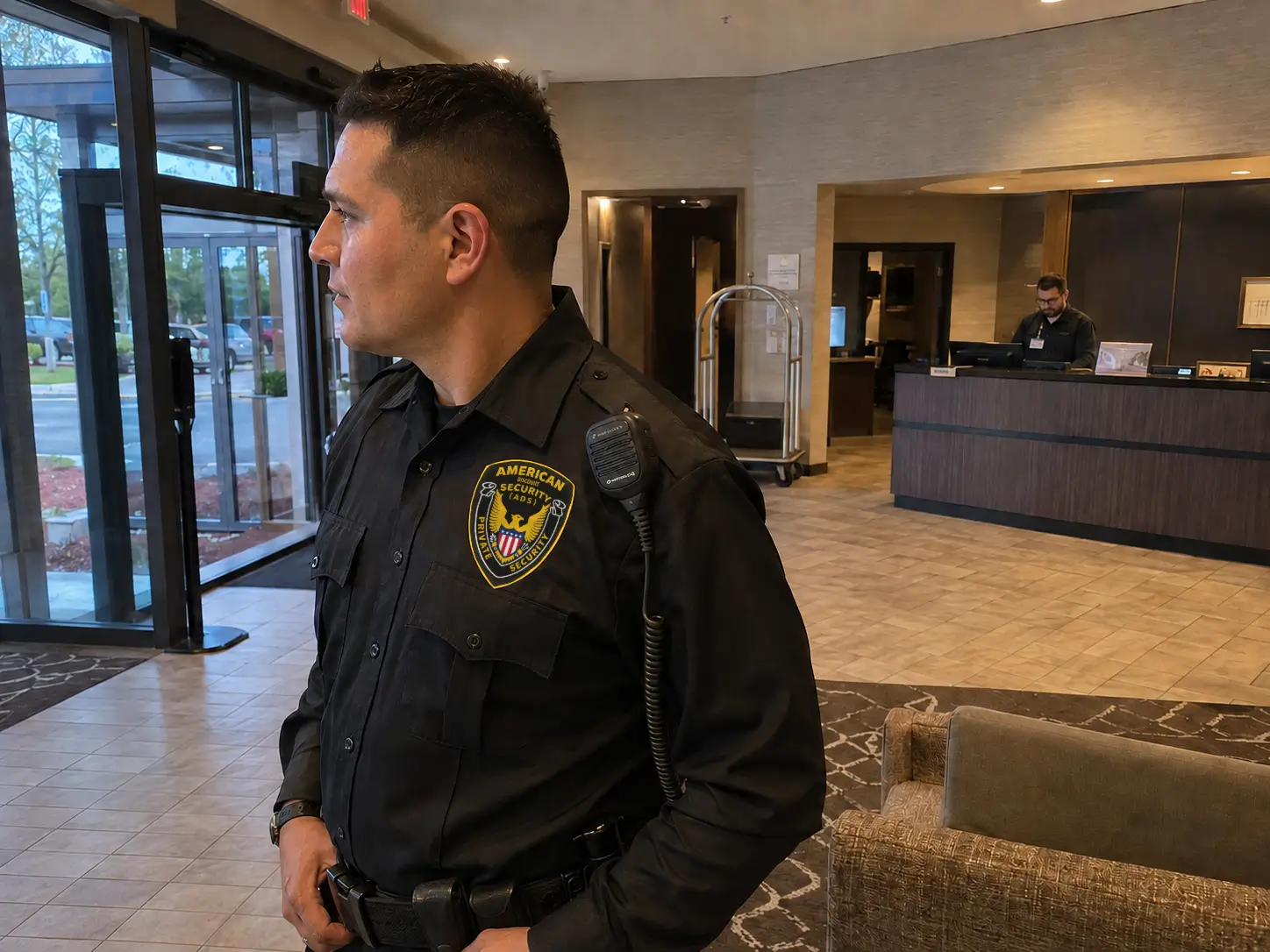
A hotel has to feel open to guests while staying closed to trouble. That is a tricky balance. People arrive at all hours, vendors use separate entrances, staff move between public and private areas, and hundreds of room keys may be active at once. Good hotel security measures account for that movement without making the lobby feel like an airport checkpoint.
What hotel security measures should cover
Hotel security includes much more than guest room locks. A useful plan covers people, property, information, and the places where those things overlap.
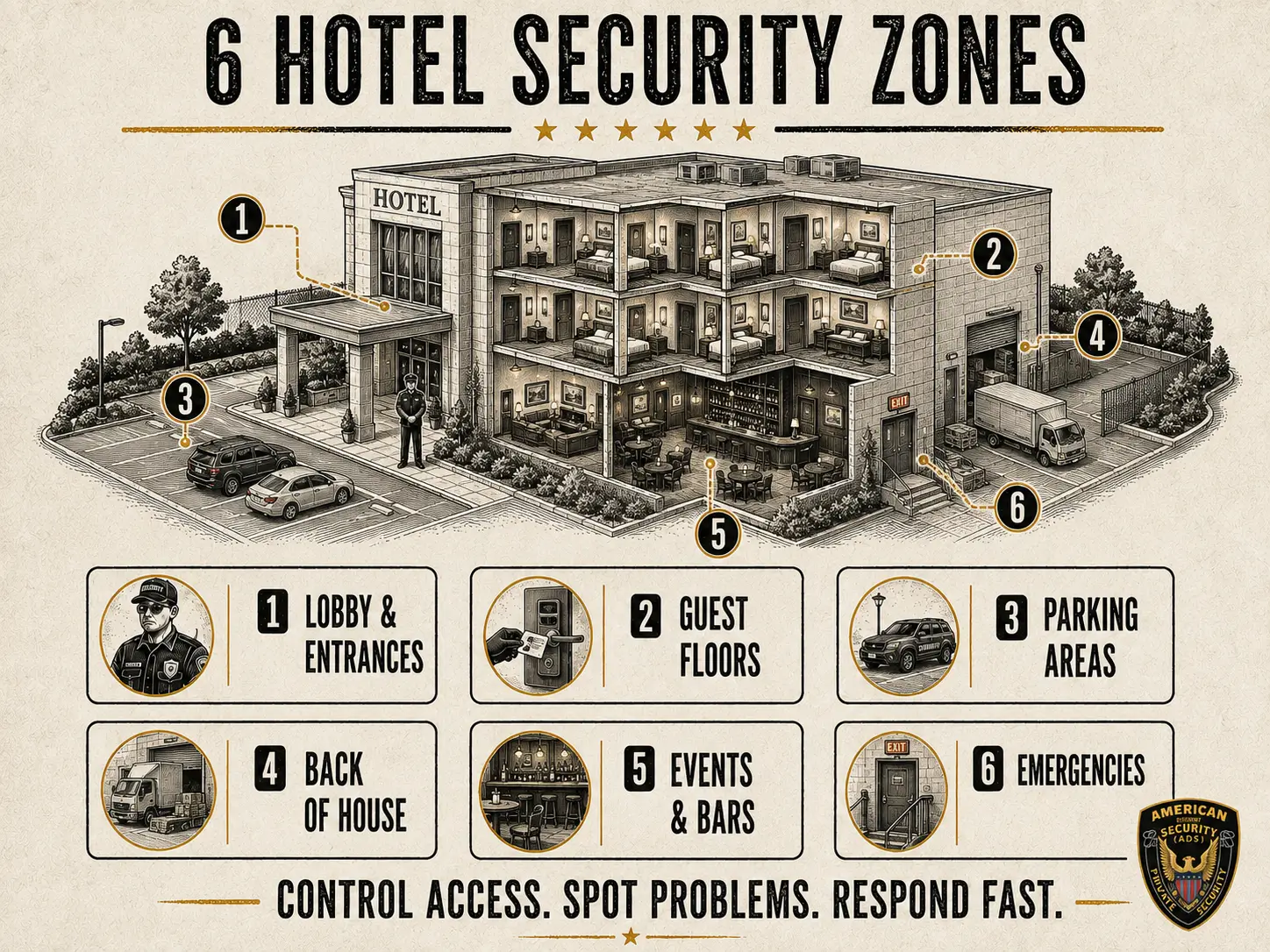
| Area | Common concern | Useful controls |
|---|---|---|
| Lobby and entrances | Unregistered visitors, disorder, theft | Clear sightlines, staff awareness, controlled secondary doors |
| Guest floors | Unauthorized access, room theft, disturbances | Working locks, key control, patrols, response procedures |
| Parking areas | Vehicle break-ins, poor visibility, staff safety | Lighting, cameras, patrols, trimmed landscaping |
| Back of house | Vendor access, inventory loss, employee-only areas | Badges, locked doors, visitor logs, access reviews |
| Events and bars | Crowding, alcohol-related incidents, access problems | Capacity controls, trained staff, added guard coverage |
| Emergencies | Fire, medical calls, violence, evacuation | Written procedures, communication tools, drills |
Controls should fit the property. A roadside hotel with exterior corridors has different weak points from a downtown high-rise with a restaurant and underground garage.
Start with a hotel security assessment
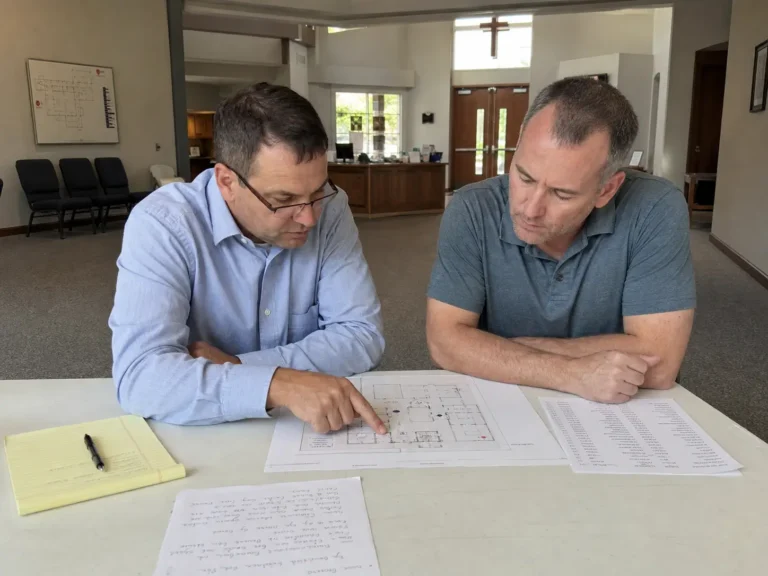
Walk the property at different times. The same side entrance that looks harmless at noon may be dark and hidden at 11 p.m. Review incidents, complaints, key-card logs, camera blind spots, and near misses. A propped door that caused no theft still exposed a gap worth fixing.
Our physical security assessment checklist gives property teams a practical starting point for the walkthrough. The point is not to collect a long list of flaws. It is to identify the few failures most likely to hurt someone or disrupt operations, then fix those first.
12 hotel security measures that work in daily operations
1. Keep public entrances visible and secondary doors controlled
The main entrance should be easy for staff to observe. Side doors, loading areas, pool gates, stairwells, and garage access points need equal attention because they often receive less supervision.
Check that locked doors latch on their own and alarms do not get ignored. If employees regularly prop open a service door because the access process is inconvenient, the process needs work. A policy that fights normal operations will eventually lose.
2. Tighten room-key and credential control
Front desk staff should verify identity before replacing a room key. Do not announce room numbers aloud, write them on exposed key sleeves, or hand out duplicate keys based on a name alone.
Remove employee access promptly when someone changes roles or leaves. Keep master-key permissions limited, and require staff to report lost keys, badges, or radios at once.
3. Put cameras where they can answer questions
A camera is useful when it shows who entered, where they went, and what happened. Cover entrances, elevator lobbies, cash-handling points, loading areas, parking entrances, and other shared spaces where incidents are likely.
Avoid private areas and follow local privacy laws. Test the footage at night. A camera that records a bright doorway and a dark face will not answer many questions.
4. Fix lighting and sightline problems
Walk parking lots, garages, walkways, stairwells, and service alleys after dark. Replace failed lights quickly. Trim landscaping that blocks views from the building or creates hiding places near doors.
Exterior safety deserves its own routine. These parking lot safety tips cover lighting, walking routes, reporting, and patrol habits in more detail.
5. Give the front desk a quiet way to call for help
Front desk employees need a fast way to reach a manager, security officer, or emergency services without escalating a tense situation. Test panic buttons, radios, and emergency numbers. Staff should know who receives an alert and what happens next.
6. Train staff to notice and report unusual behavior
Housekeepers, valet attendants, maintenance teams, and front desk employees see different parts of the property. Train them on what to report, whom to contact, and when not to confront someone. The Department of Homeland Security publishes a hospitality response guide for recognizing possible human trafficking and using an appropriate reporting process. One warning sign alone does not prove trafficking.
7. Use patrols with a clear purpose
“Walk the property” is too vague. A useful patrol plan names the areas to check, likely problems, expected frequency, and method for reporting exceptions.
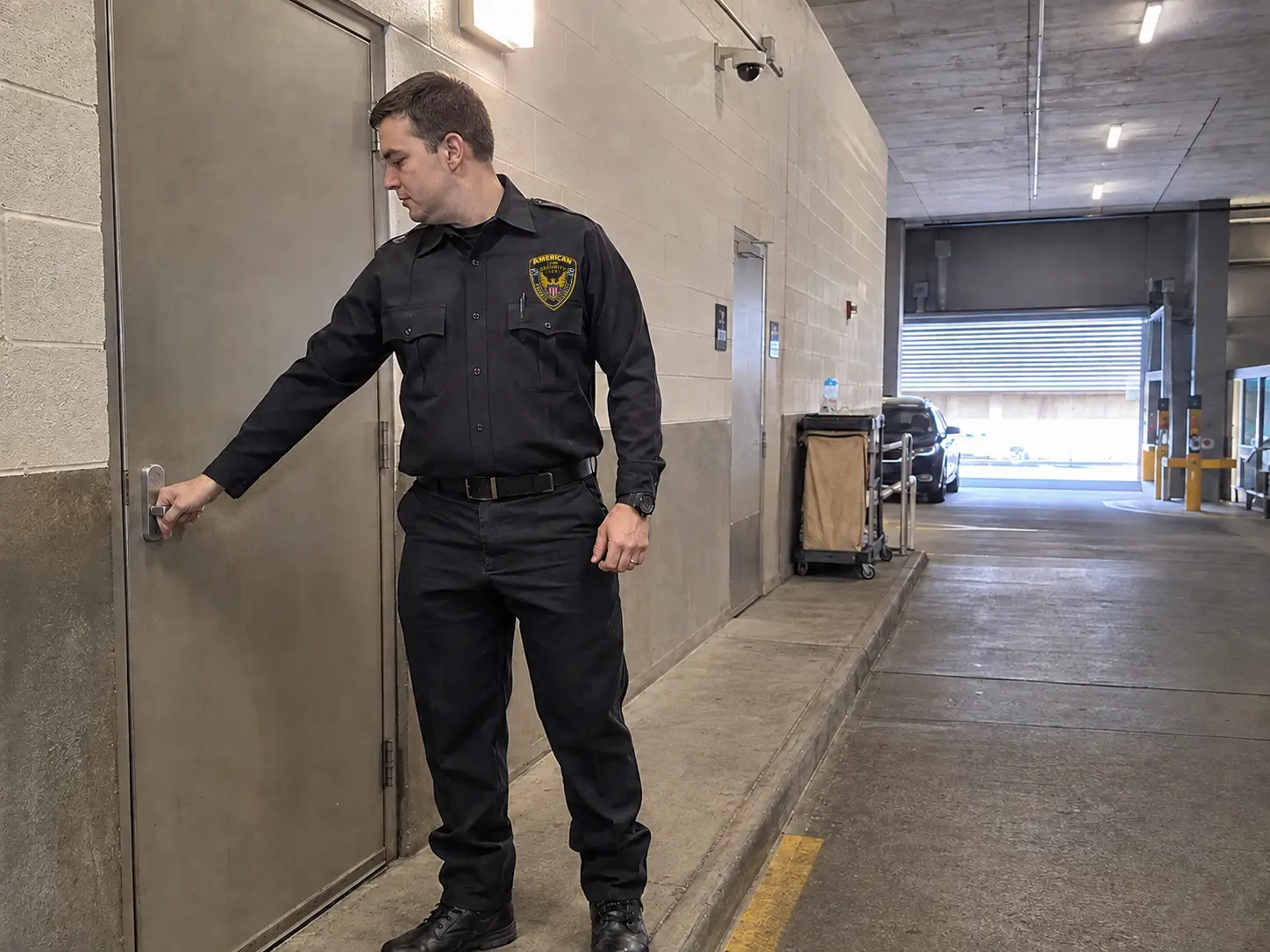
Routes should not be completely predictable. Patrols should check damaged locks, propped doors, blocked exits, suspicious vehicles, and safety hazards. Management also needs to confirm that urgent findings were handled.
8. Protect employees who work alone or late
Housekeepers may enter occupied rooms alone. Maintenance workers may respond to isolated areas. Night staff can spend long stretches with only a few coworkers on site.
Set check-in procedures for isolated work and define when two employees should respond together. Consider escorts after late shifts. OSHA lists working alone, handling money, working late, and serving alcohol among the conditions that can raise the risk of workplace violence.
9. Control vendors and back-of-house access
Delivery drivers and contractors should use a designated entrance. Confirm who they are, who requested the visit, and which areas they need to enter. Temporary credentials should expire and be returned.
Loading docks, kitchens, storage rooms, and staff corridors should not become shortcuts around the lobby. Review access permissions regularly.
10. Create a consistent incident-reporting process
When something happens, the record should capture times, locations, people involved, actions taken, witnesses, and available video. Keep the writing factual. “Guest appeared intoxicated and shouted at staff” is more useful than “guest was crazy.”
A clear security guard incident report helps management spot repeat problems. Preserve relevant footage before it is overwritten, and limit access to reports with personal information.
11. Write emergency procedures people can follow
Hotels need plans for fire, medical calls, severe weather, power failures, violent incidents, and evacuation. Staff should know who calls 911, meets responders, helps guests, and closes an unsafe area.
CISA offers active-assailant emergency planning resources for businesses and venue operators. Fire planning also deserves close attention. The U.S. Fire Administration explains the smoke-alarm and sprinkler requirements used for properties on its Hotel-Motel National Master List.
12. Review the plan after incidents and operational changes
Security plans age quickly. A renovated lobby changes sightlines. A new bar changes late-night traffic. Mobile check-in can reduce front desk contact while creating a different key-control issue.
Review the plan after an incident, near miss, renovation, or major operational change. Ask employees what failed in practice. They usually know which door will not close and which radio loses signal in the garage.
Where hotel security guards fit
Technology can record an incident and send an alert. A trained person can check what is happening, call for help, and move people away from danger.
Hotels often use security guards overnight, during busy bar hours or events, and when repeated incidents point to a pattern. The right coverage depends on the layout, occupancy, operating hours, and recent incidents.
Coverage can follow the property’s risk pattern instead of staying identical every hour. For example, a hotel might use one officer overnight on a normal weekday, then add staff for a sold-out weekend or ballroom event. The number and type of guards should follow a site assessment rather than a fixed guest-to-guard ratio.
If your hotel needs a plan that combines patrols, access control, incident response, and trained officers, our commercial security services can be adjusted to the property and schedule.
A short hotel security checklist
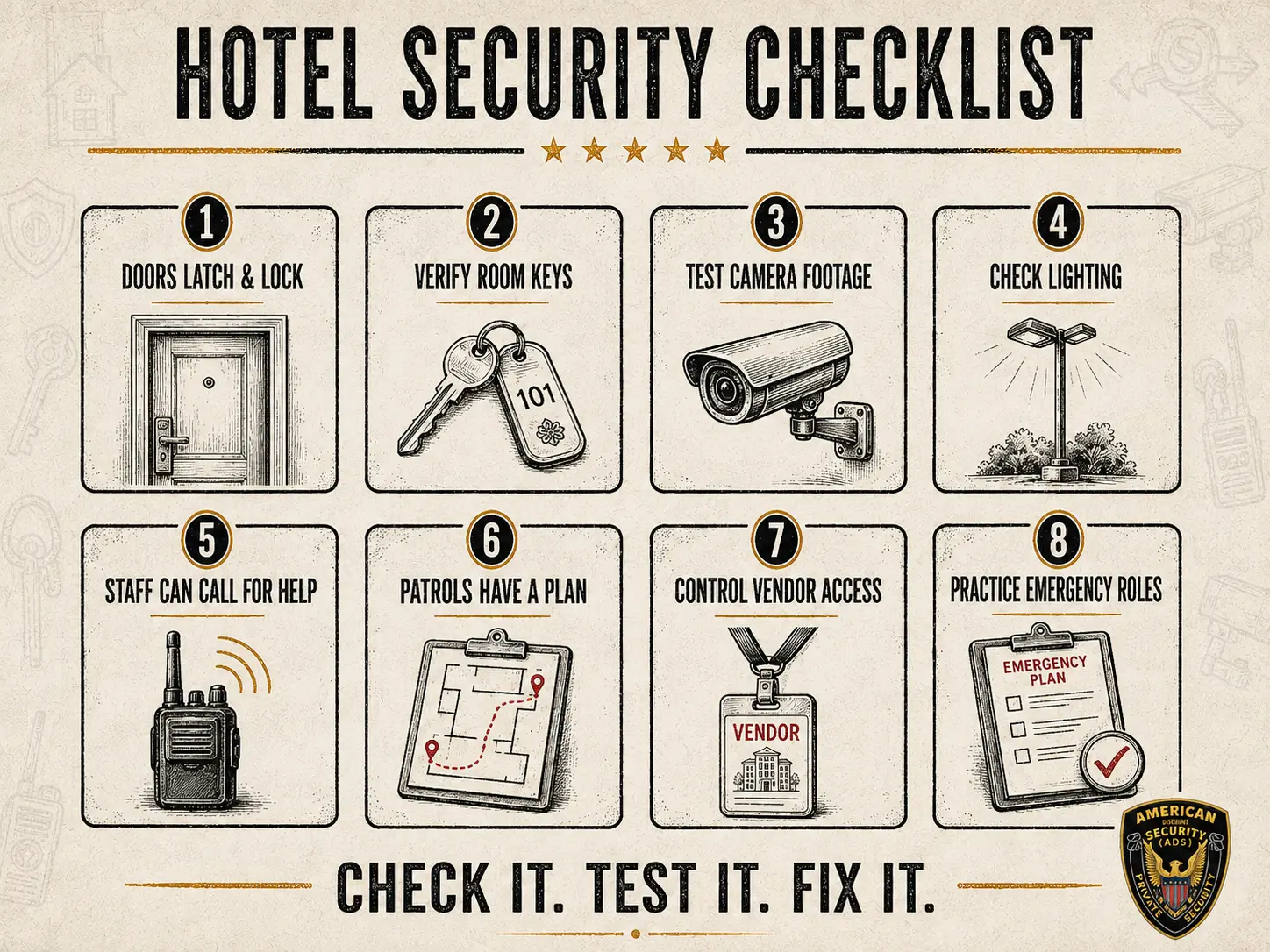
Use this list for a quick review:
- All public and service entrances close and lock correctly.
- Staff verify identity before replacing room keys.
- Master keys and employee access are limited and reviewed.
- Cameras cover useful shared areas and produce clear night footage.
- Parking areas, walkways, and stairwells have working lights.
- Front desk employees can call for help discreetly.
- Staff know how to report suspicious behavior without confronting people.
- Patrol instructions name specific areas and conditions to check.
- Employees working alone have a check-in or communication procedure.
- Vendors sign in and use only approved entrances and work areas.
- Incident reports are factual, complete, and stored securely.
- Emergency roles and contact methods are tested through drills.
Frequently asked questions
What is hotel security?
Hotel security is the set of people, procedures, and physical controls used to protect guests, employees, visitors, rooms, vehicles, and hotel operations. It includes access control, staff training, cameras, lighting, patrols, incident reporting, and emergency planning.
What are the most important hotel security measures?
Start with working locks, controlled entrances, clear camera coverage, good lighting, trained staff, and a response plan people understand. The priority changes by property, so a site assessment should come first.
Are cameras enough to secure a hotel?
No. Cameras can deter some behavior and help investigate incidents, but they cannot repair a propped door, calm a dispute, assist an injured guest, or decide when to call emergency services. Hotels need procedures and trained people behind the equipment.
When should a hotel hire security guards?
Guard coverage makes sense when staff face recurring disturbances, theft, unauthorized access, parking-lot problems, overnight safety concerns, or large events. A security assessment can identify the busiest locations and hours so coverage is placed where it will help most.
How can a hotel improve security without making guests uncomfortable?
Keep most controls quiet and consistent. Good lighting, staff awareness, reliable locks, discreet communication tools, and professional patrols improve safety without turning every interaction into a screening process. Staff can verify identity politely and enforce rules without announcing sensitive details.
Final thoughts
Useful hotel security measures are rarely flashy. They are doors that latch, employees who know whom to call, cameras that show a clear face, and reports that help the next shift understand what happened. When those basics work together, the hotel is easier to manage and safer for the people inside it.
Review the property during real operating conditions, fix the most serious gaps first, and test the plan. If the same problem keeps returning, change the control instead of writing another reminder nobody will read.