How to Create a Church Security Plan: A Step-by-Step Guide
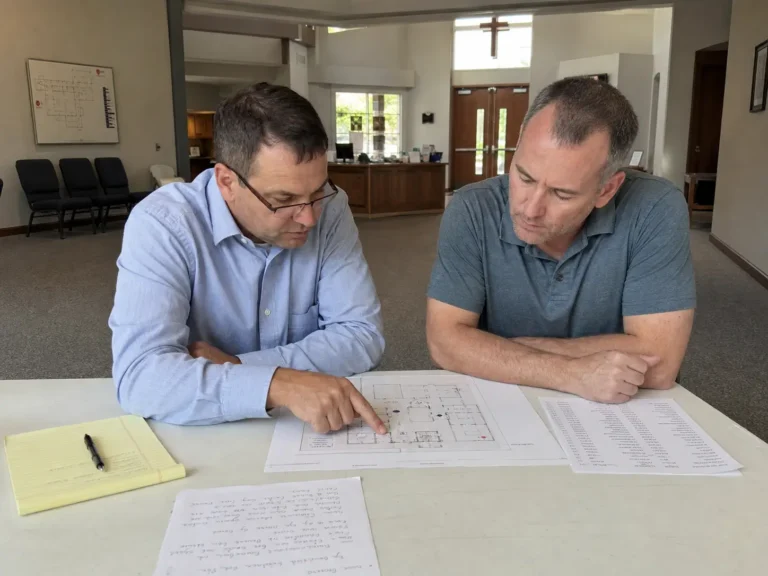
A church can feel calm right up until the parking lot fills, the children's rooms open, volunteers rotate, and a side door gets propped open. Problems are easier to manage when somebody has already decided who should respond.
A church security plan puts those decisions in writing. It should cover everyday concerns, medical emergencies, severe weather, disruptive visitors, missing children, fires, and serious threats. A good plan helps staff and volunteers act quickly without making worship feel tense or forcing people to improvise under pressure.
A simple church security plan template
Some organizations call this a church safety plan. Whatever the name, these sections provide a workable structure:
- A contact page for church leaders, security coordinators, emergency services, utilities, and building management
- A property profile with floor plans, entrances, assembly areas, utility shutoffs, children's rooms, and restricted spaces
- Team assignments naming the primary and backup person for each role
- Daily procedures for opening, closing, key control, children's pickup, money handling, and routine reporting
- Emergency procedures for medical calls, fires, severe weather, evacuation, lockdown, sheltering in place, and disruptive visitors
- A communication section covering alarms, radios, phone trees, congregation alerts, and first-responder contact
- A training and review schedule with drill dates, incident reviews, updates, and approval records
Keep the first version manageable. A 100-page binder that nobody reads is not much of a plan. Start with the likely procedures, assign names to the important roles, and add detail as the team practices.
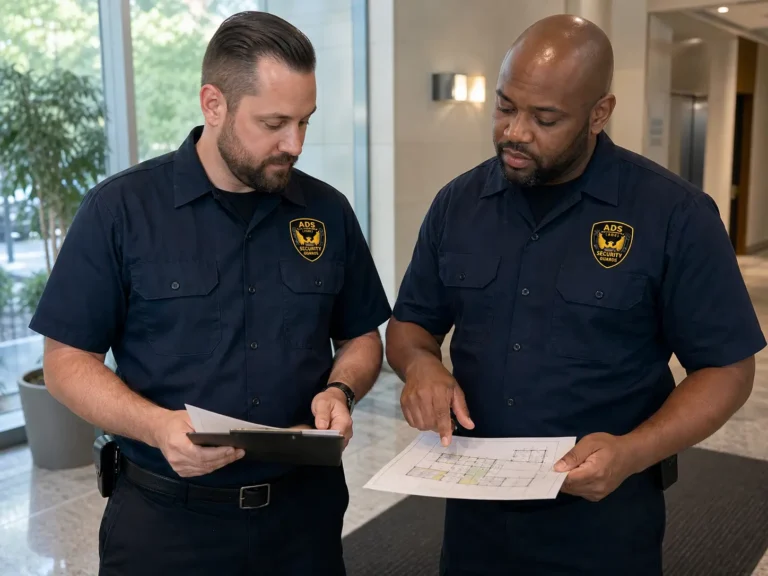
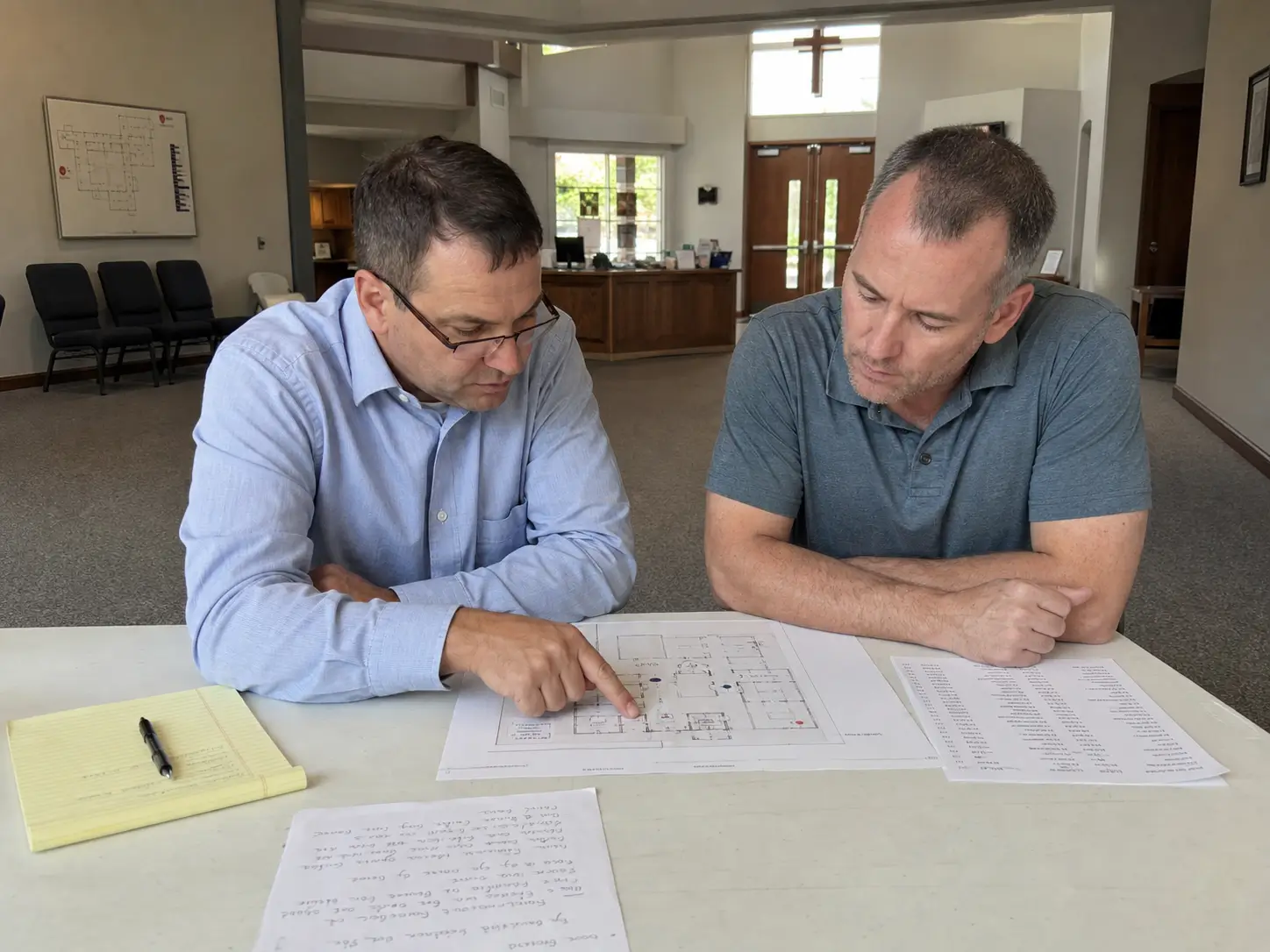
Start with a walk-through of the property
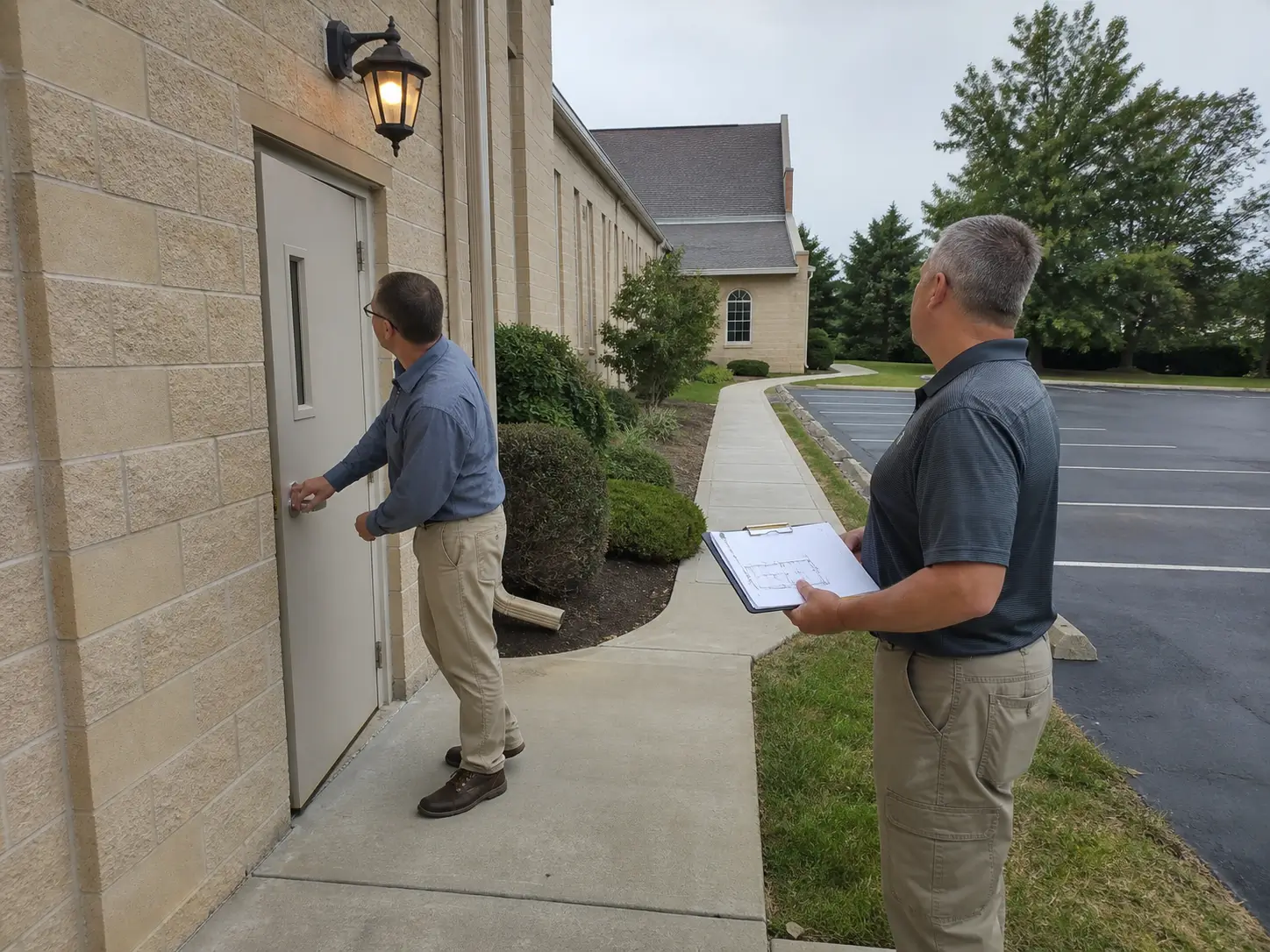
Buying cameras or radios before checking the property is an easy way to spend money in the wrong places. Walk the site during the same hours when services, classes, and evening programs usually happen. Conditions can look very different after dark or when several hundred people arrive at once.
Check the parking area, walkways, exterior lighting, doors, windows, offices, children's spaces, utility rooms, and any place where money or sensitive records are handled. Look for entrances that cannot be seen from a staffed area, keys that are difficult to track, blocked exits, and rooms that would be hard to reach during an emergency.
CISA offers a free Houses of Worship Security Self-Assessment to identify vulnerabilities and set priorities. Our physical security assessment checklist can also help organize the walk-through.
Do not limit the review to crime. Loose handrails, poor lighting, a crowded lobby, or an unclear pickup process can create trouble without anyone intending harm.
Build a church security team with clear roles
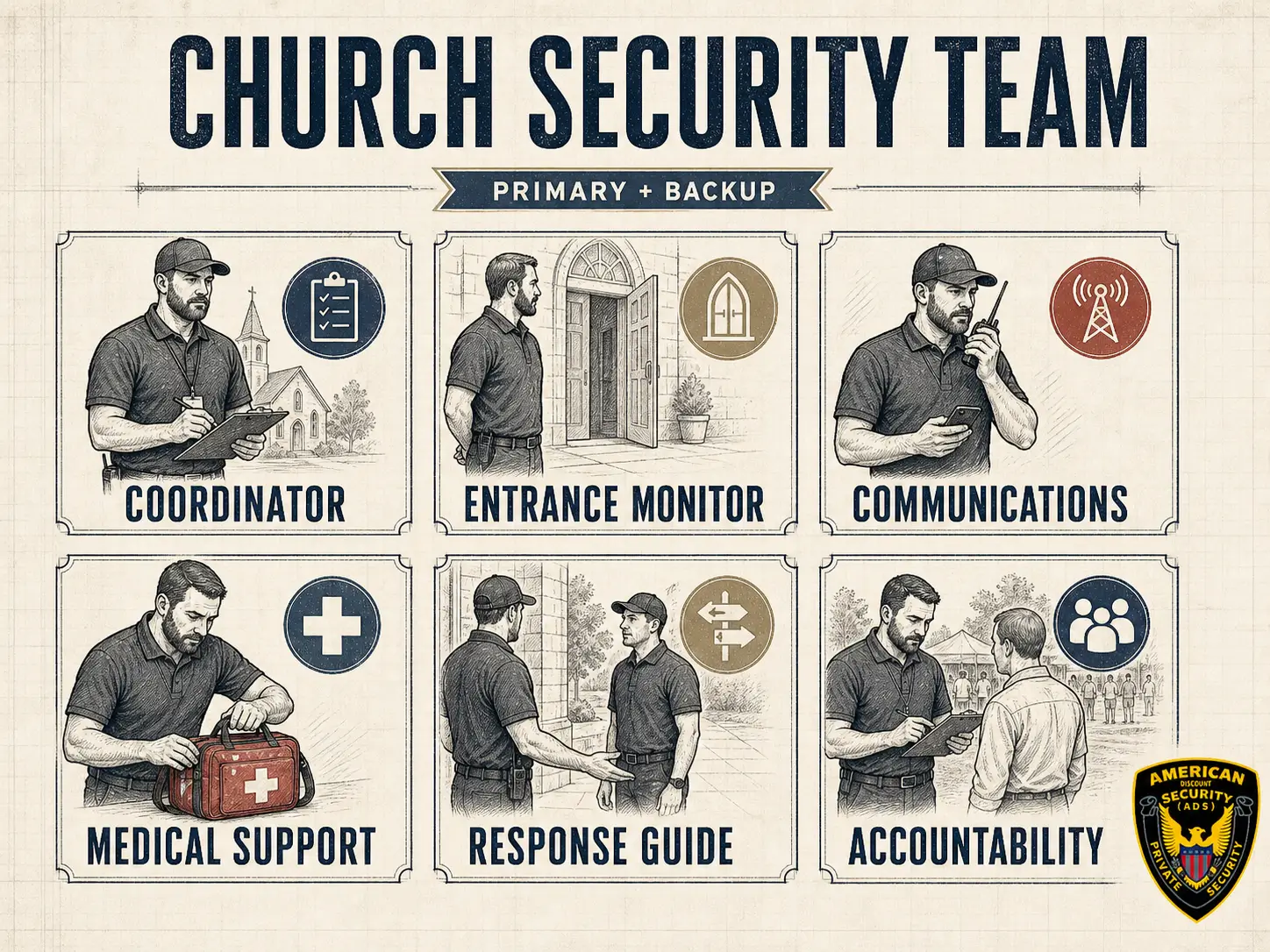
A church security team does not have to consist entirely of guards. It may include a security coordinator, ministry leaders, ushers, greeters, facilities staff, medical volunteers, and the people responsible for children's programs.
Each job needs an owner. One person cannot call 911, check the nursery, meet police, and communicate with the congregation at the same time.
Assign responsibility for:
- monitoring entrances and common areas
- calling emergency services
- communicating with staff and volunteers
- assisting children and attendees who need help
- guiding first responders to the incident
- accounting for people after an evacuation
- recording what happened
Write down the names and backups for each role. Volunteers miss Sundays. Staff members take vacations. A plan built around one reliable person tends to fall apart on the exact day that person is away.
Write procedures for the incidents you may face
The FEMA guide for houses of worship recommends a basic emergency plan supported by specific procedures for evacuation, lockdown, sheltering in place, recovery, and security. Your church may also need instructions for medical calls, severe weather, fires, suspicious packages, disruptive behavior, child-safety incidents, and power outages.
Each procedure should be short enough to use under stress. Include:
- The person authorized to make the decision
- How the team will announce it
- The immediate actions staff and volunteers should take
- Where people should go
- How the church will account for children and others who need assistance
- Who will meet police, fire, or medical responders
Avoid vague directions such as "handle the situation" or "secure the building." Spell out the first few actions. Those are usually the moments when confusion costs the most time.
Keep access control simple and welcoming

Churches are meant to welcome people, including visitors nobody recognizes. Access control does not have to mean treating every newcomer with suspicion.
Many churches keep a main entrance staffed during services and secure unused exterior doors once programs begin. Greeters can welcome visitors, explain where to go, and notice behavior that may need attention. Staff-only areas, financial offices, utility rooms, and children's spaces should have tighter access than the lobby or sanctuary.
CISA's Power of Hello guide for houses of worship teaches a behavior-based approach: observe, greet the person, assess the interaction, and get help when needed. Suspicion should be based on behavior and context, never somebody's faith, race, clothing, disability, or other personal characteristic.
Key and badge control matters too. Keep a current list of who can enter restricted areas. Recover keys when roles change, and avoid shared access codes that remain unchanged for years.
Give children's areas their own section
Children's ministry needs its own procedures. Cover check-in, authorized pickup, custody concerns, missing-child response, medical information, and reunification after an evacuation.
Decide who may release a child and what staff should do when the adult collecting that child does not have the expected tag or identification. During an emergency, parents may rush toward the children's rooms. The plan needs a reunification point and a method for confirming that each child leaves with an authorized adult.
Test these procedures with the people who actually work in those rooms. A policy that looks sensible in an office may be awkward in a crowded hallway full of families.
Do not ignore the parking lot
The security plan starts before anyone reaches the front door. Parking areas may have poor visibility, vehicle conflicts, theft, medical incidents, or attendees walking alone after an evening program.
Check lighting from a driver's and pedestrian's viewpoint. Keep fire lanes and emergency access routes clear. During large services, assign someone to watch traffic flow and report problems instead of expecting indoor greeters to cover the lot as well.
Our guide to parking lot safety for businesses and employees covers lighting, visibility, patrols, and reporting in more detail. Churches can apply many of the same ideas without turning the property into a fortress.
Decide whether professional guards belong in the plan
Some churches can handle routine services with trained staff and volunteers. Others have large crowds, evening programs, repeated disturbances, valuable equipment, high-profile events, or a property layout that needs dedicated coverage.
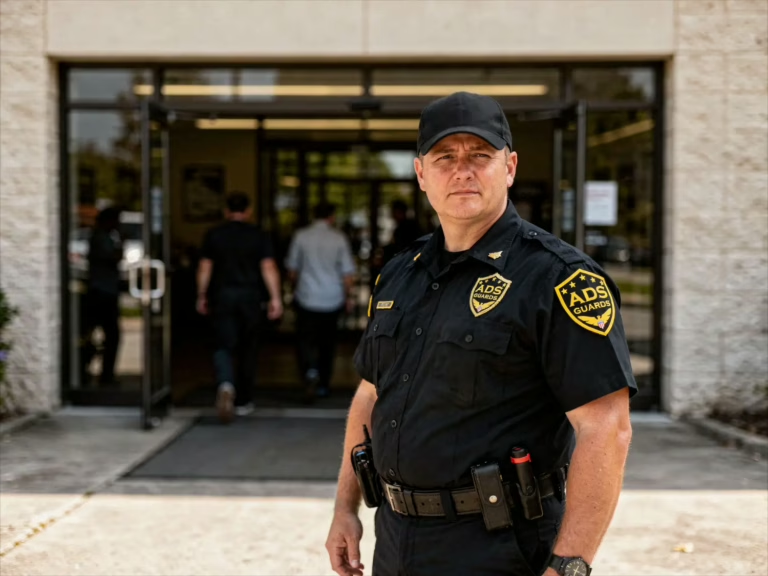
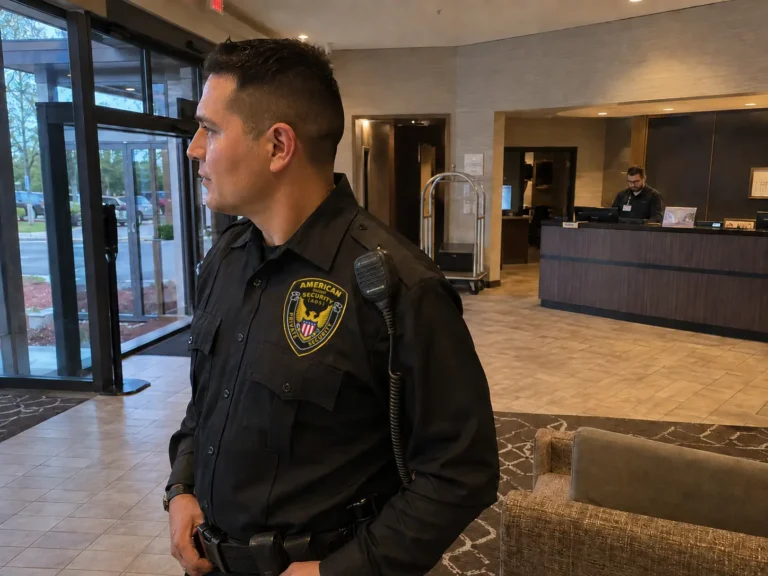
A professional security guard can monitor the site while ministry staff focus on people and programs. Guards may manage entrances, patrol parking areas, respond to disturbances, document incidents, and coordinate with first responders. Special events may need more coverage than an ordinary weekly service, especially when attendance, parking demand, or public access changes.
The choice between armed and unarmed security deserves a formal discussion with church leadership, the insurer, legal counsel, local law enforcement, and a licensed security provider. Do not treat a weapon as a substitute for screening, training, written authority, and clear communication.
If your church is considering outside help, our commercial security services can be adapted to the property, schedule, and level of coverage required. The guard's duties should be written into the same church security plan used by staff and volunteers.
Practice before the plan is needed
Start with a tabletop exercise. Put the team in a room, describe a realistic situation, and ask each person what they would do. You will quickly find missing phone numbers, overlapping responsibilities, doors nobody can unlock, and instructions that sound clearer on paper than they are.
Follow that with drills suited to the congregation and facility. Staff and volunteers should know the alarm methods, evacuation routes, assembly areas, and their own assignments. Coordinate more complex exercises with local police, fire, or emergency management agencies.
Review the plan after a drill, an incident, a remodel, or a major staff change. Schedule a full review at least once a year even if nothing obvious has changed. Update contact lists more often.
Church security checklist
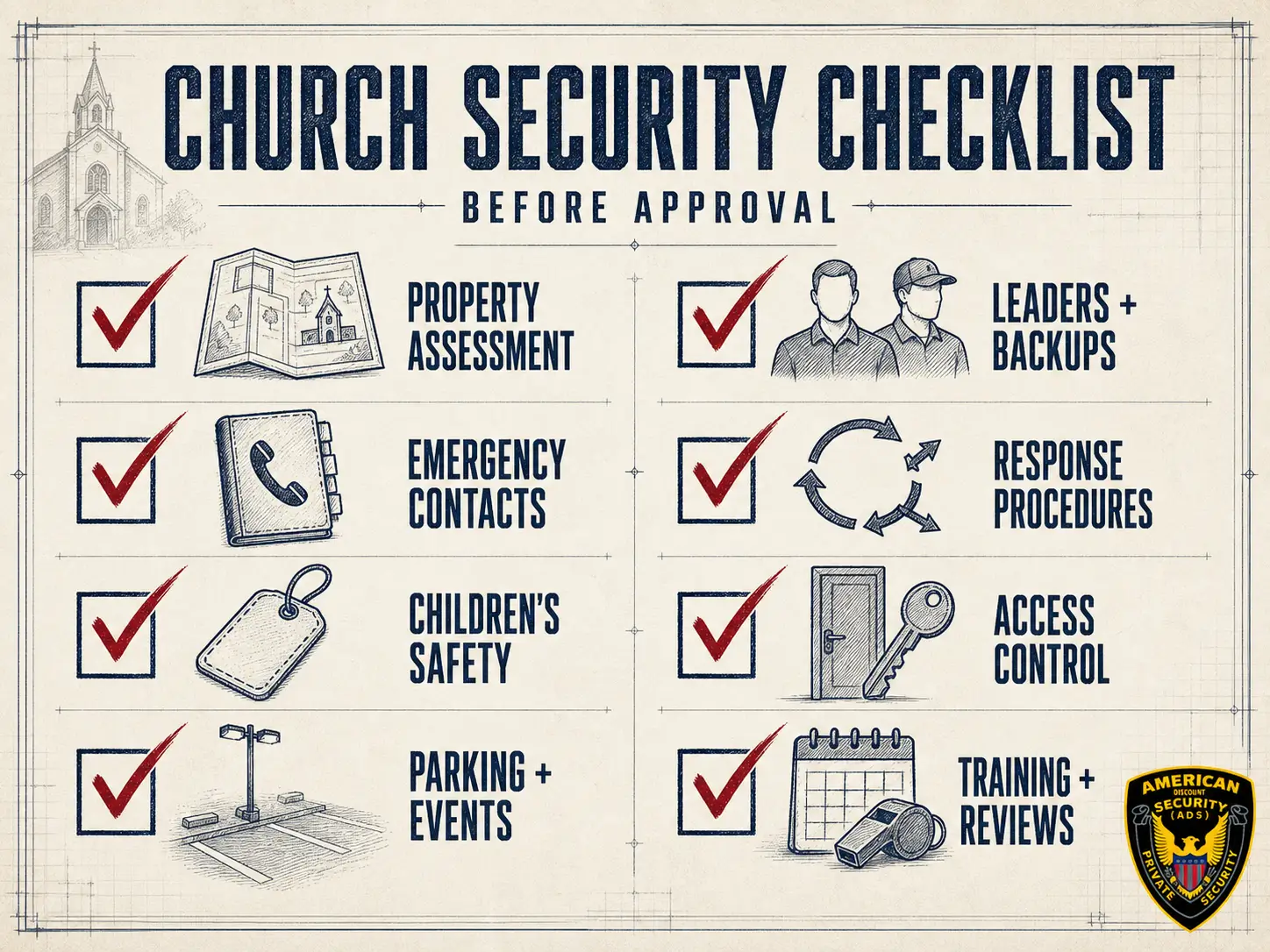
Before approving the plan, confirm that it includes:
- a current property and vulnerability assessment
- named leaders and backups for each security role
- emergency contact information
- evacuation, lockdown, and shelter-in-place procedures
- medical and severe-weather response steps
- children's check-in, pickup, and reunification procedures
- entrance, key, and restricted-area controls
- parking lot and special-event coverage
- an incident reporting process
- a schedule for training, drills, and plan reviews
Use the checklist to catch common gaps, then add the site-specific details before distributing the document.
Frequently asked questions
Does every church need a security plan?
Even a small church that has never had a serious incident benefits from written emergency and security procedures. Scale the plan to the congregation, building, programs, and local risks.
What is the difference between a church security plan and an emergency plan?
A security plan focuses on preventing and responding to threats involving people, property, and access. An emergency plan also covers fires, severe weather, medical calls, evacuations, utilities, and recovery. Combining them into one coordinated document usually makes the responsibilities easier to understand.
Should church security teams carry weapons?
There is no universal answer. State and local laws, insurance requirements, training, licensing, the facility, and the congregation's risk profile all matter. Church leaders should get qualified legal and insurance guidance before approving any armed role.
How often should a church security plan be updated?
Review it after any incident or drill and whenever the building, leadership, programs, or contact information changes. A scheduled annual review keeps old assignments and phone numbers from lingering in the document.
Can a church stay welcoming while improving security?
Yes. Staffed entrances, friendly greeters, clear signs, reliable children's procedures, and trained responders can improve safety without creating an aggressive atmosphere. Focus on behavior, access, and preparation rather than profiling visitors.
Final thoughts
A useful church security plan is specific to the building and the people using it. It gives ordinary staff and volunteers clear jobs, covers the emergencies the church may actually face, and gets practiced often enough that the instructions feel familiar.
Start with a walk-through. Fix the obvious gaps. Put responsibilities in writing, then test the plan with the people expected to use it. If the property or attendance requires dedicated coverage, bring professional security into the planning process early so everyone works from the same playbook.